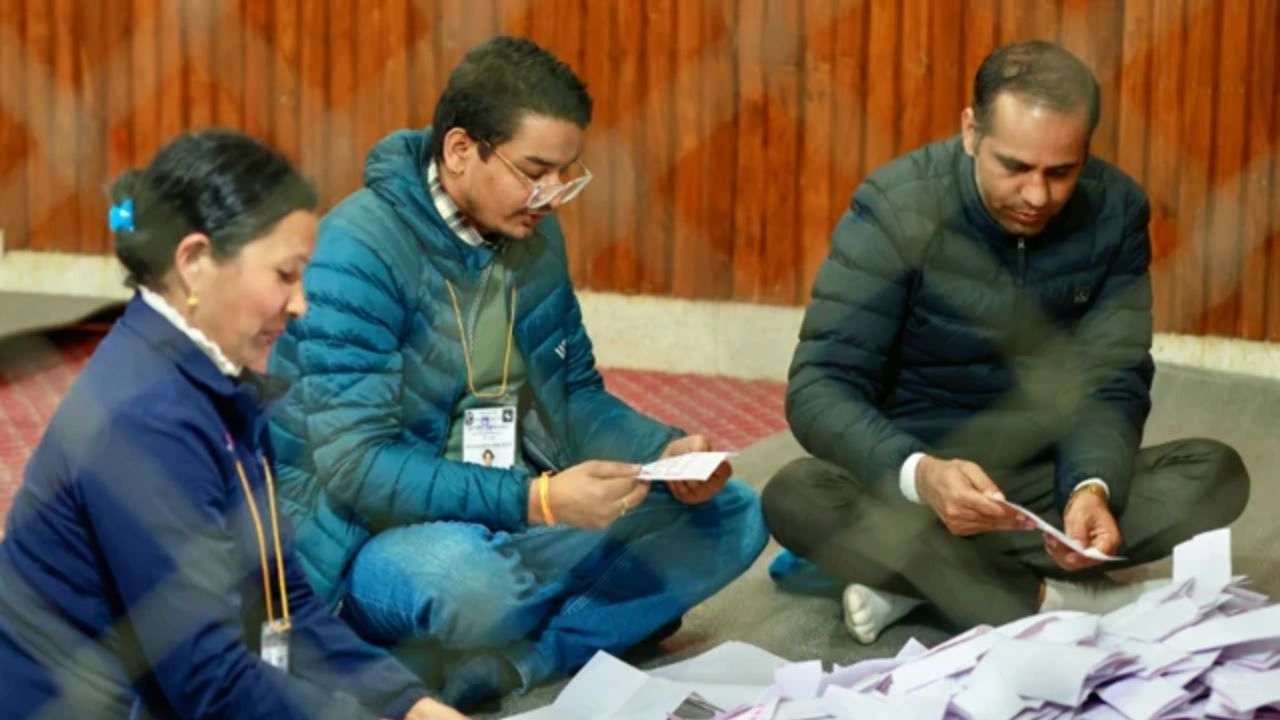



Vote counting began across Nepal on Friday following a closely watched parliamentary election that could reshape the country’s leadership after the 2025 protests that brought down the government.
Among the prominent contenders are a Marxist former prime minister seeking a political comeback, a rapper-turned-mayor appealing to younger voters, and the newly elected head of the influential Nepali Congress party.
Prakash Nyupane, a spokesperson for the Election Commission of Nepal, said on Friday, “Counting has begun in most places in a peaceful manner.”
Initial results may emerge later on Friday, though the final nationwide outcome could take several days to complete.
Even after results are declared, talks to establish a government could continue for some time if – as many analysts expect – no party secures a clear majority.

Interim prime minister Sushila Karki commended the peaceful conduct of the vote, which she has described as vital in “determining our future”.
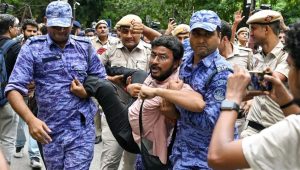
Voters were choosing representatives to replace the interim administration that has governed the country since the September 2025 uprising, during which at least 77 people were killed and parliament along with dozens of government buildings were set on fire.
The protests, led largely by young demonstrators under a loose Gen Z banner, initially began in response to a short-lived ban on social media but quickly expanded as frustration grew over corruption and the country’s struggling economy.
“Congratulations to the Nepali people for successfully conducting a historically peaceful election… thereby providing the country with a democratic and constitutional resolution,” Karki said on Thursday after voting concluded.
‘Better path’
The election ranks among the most fiercely contested polls in the Himalayan nation of around 30 million people since the end of the civil war in 2006.
Karki – a 73-year-old former chief justice who came out of retirement to lead the country – now faces the challenge of managing reactions to the results.
Authorities have deployed thousands of soldiers and police across the country.
Particular attention is focused on the constituency of Jhapa District’s Jhapa-5, a normally quiet eastern area where two major prime ministerial hopefuls are competing directly.
KP Sharma Oli, the 74-year-old Marxist leader who was removed from the premiership last year and is aiming for a return, is facing off against former Kathmandu mayor Balendra Shah, a 35-year-old rapper-turned-politician.
Shah, representing the centrist Rastriya Swatantra Party (RSP), has presented himself as a symbol of youth-led political change, often appearing in a black suit and sunglasses.
Another contender for the premiership is Gagan Thapa, 49, the new leader of Nepali Congress, who has said he aims to end the “old age” club of veteran politicians rotating through power.
More than 3,400 candidates competed for 165 seats through direct voting in the 275-member House of Representatives of Nepal, the lower chamber of parliament. An additional 110 seats will be allocated through party lists. Voter turnout reached 59 percent.
Mira Ranjit, 49, who cast her vote in Kathmandu, applauded as ballot boxes were transported under heavy security to counting centres late on Thursday.
“A new leader should emerge who can guide our country and show a better path for the nation, so that the Gen Z protest achieves its goal,” she said.
“We don’t need anything more than this. Many mothers lost their children, and their demands should be fulfilled.”