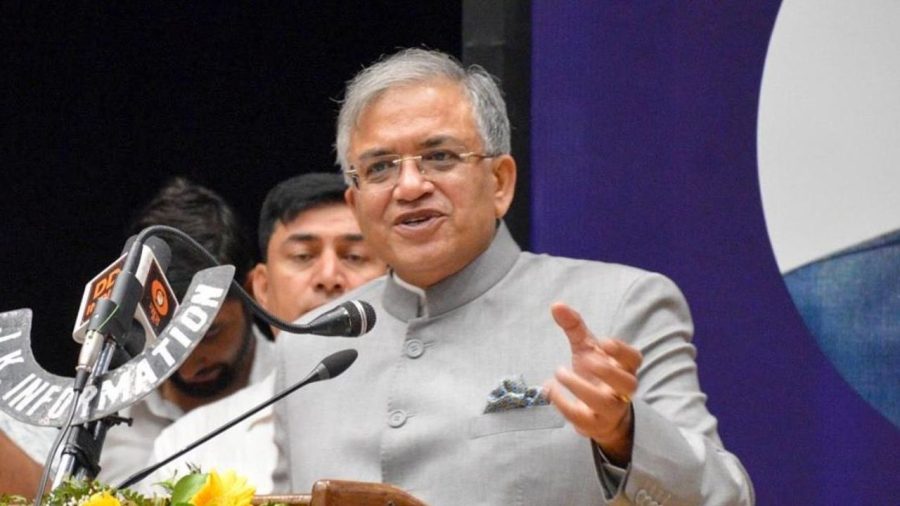



The Indian Supreme Court on Monday declined to grant an interim order seeking the suspension of Chief Election Commissioner (CEC) Gyanesh Kumar over allegations that he took unilateral decisions without the concurrence of his fellow election commissioners.
The top court, however, directed the Election Commission of India (ECI) to present official files regarding the challenged actions, including controversial modifications made to Form 6, reports India Today.
The directions came during the hearing of a petition filed by Patna resident Rakesh Kumar Singh, who challenged the governance of panel under CEC.

The petitioner claimed that key guidelines and software modifications were rolled out without the approval of the other two Election Commissioners, Sukhbir Singh Sandhu and Vivek Joshi.
The plea further called for CEC’s suspension, arguing that his conduct breached the statutory and constitutional framework.




A bench comprising Chief Justice of India (CJI) Surya Kant, Justice Joymala Bagchi, and Justice V Mohana noted that it intends to inspect whether the contested measures were enacted solely by Gyanesh Kumar or carried the unanimous or majority approval of the Commission.
“When the record is produced, we want to see who has modified the Form 6. If there is no consensus, the decision should be by a majority; otherwise, the decision could be set aside. You are basing your arguments solely on a newspaper report,” observed the CJI during the proceedings.
Appearing on behalf of the petitioner, senior advocate Vikas Singh submitted, “There is a press release from the Election Commission itself, and they have not refuted this report.”
In response, the CJI remarked, “The report might be accurate or inaccurate, but we cannot pass an order based on that. We must await their response.”
The bench refrained from setting a firm deadline for the ECI to submit its documentation, despite advocate Vikas pressing for a response within a week and warning that judicial intervention was urgently required, adding that otherwise “the country will burn”.
During the exchange, the CJI noted that should the court ultimately identify flaws in the appointment procedure, it retains the authority to cancel the election results. The senior lawyer maintained, however, that the judiciary has never previously cancelled or rejected an election, urging the court instead to issue directives ensuring all Commission decisions are taken unanimously.