
Despite the presidency being the highest office in the land, the history of Bangladesh’s heads of state is marked by profound instability. Out of the 16 individuals who have served as president, only four have managed to complete their full terms and oversee a smooth transfer of power.
Ten presidents were forced to resign, either voluntarily or under significant pressure, while two were assassinated in office and one died of natural causes. Notably, Sheikh Mujibur Rahman resigned once from the post, only to be assassinated during a subsequent term.
The most recent departure occurred on Friday, when the 22nd president, Mohammed Shahabuddin, resigned citing health reasons, following days of intense speculation regarding his exit.
This follows a legacy where only a few, such as Sheikh Mujibur Rahman and Abdul Hamid, served in the role twice. The nation has also seen several acting presidents, including Syed Nazrul Islam, Shahabuddin Ahmed, and Barrister Jamiruddin Sircar.
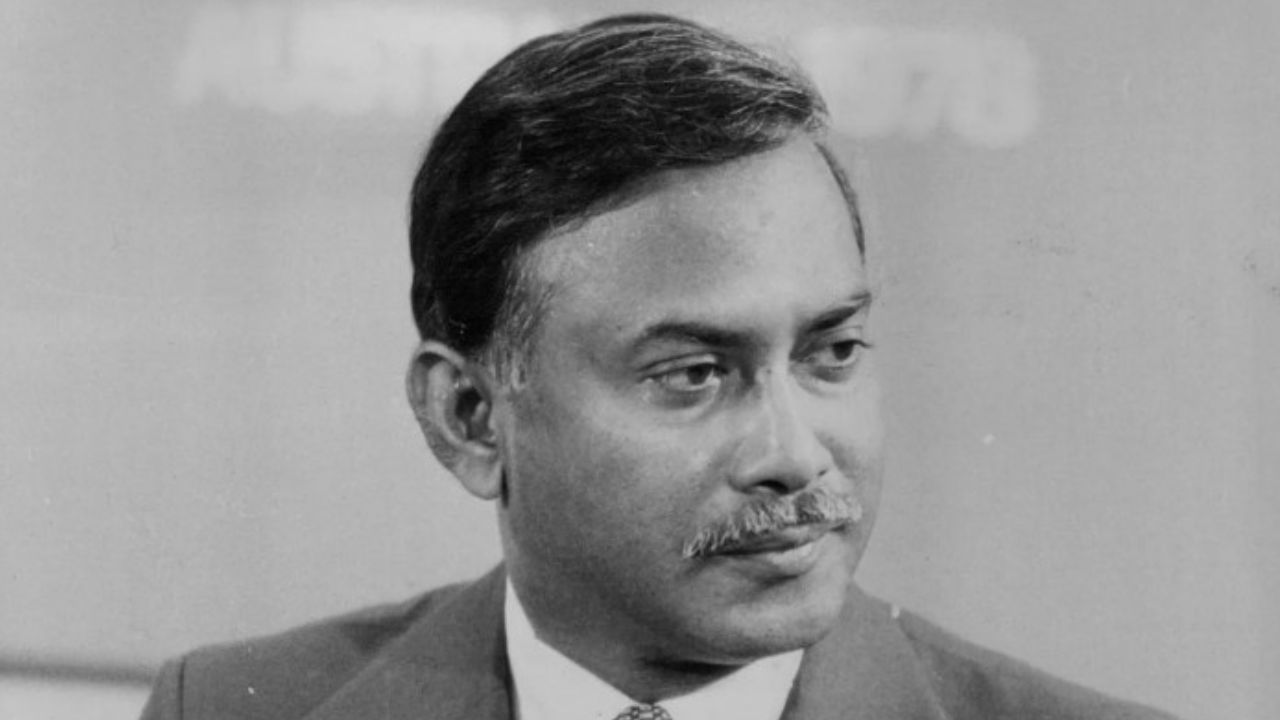
While Sheikh Mujibur Rahman and Ziaur Rahman were victims of assassination while in office, Zillur Rahman is the only president to have died of natural causes during his tenure.
The four individuals who successfully completed their full terms are Abdur Rahman Biswas, Shahabuddin Ahmed, Iajuddin Ahmed, and Abdul Hamid.
Conversely, the ten who resigned or were forced out include Sheikh Mujibur Rahman, Abu Sayeed Chowdhury, Mohammad Mohammadullah, Khandaker Mushtaq Ahmed, Abu Sadat Mohammad Sayem, Abdus Sattar, AFM Ahsanuddin Chowdhury, Hussain Muhammad Ershad, AQM Badruddoza Chowdhury, and Mohammed Shahabuddin.
In Bangladesh’s parliamentary system, although the president is the formal head of state, the executive power lies with the Prime Minister and the Cabinet. Consequently, a president’s fate is often tied to the support of the majority party in the National Parliament.
While the constitutional significance of the post has sometimes allowed presidents to finish their terms despite disagreements with the government, or even after a change in administration, the office remains vulnerable to political whims.
There are instances where presidents nominated by the ruling party were sent into voluntary retirement prematurely. During periods of presidential rule, heads of state have faced military pressure, coups, and mass uprisings, leading to resignations and even imprisonment.

Exits of Bangladesh’s presidents
Sheikh Mujibur Rahman
On 17 April 1971, while imprisoned in Pakistan, Sheikh Mujibur Rahman was declared the first President of Bangladesh in his absence, with Syed Nazrul Islam serving as acting president.
Following the nation’s independence on 16 December 1971, he returned home on 10 January 1972. Just two days later, on 12 January 1972, he resigned as president to take the oath as Prime Minister, aiming to strengthen parliamentary democracy.
Justice Abu Sayeed Chowdhury
Upon Mujib’s transition to the premiership on 12 January 1972, Chowdhury, former vice-chancellor of Dhaka University, was appointed president.
He resigned on 24 December 1973 and was subsequently appointed as a special envoy for foreign relations with the rank of a minister.
Mohammad Mohammadullah
Following Abu Sayeed Chowdhury’s resignation, the Speaker of the National Parliament, Mohammad Mohammadullah, first served as acting president on 24 December 1973.
He was formally elected as president on 27 January 1974. He resigned on 25 January 1975 following the introduction of a presidential system via the Fourth Amendment.


Sheikh Mujibur Rahman (second term)
In 1975, the Awami League government introduced the BAKSAL regime and a presidential system. Sheikh Mujibur Rahman once again assumed the presidency on 25 January 1975.
However, his second tenure ended tragically on 15 August 1975, when he and most of his family were assassinated by a group of military officers.
Khondaker Mostaq Ahmad
Following the assassination, the then commerce minister Khondaker Mostaq Ahmad took the oath as president on 15 August 1975. He was ousted on 5 November 1975 following a coup led by Major General Khaled Mosharraf.
Abu Sadat Mohammad Sayem
On 6 November 1975, Justice Abu Sadat Mohammad Sayem, the first Chief Justice of independent Bangladesh, was sworn in as president. He dissolved parliament, declared martial law, and appointed himself Chief Martial Law Administrator.
On 29 November 1976, he handed over the role of Chief Martial Law Administrator to the Army Chief, Major General Ziaur Rahman. Sayem eventually resigned on 21 April 1977, citing physical illness, though he later wrote in his autobiography that his resignation was at the behest of Ziaur Rahman.
Ziaur Rahman
Major General Ziaur Rahmanassumed the presidency on 21 April 1977. In 1978, he formed the Nationalist Democratic Party (JAGODAL) with Vice President Justice Abdus Sattar, and later won a controversial election to become president.
On 1 September 1978, he founded the Bangladesh Nationalist Party (BNP), which won 207 seats in the 1979 elections. His presidency ended on 30 May 1981, when he was assassinated during a military coup in Chattogram.
Abdus Sattar
After Ziaur Rahman’s death, Vice President Justice Abdus Sattar served as acting president and was later elected as the BNP candidate in a disputed election. However, on 24 March 1982, he was forced to resign by the then Army Chief, Major General Hussain Muhammad Ershad.
AFM Ahsanuddin Chowdhury
After ousting Sattar, Ershad declared himself Chief Martial Law Administrator and nominated retired Justice Ahsanuddin Chowdhury as president on 27 March 1982.
Under martial law, the president had no power to make decisions without Ershad’s approval, and he eventually resigned 20 months later according to Ershad’s wishes.
Hussain Muhammad Ershad
HM Ershad officially took the presidency on 11 December 1983. He held two controversial elections in 1986 and 1988. Following a mass uprising, he announced his resignation on 4 December 1990.
On 6 December, following an agreement between political parties, Vice President Moudud Ahmed resigned to allow the appointment of Chief Justice Shahabuddin Ahmed as vice president, who then became acting president after Ershad’s resignation.
Shahabuddin Ahmed
As Acting President, Shahabuddin Ahmed organised a participatory election in 1991, won by the BNP led by Khaleda Zia.
Following the 12th Amendment, which restored parliamentary democracy, he returned to his role as Chief Justice on 10 October 1991 and retired on 1 February 1995.
Abdur Rahman Biswas
On 8 October 1991, Abdur Rahman Biswas was elected president by the National Parliament. He had previously served in the cabinets of Ziaur Rahman and Abdus Sattar. Even after the Awami League came to power in June 1996, he remained in office and completed his full term on 8 October 1996.
Shahabuddin Ahmed (full term)
The Awami League government, led by Sheikh Hasina, then elected the retired Chief Justice Shahabuddin Ahmed as president. He served from 9 October 1996 to 14 November 2001.
Despite friction with the government over the ‘Public Safety Act’ in 2000, the Awami League did not obstruct his tenure, and he completed his full term.
AQM Badruddoza Chowdhury
After the BNP returned to power in 2001, Dr AQM Badruddoza became President on 14 November. However, he resigned just seven months later on 21 June 2002 due to government pressure.
Barrister Jamiruddin Sircar
Speaker Barrister Jamiruddin Sircar served as Acting President from 21 June 2002 until 6 September 2002.
Iajuddin Ahmed
Professor Dr Iajuddin Ahmed took office on 6 September 2002 as the BNP’s choice. In 2006, at the end of the BNP’s term, he also assumed the role of Chief Adviser of the caretaker government, a move opposed by the Awami League.
The military intervention of 1/11 in 2007 led to Fakhruddin Ahmed becoming Chief Adviser. Iajuddin Ahmed finally handed over the presidency on 11 January 2009, following the Awami League’s victory in the December 2008 elections.
Zillur Rahman
Zillur Rahman, former General Secretary of the Awami League, became President on 12 February 2009. He died in office on 20 March 2013 at the age of 84 due to old age.
Abdul Hamid
Following Zillur Rahman’s death, Speaker Md. Abdul Hamid served as Acting President before being elected on 24 April 2013 and re-elected in 2018. He became the longest-serving president in the nation’s history, completing a 10-year tenure on 24 April 2023.
Mohammed Shahabuddin
Mohammed Shahabuddin, a retired District and Sessions Judge, was sworn in on 24 April 2023. He remained in office after the fall of the Awami League government on 5 August 2024 and through the formation of the interim government.
Following national elections held on 12 February 2026 (without the Awami League) which saw the BNP form a government, he continued to serve until 24 July 2026.
After serving under three different administrations, he voluntarily resigned, and the Speaker of the National Parliament, Hafiz Uddin Ahmed, has since assumed the role of Acting President.