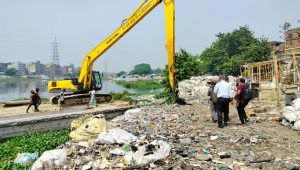
Chattogram’s most expensive anti-waterlogging project is set for another delay, with the Chattogram Development Authority (CDA) seeking to extend the deadline by a further year to June 2027, even as officials claim the work is more than 90% complete and residents continue to face flooding after routine rainfall.
The Tk 8,626 crore project, launched in 2017 to address chronic waterlogging by restoring the city’s canal network, was initially scheduled for completion within three years. It has since missed multiple deadlines – 2020, 2022, 2024 and 2026 – raising concerns over planning, coordination and effectiveness. If approved, the latest extension would stretch the timeline to nearly a decade.
The CDA says the project includes re-excavation of 36 canals, construction of retaining walls, installation of 56 pumps and more than 40 silt traps, as well as 85 kilometres of service roads. It is being implemented with support from the Bangladesh Army. Alongside this, the Chattogram City Corporation and the Bangladesh Water Development Board are carrying out separate waterlogging mitigation projects, bringing total spending on drainage-related initiatives in the city to around Tk 14,000 crore.
Despite the scale of investment, recent rainfall again exposed the city’s vulnerability. Low-lying areas including Panchlaish, Muradpur, Sholoshohor and Prabartak Circle were inundated within hours, disrupting traffic, businesses and daily life.

Project Director Ahmed Mainuddin said most of the work had been completed, with 34 canals already excavated. “Over 90% of the project is complete. We need one more year to finish the remaining sections, particularly Jamal Khan and Hijra canals,” he said.
However, work on key sections has been suspended after temporary dams used to block water flow for excavation were removed to ease drainage during the rainy season. With water flowing again, construction cannot resume until the dry months, effectively halting progress when flooding risks are highest.




Residents say the delays have eroded confidence. “We’ve heard about canal digging for 10 years. Still, my area floods within minutes,” said Karim Ullah, a businessman in Muradpur. Farzana Akter, a resident of Prabartak Circle, said different authorities continued to blame each other while the situation remained unchanged.
Even where canals have been re-excavated, waste dumping has emerged as a major obstacle. Chattogram produces an estimated 3,000 to 3,500 tonnes of waste daily, a significant portion of which ends up in drains and canals, clogging waterways and reducing flow capacity.
CDA Chief Engineer Ahmed Anwarul Nazrul said the canals would eventually be handed over to other authorities for maintenance but warned that continued dumping would undermine the system. “If waste disposal is not controlled, the infrastructure will not function properly,” he said.
Responsibility for drainage and waste management is split between agencies, with the city corporation overseeing drains and solid waste, while the CDA implements canal and infrastructure works. Critics say the lack of coordination has hampered progress.
Mayor of the Chattogram City Corporation Shahadat Hossain said cleaning the city’s extensive drain network was essential. “Without maintaining the drains, no canal project alone can solve waterlogging,” he said, adding that the project had been assigned to the wrong authority.
Officials say the latest extension is unavoidable due to the seasonal nature of canal work, which requires dry conditions. However, analysts argue that repeated monsoon disruptions point to flaws in project design and scheduling.
Nearly a decade after its launch, the project remains incomplete, with questions persisting over whether it can deliver its intended outcome. For residents, the gap between official claims and lived reality continues to widen, as each new deadline risks being overtaken by the next spell of rain.