


The apex court of the country has allowed the government to file a formal appeal against a ban on construction work at the protected archaeological site of Mahasthangarh in Bogura.
A four-member Appellate Division bench, headed by Chief Justice Zubair Rahman Chowdhury, on Sunday passed the order following an initial hearing on 21 July.
The move follows a petition filed in the names of six government bodies, all of which have denied any involvement. While two formally disowned the petition in letters to the solicitor’s office, the remaining four told TIMES of Bangladesh they had no role in filing it.
On 19 January 2012, the High Court issued an injunction directing the preservation of Mahasthangarh and prohibiting the erection of any permanent structures within a 7.5-kilometre radius of the site.
However, State Minister for Local Government Mir Shahe Alam subsequently sought to carry out development work at the location. Upon taking office, he wrote to the Ministry of Cultural Affairs requesting approval for the project. Although the ministry rejected the proposal, a grant of Tk74 lakh was later allocated for the work.
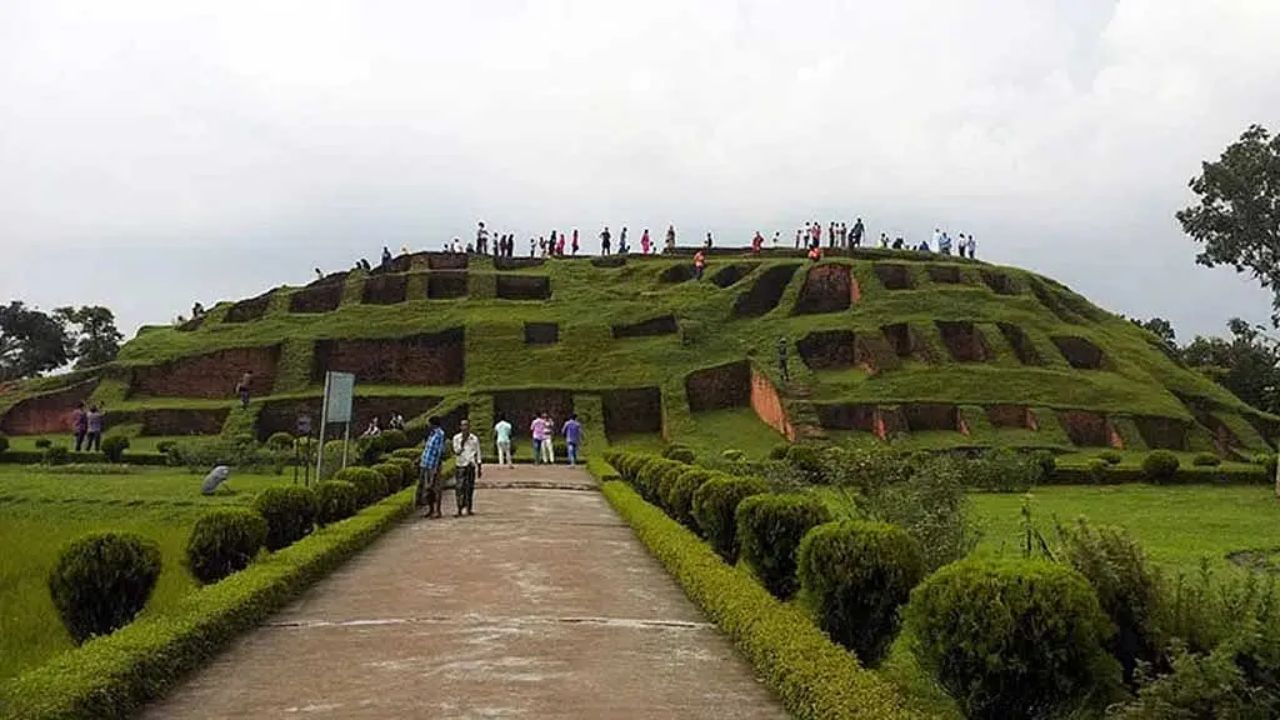
Razia Sultana, custodian of the Mahasthangarh Archaeological Museum, said the ancient citadel of Pundranagar, located within Mahasthangarh, houses a mosque and the shrine of Shah Sultan Balkhi Mahiswar. Construction of facilities for female worshippers had commenced near the shrine. On 15 June, excavation work began using bricks, sand, and cement to erect a permanent structure, with the state minister himself inaugurating the project.

Despite the restrictions, work proceeded until the regional office of the Department of Archaeology contacted the Bogura deputy commissioner on 17 June, requesting an immediate halt to construction and appropriate legal action. The deputy commissioner subsequently suspended the project.
Disputed leave to appeal
On 2 July, a petition for leave to appeal challenging the High Court’s 2012 order was filed with the Appellate Division. The application was submitted under the names of six government figures and bodies including cultural affairs secretary, home affairs secretary, Bogura deputy commissioner, Bogura superintendent of police, Shibganj Police Station officer-in-charge, and the custodian of the Mahasthangarh Archaeological Museum
However, when contacted by TIMES of Bangladesh, all six named parties denied submitting the appeal.
Following a media report on the discrepancy, both the Ministry of Cultural Affairs and the Department of Archaeology dispatched letters to the Supreme Court’s Solicitor Wing, formally disavowing any involvement in the application.




The secretary of the Ministry of Cultural Affairs, listed as the primary petitioner, said in a letter, “The secretary has no involvement in this matter and did not file this petition for leave to appeal.”
Museum custodian Razia Sultana similarly informed her superiors in writing that she had no connection to the petition, a statement the Department of Archaeology subsequently forwarded to the Solicitor Wing.
The Solicitor Wing, a key government body under the Law and Justice Division of the Ministry of Law, Justice and Parliamentary Affairs, is responsible for supervising and conducting government litigation nationwide.
Normally, such representations are channelled through the Solicitor Wing to the Attorney General’s Office. In this instance, Deputy Attorney General Aneek R Haque and later Attorney General Md Ruhul Quddus Kazal appeared on behalf of the state.
Addressing the situation, the Attorney General’s Office said that legal matters concerning the 2010 writ petition (No 9592), which relates to the construction of a mosque and toilet facilities at the site, were being handled directly by the Attorney General’s Office rather than through the Solicitor Wing.
Irregularities and political influence
Allegations of illegal excavation and construction at Mahasthangarh first surfaced in December 2010. Lawyers Manzill Murshid, Asaduzzaman Siddiqui, and Sarwar Ahad Chowdhury, acting on behalf of the human rights organisation Human Rights and Peace for Bangladesh (HRPB), filed a public interest litigation petition.
Following hearings, the High Court imposed strict restrictions on 19 January 2012 against the construction, expansion, excavation, demolition, or destruction of protected antiquities at Mahasthangarh and its surrounding areas.
Following the submission of the recent leave to appeal, lawyer Manzill Murshid appeared in court to challenge the petition. He told TIMES, “We submitted to the court that none of the listed petitioners was aware of the application. The difficulty, however, is that the Attorney General stated no one had contacted him.”
Describing several aspects of the proceedings as “opaque”, Murshid added, “I cannot comprehend what has occurred behind the scenes. The letters from the Ministry of Cultural Affairs and the Department of Archaeology ought to have passed from the Solicitor Wing to the Attorney General. Yet, regardless of what I raise, the Attorney General’s Office has offered no response. I do not know whether the Solicitor’s Office ever forwarded those documents.”
He further said, “From what I have gathered through discussions, an influential State Minister has a personal interest in this matter, which is perhaps why no one dares to speak out openly.”
Court orders status quo
Murshid explained that after hearing the attorney general’s submissions, the court initially considered staying the 2012 protection order. He firmly opposed the move, arguing, ”If a stay is granted, the construction will be completed. At that point, any subsequent appeal will be rendered academic, as the damage will already be done.”
The court ultimately directed the government to maintain the status quo, ensuring the site remains in its present state.
Murshid also reminded the court that Mahasthangarh was added to Unesco’s tentative World Heritage List on 17 May 2023. He warned that any compromise to its archaeological integrity could jeopardize its chances of securing full World Heritage status in the future.
“I told the court, ‘My Lord, if the judgment is stayed, the work will be completed, destroying any possibility of inclusion on Unesco’s final list.’ The court then said they will issue an order for the status quo to be maintained.’”