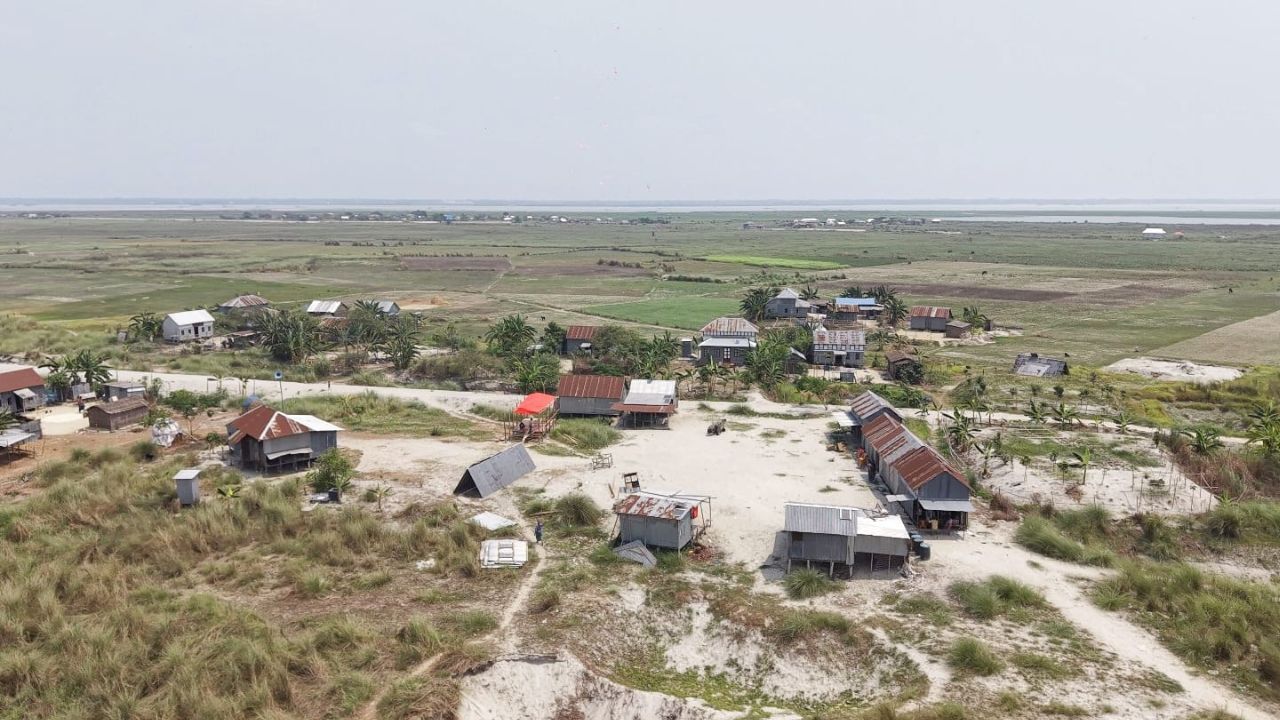

Thousands of people living in remote char areas of Madaripur’s Shibchar Upazila have been facing severe hardship due to a lack of basic healthcare facilities, with many forced to cross the mighty Padma River even for emergency treatment.
Two remote chars under Charjanajat Union have no hospital, community clinic or permanent doctor for nearly 2,000 residents who have been living there for the past four years.
When pregnant women go into labour, families have no option but to carry them across the vast river to reach Shibchar Upazila Health Complex or nearby hospitals, often risking their lives and facing immense suffering.
The same difficulties apply to elderly people, children and other patients who need urgent medical attention.
A recent visit to the area found that boat services are the only means of communication for residents of the chars. Most people depend on fishing and agriculture for their livelihoods, but geographical isolation, poor transport links and a lack of healthcare services have made their lives increasingly vulnerable.
There are no government or private healthcare facilities in the area, and residents do not receive regular supplies of medicines. As a result, many people rely on traditional healers or untrained practitioners even for common illnesses.
For critical patients, travelling to Shibchar Upazila Health Complex remains the only option.

The chars emerged after river erosion and land formation over several years. The Charjanajat area lost around 70 per cent of its land between 2013 and 2017 before new land reappeared in the Padma River in 2021. People began settling there again from 2022, and the population has now grown to around 2,000.
It takes nearly two hours to cross the Padma River from the chars. During bad weather, strong currents and a shortage of boats often make patient transportation impossible.
The situation becomes even more critical at night, when carrying seriously ill patients across the river is extremely difficult. Residents said there is no boat ambulance service for emergencies.
Pregnant women, children and elderly people are among the worst affected. Due to the absence of antenatal care, safe delivery facilities and newborn treatment, many pregnant women are forced to give birth at home, putting both mothers and babies at risk.
Residents also reported rising cases of malnutrition, diarrhoea and fever among children.



Char resident Zulekha Begum said healthcare remains a major challenge for people living there.
“There is no doctor, health centre or community clinic here. When I experienced labour pain last month at night, I could not find a boat. I had to cross the river at dawn and go to a hospital in Pachchar. If something had happened during the night, I might not have survived,” she said.
“We want the government to establish a community clinic here as soon as possible.”
An elderly resident, Jabbar Molla, said he had been suffering from breathing problems for a long time but had no way to receive quick medical attention during emergencies.
“If my condition suddenly worsens, crossing the river takes too much time and my health deteriorates further. A hospital on the char would reduce our suffering,” he said.


Expressing frustration, he said many people had promised to build hospitals and roads in the area, but none of those commitments had been fulfilled.
“We have only heard promises, but have received nothing in reality. It feels like no one notices our suffering,” he added.
Taslima Salma Bibi, a mother of two, said daily life in the char was extremely difficult, particularly for healthcare, education and shopping.
“When my son suffers from fever or diarrhoea, I become very worried. There is no doctor here and medicine is not easily available. We have to depend on local healers,” she said.
Another resident, Nasir Uddin Bepari, said people in the char were being deprived of their basic right to healthcare.
“We need a modern community clinic with doctors and proper facilities where pregnant women and people of all ages can receive treatment,” he said.
Union Parishad member Motaleb Bepari said residents had no access to government healthcare services.
“The government has not established even a single clinic here. When someone becomes seriously ill, we cannot take them to hospital on time. We are constantly living with the fear of losing lives,” he said.
He urged authorities to establish a community clinic, ensure adequate medicine supplies and introduce a boat ambulance service for emergency transportation.
Matiur Rahman, deputy director of Madaripur District Family Planning Office, said healthcare services in remote char areas were being disrupted due to shortages of sub-health centres and manpower.
“However, a sub-assistant community medical officer provides services twice a week, and there is an initiative to start monthly medical services in the newly formed chars,” he said.
He added that training would be provided to pregnant women on safe motherhood practices.
“A permanent community clinic requires 30 per cent land ownership. If land can be arranged through the Upazila Nirbahi Officer-led committee, necessary steps can be taken,” he said.