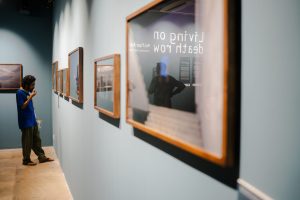
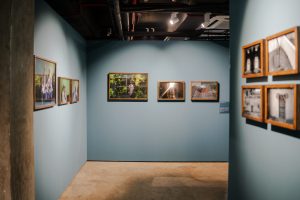
At Drik Gallery in Panthapath, visitors are greeted not with spectacle but with the heavy, lingering silence that settles after a story becomes too painful to tell.
Photographer Mosfiqur Rahman Johan’s solo exhibition, ‘Living on Death Row’, curated by Tanzim Wahab, offers a haunting meditation on life, loss and the fragile space between crime and consequence.
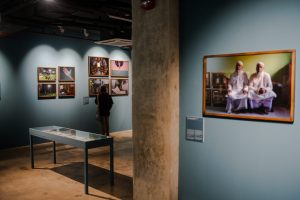
Supported by the European Union, French Embassy, Drik and The Death Penalty Project, Living on Death Row is being hosted at Drik Gallery in DrikPath Bhaban, Panthapath. The exhibition opened on October 10 and will continue till October 19, everyday from 3:00 pm to 8:00 pm.
The exhibition bears witness to the lives of individuals once condemned to die: men and women who survived the irreversible machinery of capital punishment. Through Johan’s lens, these faces, once faceless in the eyes of the law, reclaim their humanity.

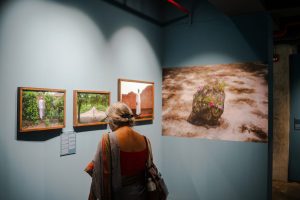
Johan describes the exhibition as a confrontation with society’s collective conscience. “This project seeks to portray the lives of those who were once sentenced to death and later returned to society from the brink of oblivion.”
Adding, he said, “I have long been interested in photographing death row convicts. According to studies by The Death Penalty Project, most in Bangladesh come from low-income backgrounds, have little education and no prior criminal record. I wanted to explore and document the lives of those who spent decades in confinement before their innocence was proven.”




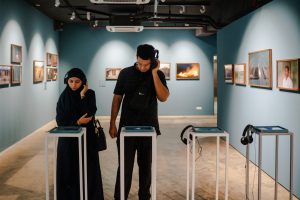
The images are accompanied by narratives drawn from interviews with exonerees and their families, revealing the quiet devastation that lingers even after release: the social alienation, the psychological toll and the enduring mark of a system that rarely forgives.
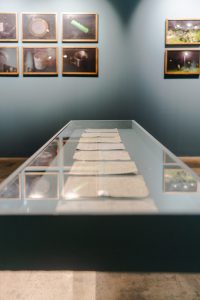
A captioned account by Ismail Hossain, one of the exonerees photographed who endured approximately 14 years of long-term solitary confinement, recalls how for 16 long years, he had not seen stars in the sky.
Ismail’s caption also challenged the legal system. “If we seek compensation, it will seem like we’re turning against the state. The judges might think. ‘We gave them justice, and now he’s suing us again.’ It’s not really against them, but in a way, it goes against the state.”
“With this exhibition I attempted to document how they rejoined their families, faced social stigma and learned to exist again. After nearly two decades in a condemned cell, the world they returned to was unrecognizable,” Johan said.

In one striking series, Johan juxtaposes the hollow corridors of prison cells with the fragile domestic spaces to which some of these individuals returned, homes that could never quite feel like home again.
The contrast between freedom and captivity blurs; the viewer is left to question what justice truly means.
“This exhibition is, at its heart, a psychological study of their return, survival, alienation and the struggle to come to terms with a brand new world,” Johan concluded.