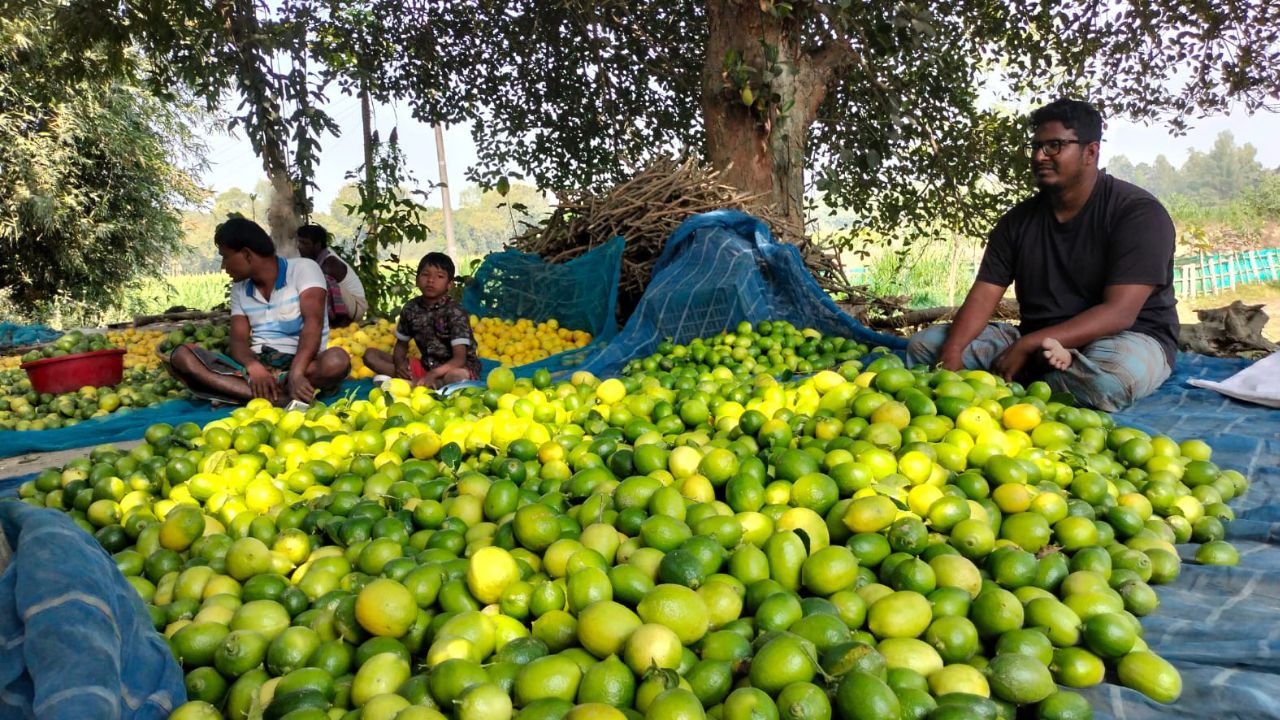



Lemon prices have surged sharply in Gior Upazila of Manikganj at the start of Ramadan, with retail rates jumping three to four times above wholesale levels even in areas locally known as “lemon villages”.
Farmers say middlemen and dishonest trading groups are depriving them of fair prices, while consumers are paying several times more in retail markets.
A visit to local markets found lemons selling at Tk70 to Tk100 per hali, depending on size and quality, compared with Tk20 to Tk25 a week earlier.
In wholesale markets, the same quantity is being sold at Tk40 to Tk60.
After changing hands several times, prices rise three to four times before reaching retail stalls.
Baliakhora and Sodhgatha villages in Gior, widely known as lemon villages, have around 60 orchards of varying sizes.

More than a thousand people are directly involved in lemon production and marketing there.
Colombo, Elachi and Kagzi varieties are the most widely cultivated.
Orchard owners allege that ahead of Ramadan, trader groups purchase orchards in advance, leaving growers without a fair share of profits even when market prices climb.
“Production is slightly lower this season. Fertiliser, pesticides and maintenance costs have also increased,” said Baliakhora orchard owner Azizur Rahman.



“Although demand rises in Ramadan and prices go up, we do not benefit at field level. Lemons are bought cheaply and later sold at several times the price after passing through different hands,” he said.
Farmer Pritul Mia, whose family has been cultivating lemons for nearly 30 years, said they manage about 20 bighas of orchards.
“We expect some profit during Ramadan. But with higher production costs, even that does not last. Even if market prices rise, we are only trying to recover costs and keep the orchards running,” he said.
Retail traders argue that this is not the peak season and that they are buying at higher rates from wholesalers.
They say transport and other expenses leave them little choice but to sell at increased prices, denying any deliberate price manipulation.
Consumers, however, allege that some traders create instability in essential commodity markets during Ramadan.
As lemons are an essential item for iftar, they believe demand is being exploited to push up prices.
They have called for stricter market monitoring and regular oversight by the administration.
According to the district agriculture department, lemons have been cultivated on 326 hectares of land in the district this year.
Gior, Saturia and Singair upazilas account for the largest share of production.
After meeting local demand, lemons are supplied to major markets in Dhaka.
Residents say it is disappointing that prices have soared most sharply in the very areas where production is highest.
Gior Upazila Nirbahi Officer Nashita Tul Islam said there has been a tendency of price increases in several perishable items in local markets.
“Market monitoring has been intensified. If there is evidence of artificial shortages or price control through syndicates, strict action will be taken,” she said.
Locals fear that the early spike in lemon prices at the beginning of Ramadan could influence the broader market for daily essentials, and expect visible and effective measures to keep prices stable throughout the month.