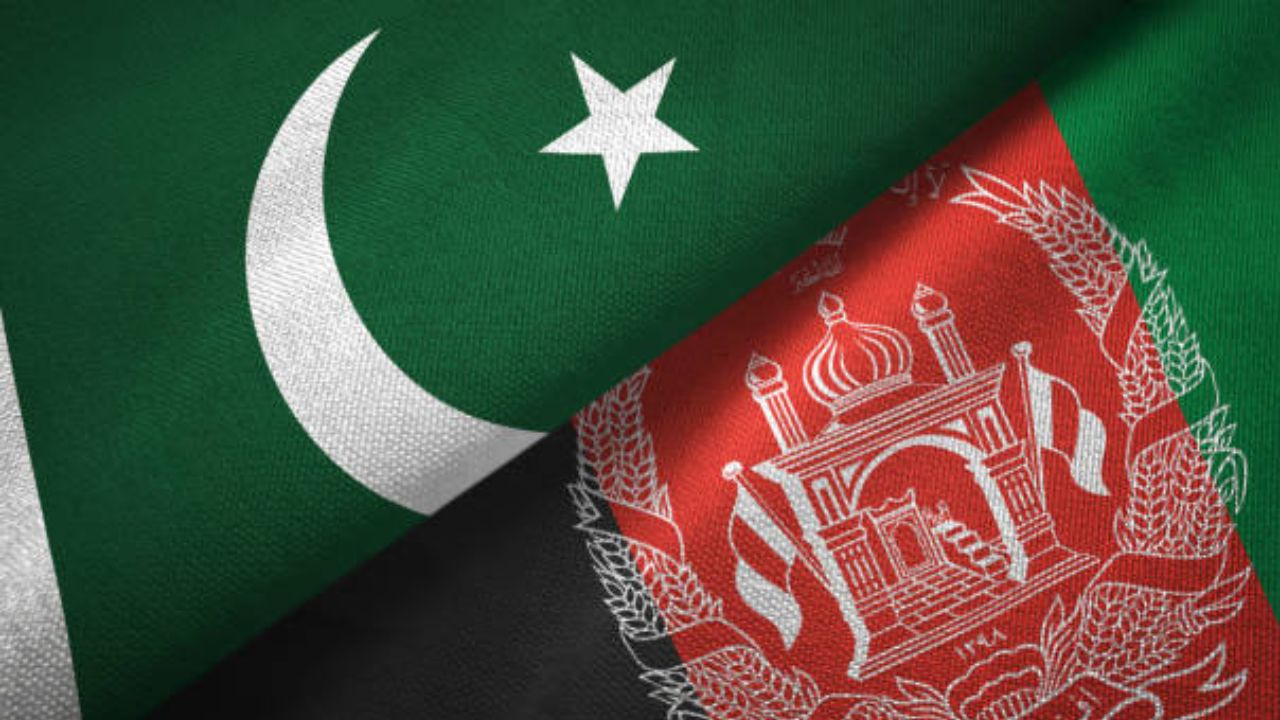



Pakistan and Afghanistan remain locked in what Pakistani officials describe as “open war”, after days of escalating airstrikes, artillery exchanges and cross-border assaults that have left scores dead and fuelled fears of a wider regional crisis.
Overnight and into early Saturday, Pakistan’s military launched fresh strikes deep inside Afghan territory, targeting what it described as military installations. The attacks followed an earlier declaration by Pakistan’s Defence Minister, Khawaja Mohammad Asif, who said Islamabad’s patience had “run out” after what he described as a broad Afghan cross-border assault, international media reports.
“Our patience has now run out. Now it is open war between us,” he said on Friday.
The human cost of the fighting remains deeply contested. Pakistani officials say more than 300 Afghan forces have been killed since hostilities flared on Thursday night. Information Minister Attaullah Tarar claimed that 331 Afghan personnel had died and more than 500 had been wounded, adding that Pakistani forces had destroyed dozens of military posts, tanks and armoured vehicles across multiple locations.
Afghanistan’s Taliban-led government rejects those figures outright. Deputy spokesman Hamdullah Fitrat described the claims as “untrue”, accusing Pakistan instead of targeting civilian areas in Paktika, Khost, Kunar, Nangarhar and Kandahar provinces, as well as refugee camps near Torkham. Afghan officials say at least 52 people have been killed, most of them women and children, and dozens more injured.
Earlier, Taliban spokesman Zabiullah Mujahid said 13 Afghan forces had been killed and 22 wounded, while asserting that 55 Pakistani soldiers had died in retaliatory strikes. Pakistan has acknowledged 12 soldiers killed, 27 wounded and one missing.

The United Nations said major Afghan cities were reportedly bombed on Friday, warning of a dangerous new escalation and heightened risks to civilians already living under severe humanitarian strain.
The latest round of violence began after Pakistani airstrikes last weekend inside Afghanistan. Islamabad said it was targeting hideouts of the Tehreek-e-Taliban Pakistan (TTP), an outlawed militant group responsible for numerous attacks inside Pakistan. The TTP is distinct from, but ideologically aligned with, Afghanistan’s Taliban rulers.
Kabul insists that only civilians were killed in those strikes and denies harbouring militants who attack Pakistan. Islamabad, by contrast, has repeatedly accused Afghanistan of providing sanctuary to the TTP.
Pakistan’s army spokesman, Lt Gen Ahmed Sharif Chaudhry, framed the dispute starkly, saying Afghanistan must choose between supporting the TTP or maintaining relations with Pakistan.


After Afghan forces launched retaliatory attacks across several Pakistani districts on Thursday, Pakistan responded with widespread aerial strikes in the early hours of Friday. Among the targets were Kabul and Kandahar — the latter the Taliban’s historic southern stronghold — marking the first Pakistani airstrikes on that power base since the Taliban returned to power in 2021.
Afghanistan’s defence ministry said on Saturday that it had struck Pakistani military bases in Miranshah and Spin Wam overnight, claiming to have destroyed installations and inflicted heavy casualties. Pakistani officials have not immediately responded to those specific claims.
Tit-for-tat drone and artillery attacks have continued along the volatile frontier, including reports of a drone strike near Bannu in Pakistan’s northwest that injured worshippers at a mosque.
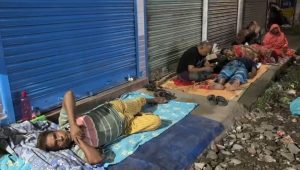
The renewed fighting has displaced hundreds of civilians living near the Torkham border crossing, according to Pakistani authorities. In recent days, Pakistan has also deported dozens of Afghan refugees to the same crossing, compounding tensions.
Many families are now stranded between two fronts. Some Afghan refugees near Torkham say they are unable to return home because of the bombardment, while struggling to secure food and basic supplies during the fasting month of Ramadan.
Afghan provincial officials accuse Pakistan of destroying homes and civilian infrastructure in eastern regions. Islamabad maintains it is targeting only military facilities.
International concern is mounting. The European Union’s foreign policy chief, Kaja Kallas, has urged both sides to lower tensions and return to dialogue, warning that instability could spill across the wider region. UN Secretary-General Antonio Guterres, along with officials from Iran, Jordan, the United Arab Emirates and Russia, has called for de-escalation.
Qatar has again stepped in diplomatically. Its minister of state, Mohammed bin Abdulaziz Al-Khulaifi, spoke with the foreign ministers of both countries in an effort to calm tensions.
A Qatari-mediated ceasefire last October temporarily halted intense border fighting, but subsequent peace talks in Turkey failed to produce a durable settlement. Although sporadic exchanges continued, the truce largely held until last week’s airstrikes.
This time, however, prospects for talks appear slim. Afghanistan’s Taliban authorities say they are open to negotiations. Pakistan has taken a harder line.
“There won’t be any talks. There’s no dialogue. There’s no negotiation. Terrorism from Afghanistan has to end,” said Mosharraf Zaidi, a spokesman for Pakistan’s prime minister on foreign media.
The confrontation pits a nuclear-armed state with superior conventional military power against a battle-hardened insurgent movement that spent two decades fighting US-led forces before regaining control of Afghanistan.
Pakistan has seen a sharp rise in militant violence in recent years, including suicide bombings and coordinated assaults on security forces. Officials attribute many of these attacks to the TTP and argue that cross-border operations are necessary for national defence.
Kabul denies allowing Afghan soil to be used for attacks on any country and portrays Pakistan’s strikes as violations of sovereignty and attacks on civilians.
With artillery fire and air raids continuing for a third consecutive day, and diplomatic channels strained, the conflict now stands at its most serious point in months. Regional powers are pressing for restraint, but on the ground both sides appear entrenched — and the risks of further escalation remain high.