Israeli Prime Minister Benjamin Netanyahu claimed there are “more and more signs” that Iran’s Supreme Leader, Ayatollah Ali Khamenei, has been “eliminated” following major joint military strikes by Israel and the United States on Saturday.
Netanyahu and the heads of Israel’s security establishment were reportedly presented with a photo of Khamenei’s body as proof of his death, according to the Israeli outlet N12.
The Israeli public broadcaster Kan further reported that the supreme leader’s body has been located.
Iran however has yet to confirm the killing.
Iran’s President Masoud Pezeshkian and Supreme Leader Ayatollah Ali Khamenei are “safe and sound,” Iranian foreign ministry spokesperson Esmail Baghaei told ABC News on Saturday. Iran’s government “system is working,” Baghaei said.

Iranian media reports Khamenei ‘alive and well’
Iran’s semi-official Tasnim and Mehr news agencies have reported that Supreme Leader Ayatollah Ali Khamenei remains “steadfast and firm in commanding the field,” dismissing claims that he was killed in recent US-Israeli air strikes.
The reports directly contradict assertions from Reuters and Israeli media outlets that suggested Khamenei had been eliminated in the joint military operation.
Strike on Tehran compound
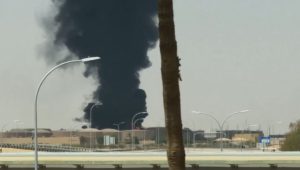
The joint operation targeted a compound in Tehran housing the 86-year-old religious leader, with satellite imagery showing clouds of smoke rising above the site.

While a senior Israeli official confirmed the killing to Reuters, there has been no immediate confirmation from Tehran regarding Khamenei’s fate.
US President Donald Trump remarked that the strikes were intended to neutralise a security threat to the United States. Both Trump and Netanyahu have urged the Iranian population to use this moment to overthrow the regime.
Regional retaliation
In response to the attack on the compound, Tehran launched missiles at Israel and targeted US bases in Gulf countries.
However, the US military reported that the Iranian counterattacks caused “minimal damage” to its installations and resulted in no American casualties. Germany, France, and the United Kingdom have condemned the Iranian retaliatory strikes.
A legacy of absolute rule Khamenei assumed the role of Iran’s highest authority in 1989, succeeding the Islamic Republic’s founder, Ayatollah Ruhollah Khomeini. For over three decades, he exercised ultimate control over the nation’s military, political, and religious institutions.
Israel has long identified Khamenei as a destabilising force due to his support for militant allies, including Hamas and Hezbollah.
During a 12-day air war in June 2025, Israeli Defence Minister Israel Katz issued a direct threat against Khamenei, stating the Supreme Leader “cannot continue to exist.”
Succession and crisis
The reported killing deals a massive blow to a nation already struggling with economic hardship and the remnants of the 2025 conflict, which saw Israel strike Iran’s underground nuclear sites and eliminate much of its military leadership.
Khamenei’s tenure was marked by the systematic suppression of domestic protests and the sidelining of reformists who sought to improve relations with the West.
Under his rule, Iran’s regional influence has recently faltered; allies Hamas and Hezbollah have suffered heavy losses since 7 October 2023, and Syrian President Bashar al-Assad was toppled in December 2024.
According to the Iranian constitution, the formal selection of a successor now rests with the Assembly of Experts, an 88-member clerical body. This body is vetted by a hardline watchdog that remains closely aligned with the conservative vision Khamenei upheld throughout his rule.