






As the call to Maghrib prayer approaches and families prepare to break their fast, Dhaka’s kitchen tables tell a quieter, more anxious story this Ramadan. In markets across the capital, from Karwan Bazar to local bazaars, the cost of essential commodities has climbed sharply, stretching household budgets at a time meant for reflection and restraint.
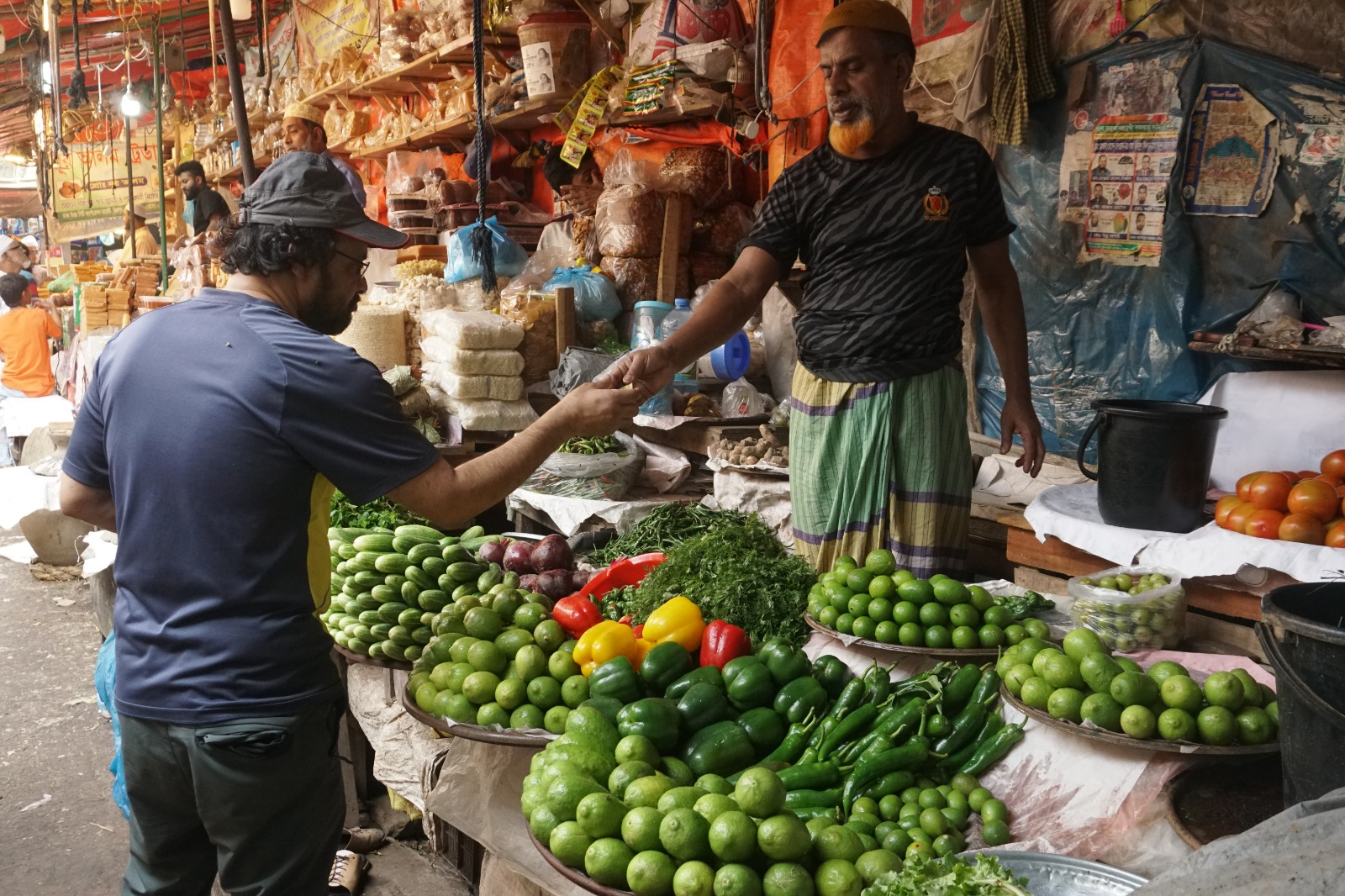
Broiler chicken is now selling at Tk200-220 per kilogram, while Sonali chicken ranges between Tk320 and Tk340. Beef has reached Tk820-850 per kilogram, and mutton stands even higher at Tk1,050-1,100. Fish, a staple in many homes, offers little relief: rohu is priced at Tk300-350, katla at Tk320-350, while pangas and tilapia hover between Tk180 and Tk220 per kilogram.

Even the simplest ingredients for iftar have become costlier. Lemons were selling at Tk25-30 each, or Tk100-120 for four pieces, nearly triple their price from just weeks ago. Green chillies have jumped by Tk30-40 per kilogram, now retailing at Tk180-200. Aubergines and bottle gourds are selling at Tk80-100 per kilogram, while new onions cost Tk50-60. Rice, the cornerstone of every meal, has also edged upward.

Traders attribute the surge to heightened seasonal demand during Ramadan, when consumption patterns shift, and families buy more generously. But consumer rights advocates argue that supply alone does not justify the spike. They allege that market syndicates exploit increased demand to inflate prices, knowing that daily necessities cannot be postponed.

The political backdrop adds another layer of scrutiny. The Bangladesh Nationalist Party (BNP), which returned to power after a two-decade absence, faces its first significant governance challenge.
Information Minister Zahir Uddin Swapan has outlined a 180-day action plan focused on controlling commodity prices, maintaining law and order, and ensuring uninterrupted electricity during Ramadan. Prime Minister Tarique Rahman has directed officials to stabilise food costs.
Despite a reported 4.1 per cent rise in imports of lentils, chickpeas, onions, ginger, dates and sugar in late 2025, market relief remains elusive.
For many households, Ramadan this year is a careful balancing act, preserving tradition while trimming portions, substituting ingredients, and recalculating expenses. As bazaars remain crowded but tense, the coming weeks will test not only the government’s resolve but also the resilience of ordinary citizens determined to observe the holy month with dignity.


