Bangladesh Foreign Minister Md Khalilur Rahman has been elected president of the 81st session of the United Nations General Assembly (UNGA), securing 99 votes in a closely contested election against Cyprus’ Andreas S Kakouris, who received 91 votes.
Rahman will preside over the 81st session of the General Assembly, which begins in September, serving a one-year term as the chief facilitator of the UN’s most representative body.
His election marks a significant diplomatic achievement for Bangladesh and enhances the country’s standing within the UN system. Rahman becomes only the second Bangladeshi to hold the prestigious position, nearly four decades after former foreign minister and parliament speaker Humayun Rasheed Choudhury was elected president of the 41st UNGA session in 1986.
Following the election, UN Secretary-General António Guterres congratulated President-elect Khalilur Rahman and pledged his support. “You can count on my full support,” Guterres said.
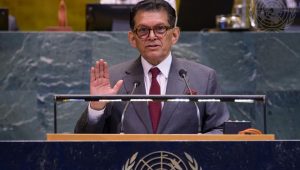
In his acceptance speech, Rahman expressed gratitude to UN member states for their confidence in him.
“I would like to express my deep appreciation to the member states of the United Nations for the trust and confidence they have placed in me,” he said. “I accept the responsibility of president of the General Assembly with humility and a profound sense of duty.”
He also thanked the prime minister for nominating him and backing Bangladesh’s campaign.

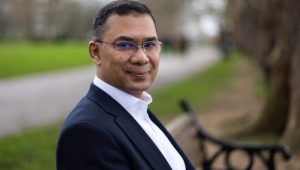
“I would like to thank my Prime Minister Tarique Rahman for nominating me for this important position and for his unwavering support throughout the campaign,” he said. “I am also deeply grateful to my team and to the many friends and partners around the world whose dedication and hard work contributed to this successful outcome.”
Highlighting the challenges facing the international community, Rahman said multilateralism was under growing strain.
“Multilateralism is under pressure and the United Nations continues to face significant financial stress. These challenges risk undermining public trust and confidence in the ability of the UN system to deliver on its promises,” he said.
Referring to the priorities he outlined during his interactive dialogue with member states, Rahman pledged to work collectively to address those challenges.
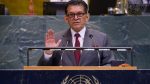



“As I emphasised during the interactive dialogue, I look forward to working closely with all member states to confront these challenges and strengthen the effectiveness, credibility and relevance of the United Nations,” he said.
The victory is being viewed by diplomats and foreign policy observers as a major boost to Bangladesh’s international image at a time of growing geopolitical uncertainty.
Former foreign secretary Md Shahidul Haque welcomed the outcome, saying the election would strengthen both Bangladesh’s global profile and Rahman’s personal standing.
“In today’s complex geopolitical environment, Khalilur Rahman will have the opportunity to strengthen UNGA,” he said.
Former ambassador and Bangladesh’s permanent representative to the United Nations, Muhammad Abdul Muhith, described the result as a “major diplomatic success” that would further enhance the country’s reputation on the global stage.
Long pursuit of the UNGA presidency
Bangladesh first announced its intention to seek the presidency of the General Assembly in 2020.
The interim administration later nominated former foreign adviser Md Touhid Hossain as the country’s candidate. Palestine initially entered the race but later withdrew, leaving Bangladesh as the sole Asian contender.
Diplomatic sources said the interim government did not actively campaign for Hossain’s candidacy, resulting in limited diplomatic outreach and engagement.
Following the formation of the BNP-led government earlier this year, Prime Minister Tarique Rahman appointed Khalilur Rahman as foreign minister and subsequently nominated him as Bangladesh’s candidate for the UN post.
Since then, Rahman has undertaken an extensive international campaign, supported by the government, to rally backing from UN member states ahead of the election.
Full-time commitment
Khalilur Rahman has said he would take a one-year leave of absence from the government if elected President of the General Assembly.
Speaking during an informal interactive dialogue at the United Nations on 13 May, he responded to a question from Andorra’s representative about whether he would resign from his ministerial position.
“Will I resign? No,” he said. “My prime minister has made it very clear that I will be released for one year to take up the position as a full-time responsibility. Resignation is not the only option. I can go on leave.”
His remarks were intended to assure member states that he would be able to dedicate his full attention to the responsibilities of the General Assembly presidency.
From career diplomat to global leadership
Before joining the current government, Khalilur Rahman served in the interim administration led by Muhammad Yunus, initially as High Representative on Rohingya Affairs and later as National Security Adviser.
Following the BNP’s election victory, he joined the cabinet as a technocrat minister and assumed the foreign affairs portfolio.
A distinguished career diplomat, Rahman topped Bangladesh’s first regular civil service examination and joined the foreign service in 1979. He later built an international career within the United Nations system, serving in senior positions in New York and Geneva under the United Nations Conference on Trade and Development (UNCTAD).
He holds a master’s degree in economics from the University of Dhaka, a graduate degree from the Fletcher School of Law and Diplomacy, and a PhD in economics from Harvard Kennedy School. He is also a founding member of East West University.
His election to one of the UN’s most prominent leadership positions is expected to provide Bangladesh with a stronger platform to advance its diplomatic priorities and contribute to multilateral dialogue on global challenges.