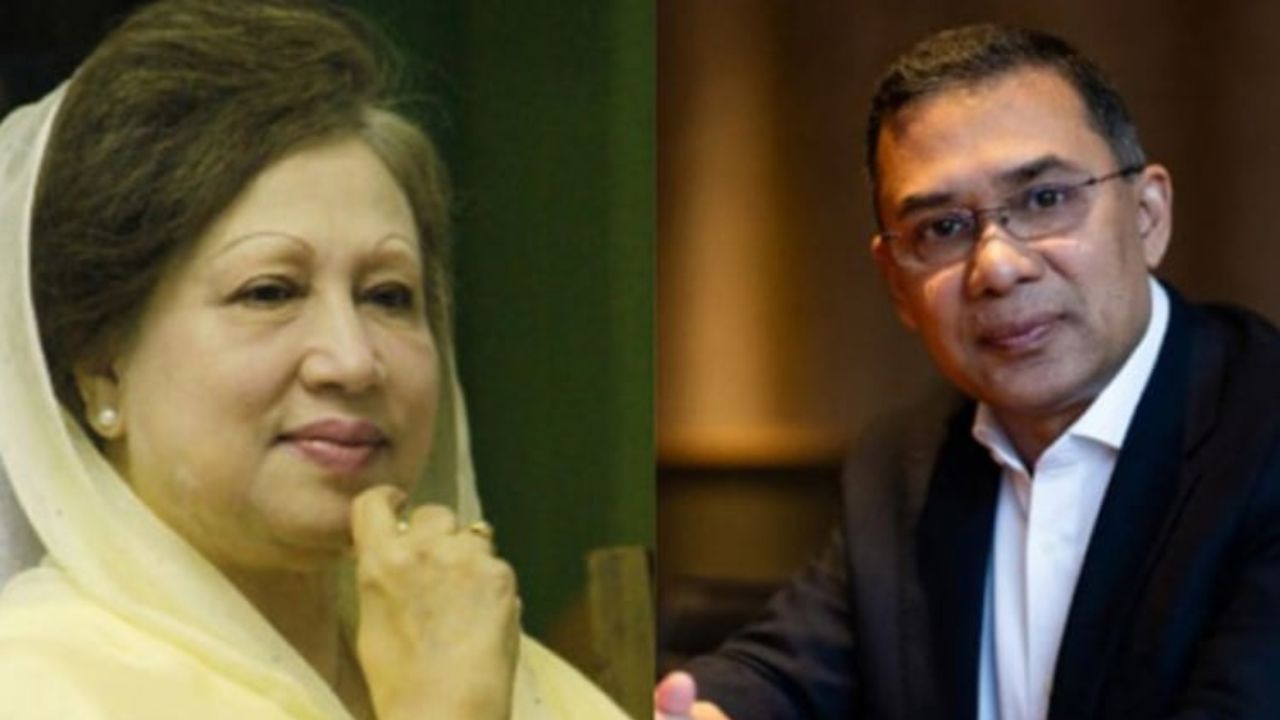



BNP has yet to decide who will be prime minister if the party wins the upcoming national election, expected in early February — now only three months away.
Although the party’s acting chairman Tarique Rahman is frequently presented on the campaign trail as the future prime minister, senior leaders remain non-committal about when such a transition would take place.
According to a section of senior BNP leaders, Chairperson Khaleda Zia should initially assume office if the party forms government. They believe she could serve as prime minister for a period before handing over responsibility to Tarique.
However, they also acknowledge that any such decision would depend heavily on Khaleda Zia’s health condition after the election.
Another faction argues that Tarique Rahman should take charge from day one, saying this would enable him to establish control across all branches of the state from the outset and ensure smoother governance for BNP. Under this arrangement, Khaleda Zia would remain the party chairperson.

BNP Secretary General Mirza Fakhrul Islam Alamgir has also refrained from giving a definitive answer. Asked by TIMES of Bangladesh who would be prime minister if BNP forms the next government, he said, “Let the election take place first.”
For the upcoming election, Khaleda Zia is expected to contest three constituencies, while Tarique Rahman will contest one.
According to BNP insiders, a significant section of the party’s senior leadership favours Khaleda Zia taking office first if BNP forms the next government.


They argue that she has a long-standing understanding of the state’s power structure, and those institutions are also well acquainted with her leadership. For this reason, they believe the initial phase of governance would run far more smoothly if she assumes the premiership immediately after the election.
On the other hand, some state institutions reportedly remain uneasy about accepting Tarique as prime minister from the outset. Leaders in this camp argue that an initial tenure under Khaleda Zia would help ease those concerns and stabilise the political environment.
Once that transition phase is complete, they say, she could then hand over responsibility to Tarique Rahman, enabling him to take over the premiership with broader acceptance and a stronger sense of continuity.
According to party insiders, a separate group of relatively younger BNP leaders wants Tarique Rahman to become prime minister from the very first day if the party comes to power.
These younger leaders point out that most political parties, during discussions on constitutional reforms, have proposed that the head of the ruling party and the prime minister should not be the same individual. The July Charter also incorporates this proposal.
In that context, they argue, Tarique could assume the premiership more easily while Khaleda Zia continues as the party chief.
They further note that the July Charter proposes a two-term or ten-year limit on the office of prime minister. In principle, Khaleda Zia has already exceeded that threshold.
However, the July Charter’s proposal does not count previous terms served. If approved in parliament, the provision would apply prospectively, taking effect only for future governments.
Other BNP sources, however, claim the underlying motive is not ideological but rooted in internal power dynamics. Senior leaders, they say, prefer Khaleda Zia as the initial prime minister largely to preserve their own influence and relevance within the party.
Conversely, the younger leadership is keen to assert its position over the senior hierarchy and therefore wants Tarique Rahman to take charge as prime minister from day one.
Within BNP’s inner circle, it is widely believed that Tarique Rahman feels more at ease working with the younger generation of leaders than with the party’s older guard, according to the sources.