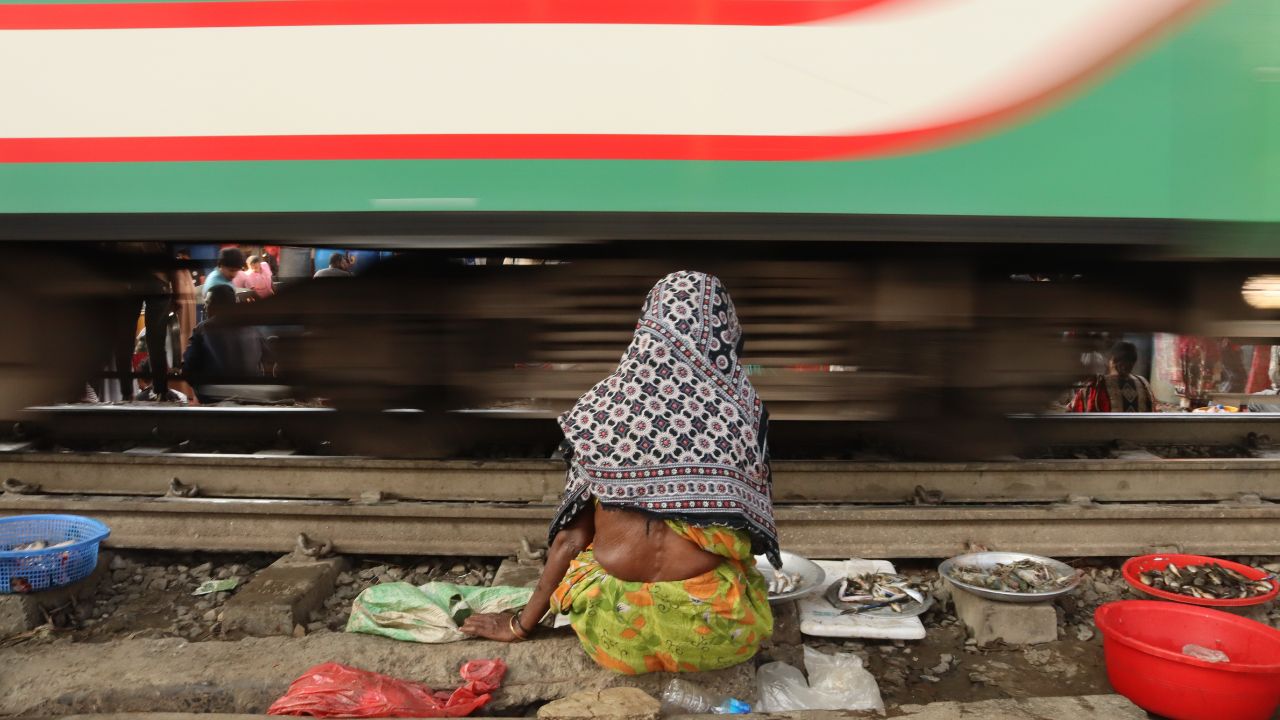
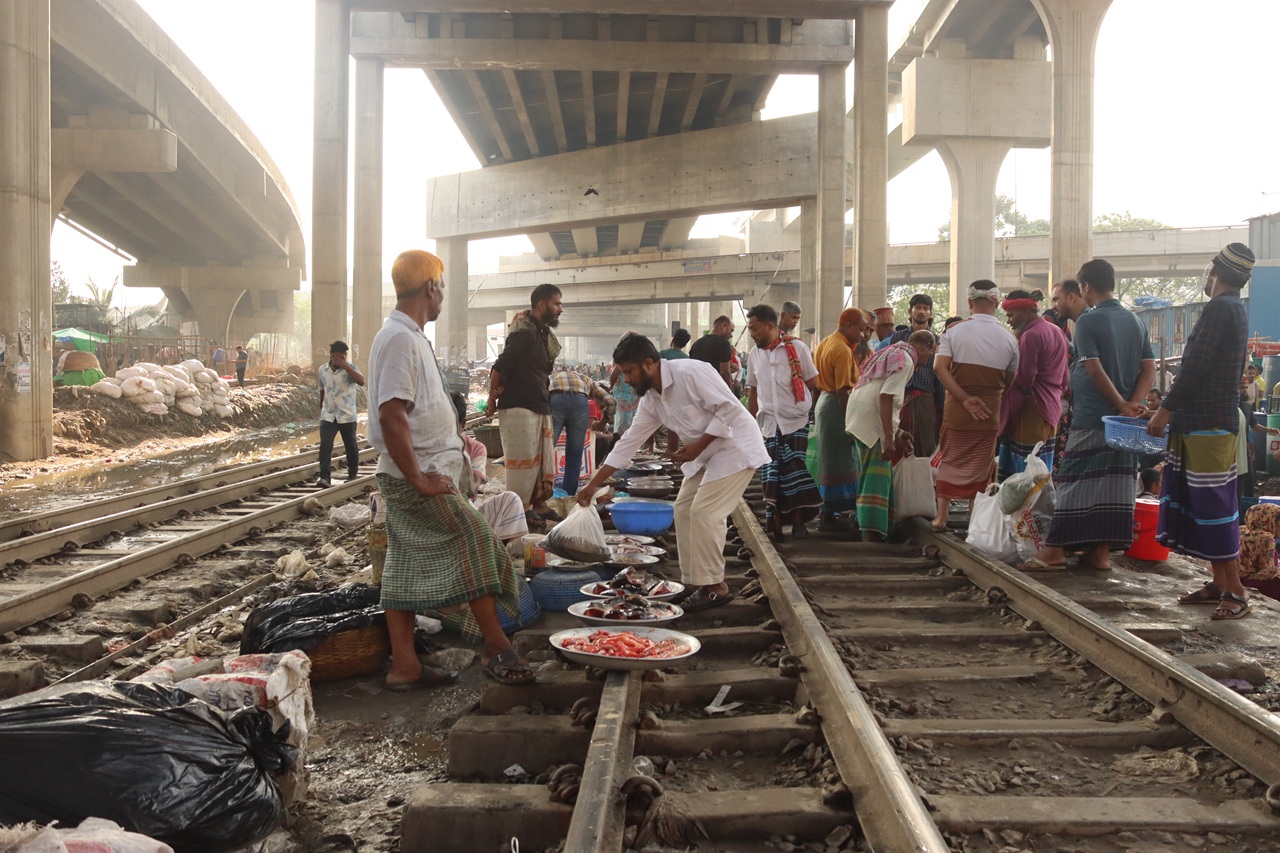
In Karwan Bazar, a daily fish market operates on active railway tracks, where commerce continues in open defiance of safety regulations.
Occupying both sides of the line, the market draws hundreds of buyers each morning. Traders lay out fish directly on the tracks as customers crowd into the narrow space. Trains departing from Kamalapur pass through every five to ten minutes, cutting across the market with little separation between steel and human activity.
The dangers of this arrangement are well documented. On 11 September 2014, four people were killed in a collision at the site, Abdul Malek (55), Nur Mohammad (40), Monowara Begum (51), and an unidentified woman.

Several others were seriously injured, including Sayer Hossain (40), Fazlu Khan (45), Rakib Khan (16), Salma Begum (45), and Parul Akter (40). Despite the fatalities, no lasting measures appear to have been enforced to prevent a recurrence. Accidents, by local accounts, continue to take place.



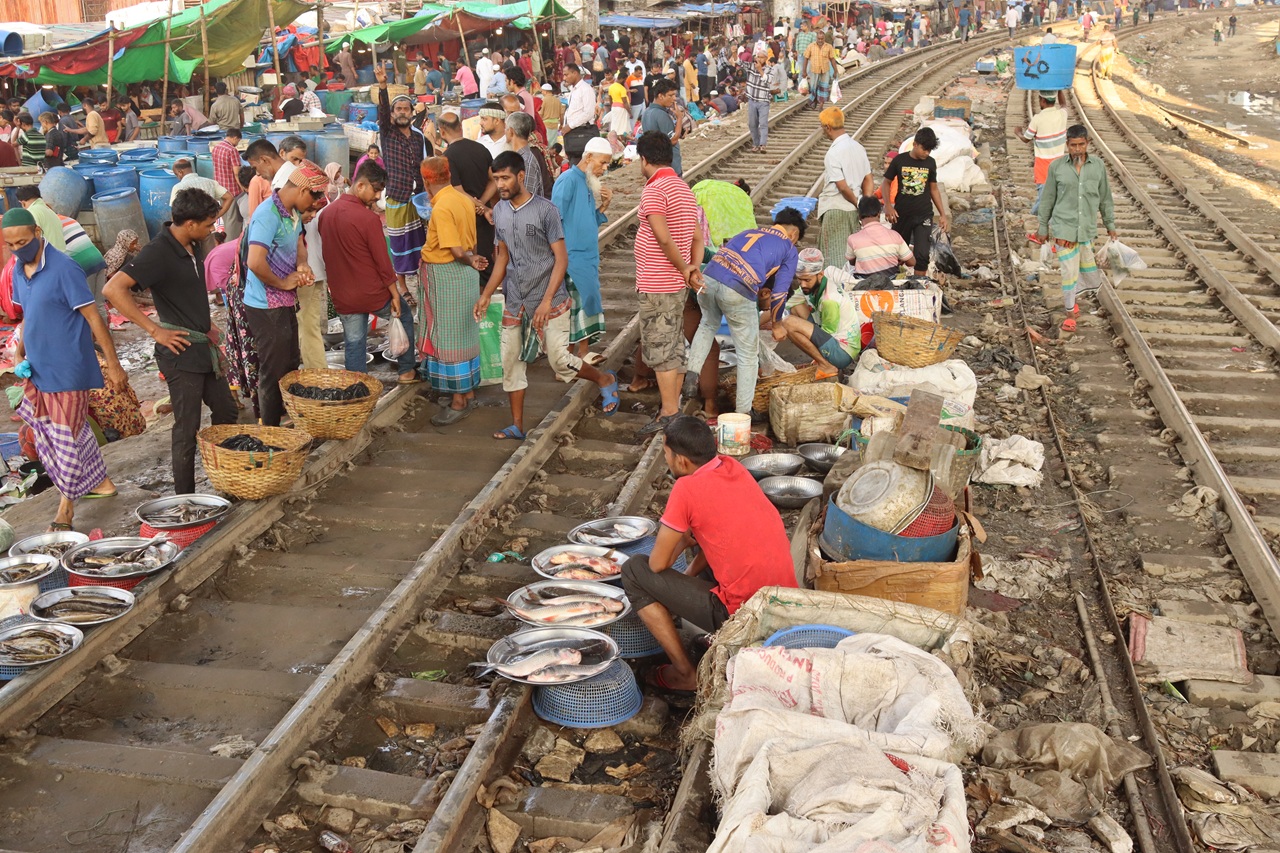
The Bangladesh Railway Act (1890) clearly prohibits the establishment of any shop within 10 feet of railway tracks, with both sides officially designated as high-risk zones. Yet enforcement remains visibly absent. A full-fledged market continues to operate in this restricted area, raising questions about oversight and accountability.
People of all ages depend on this market for their livelihood. From young boys to elderly men and women, workers navigate the tracks throughout the day. Buyers from various professions, often accompanied by children, move through the same hazardous space.
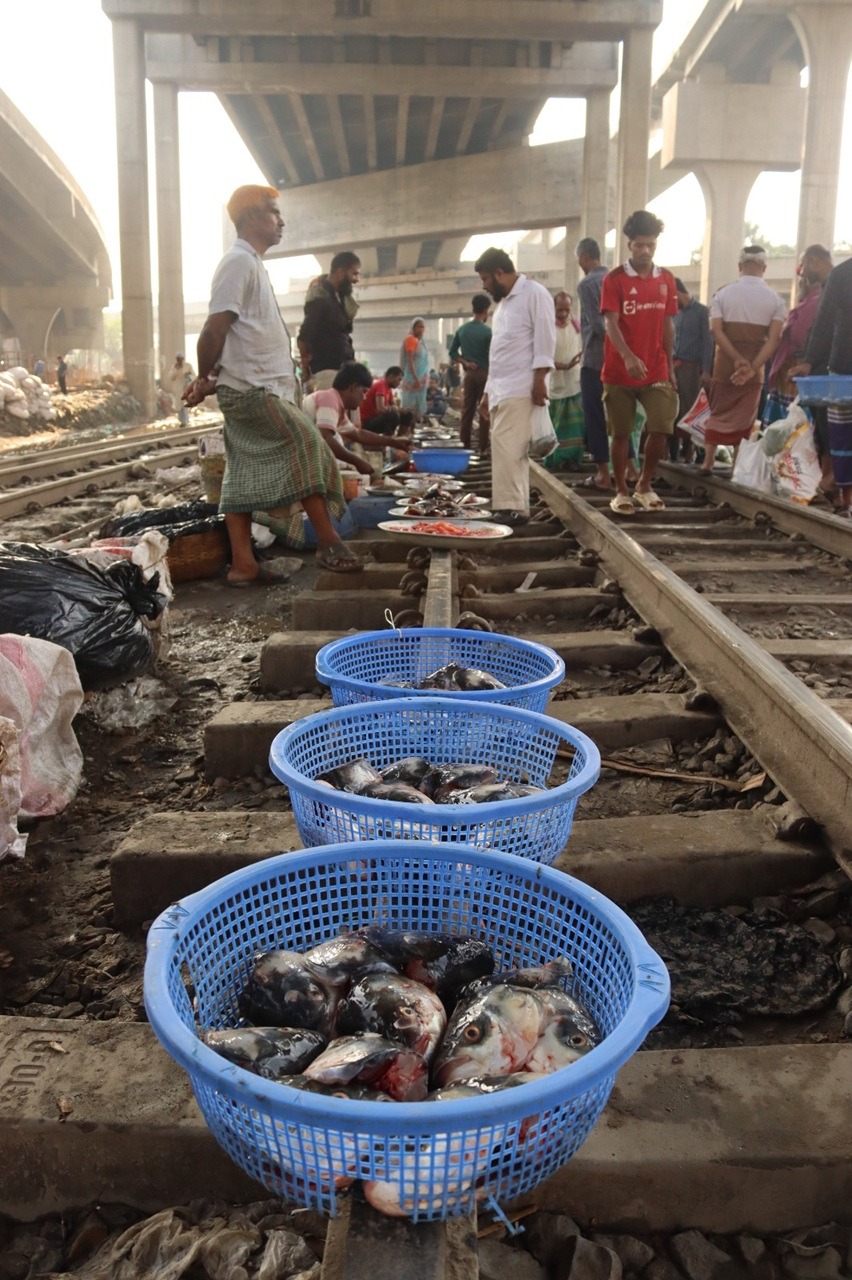
Each time a train approaches, the sound of its horn triggers a frantic rush. Traders and customers scramble to clear the tracks, making way for passing carriages, only to return moments later and resume business as usual. The cycle repeats itself throughout the morning.
What persists is not simply a market, but a system where risk is normalised, regulation is ignored, and safety remains uncertain.