Z.A.M. Khairuzzaman
In modern world, the issue is inseparably connected with economic development and industrialisation. Business and human rights clearly maintain multifarious relationship with each of them. A business organisation can directly influence an individual’s human rights both positively and negatively through its activities or its business relationship. Business organisations create an opportunity of livelihood for people. On the other hand, some business organisations show apathy towards labour rights thereby violating human rights.
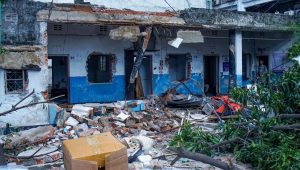
Studies show that most of the world’s multinational business organisations are in some ways involved in violating human rights in their supply chains. Failure to ensure workers’ safe working atmosphere, depriving them of their just wage, compelling them to work beyond working hours, employing child labour, forceful labour and racial discrimination et cetera are considered as gross violation of human rights. Instances of violation of human rights are greater in number in garment and mineral industries as well as in technological and agricultural sectors. As for example, in 2013, ‘Rana Plaza’ building collapsed due to insecure workplace resulting in death of 1,134 workers and injuries to thousands of others.

This incident made it clear that some business organisations put the lives of workers at risk by earning profits only. Despite initiatives taken later to ensure safe workplace in face of international pressure and local demonstrations, workers’ human rights are still being violated in many spheres. Workers’ basic rights have been clearly mentioned in the international human rights charter. As for example, basic human rights, in the form of workers’ right to organise, protection from forceful and child labour, freedom from all kinds of discrimination and torture as well as safe workplace, are being violated by business organisations due to their abject neglect or intentionally.
Not only in export-oriented RMG industry, the issue of protection of human rights is applicable to all major and minor business entities. It is essential to ensure a moral business infrastructure so that human rights and environment can be protected.




Beyond labour right, business organisations also violate environmental human rights. Water pollution occurs as industrial organisations release liquid waste and toxic chemicals contaminating rivers and canals vitiating the source of local people’s drinking water creating a public health crisis.
Against this backdrop, Human Rights Due Diligence-HRDD has appeared as an important tool for protection of labour rights as well as human rights. HRDD can be practiced depending on four pillars. These are as follows:
- Identification of risks regularly.
- Risk mitigation, unifying preventive and remedial procedure.
- Observation and evaluation.
- Preparing reports and effective communication system/accountability.
However, for successful implementation of the procedure, an active role of media and especially of the journalists is essential. Journalists are mirror of society and work as a via media for attracting the policymakers’ attention. They should have a sound knowledge on Human Rights Due Diligence so that they can play an effective role in protecting the labour rights.
Journalists create awareness in society through their investigation, analysis and publicity and ensure accountability on different issues. On the question of labour rights, the role of journalists is much more important as on many times the voices of marginalised working people do not reach the ears of policy makers and socially influential people. They are journalists who bring their voices to the forefront.
If the media people learn about Human Rights Due Diligence, they can identify any incident concerning violation of human rights. As for example, if firing of workers or compelling workers to work beyond working hours become a regular affair in a factory, journalists can highlight the wrongdoings of the factory owners in their articles or reports. Media activists can create accountability. When they prepare informative articles without any bias towards anyone, pressure is created on the relevant companies and policymakers. As a result, they are compelled to adopt human rights-friendly policy.
On many occasions, the international buying agencies change the supply organisations. Through HRDD related journalism, workers also become conscious enough about their rights and how they can realise their rights. Moreover, being aware about the issue, common people and consumers can create pressure on the companies. Journalists not only highlight the problems only. They also show a way out to solve the problems. For instance, journalist can create explanatory stories where they can explain about the types of changes which can ensure safe workplaces. Finally, newspersons create global connection. On many times, the articles or reports published at national level draw the attention of international media, NGOs and human rights organisations. As a consequence, the articles or reports create international pressure assisting in protection of labour rights.