In a city that constantly urges you to move faster, finding a place that invites you to pause feels almost radical. Amid Banani’s concrete buildings exists such a space – quiet, open, and gently alive. There is no guarded doorway, no pressure to step inside.
Sleeping dogs keep watch as people settle into cane stools and low wooden chairs, letting conversations unfold at their own pace. Music drifts freely through the air, carrying the soft chime of anklets or the tender twang of a guitar.
This is Jatra, where journey slows and mind exhales. Beneath its roof, everyday objects mingle with little luxuries for the soul. Wooden furniture crafted for mindful living sits alongside corners bursting with clothing, bags, jewelry, and artwork. Handicrafts quietly transform spaces; jute-based items and seed-made jewelry celebrate local materials. Sustainability is not a label here – it has woven into every corner, every choice.
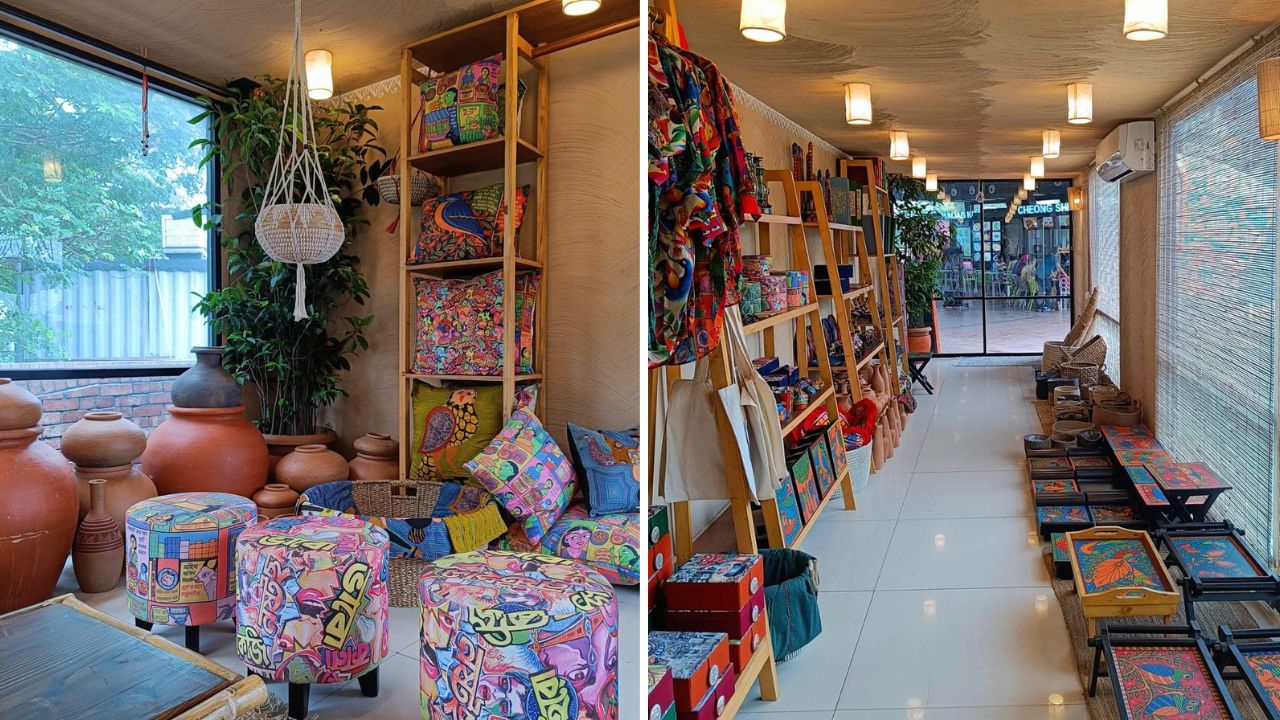

Jatra is divided into two realms. One houses the artisans, quietly shaping and selling their creations. The other, Jatra Mela, gives small brands an affordable platform to share their craft. Customers can even take fabric home and have it tailored, designing something entirely their own.
And then there is a eatery named Jatra Biroti. At first glance, it might seem like any courtyard. Alpana patterns spread across the floor. Tables and benches are scattered under the open sky. There is no bustling staff, no glaring menu.
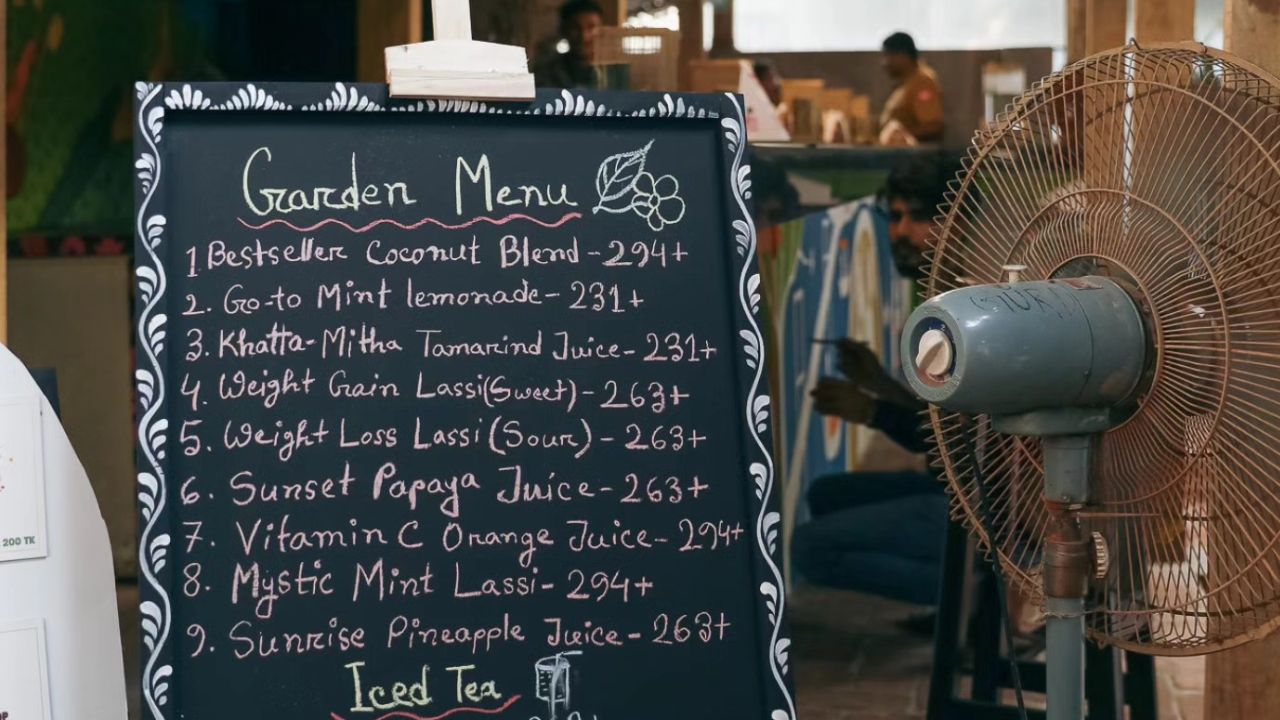


Someone naps on a wooden platform. Others sink into conversations that have no hurry to end. A chalk-written menu rests on a board near the open kitchen. Water filters hum quietly in the corner. Everything moves at its own pace here.
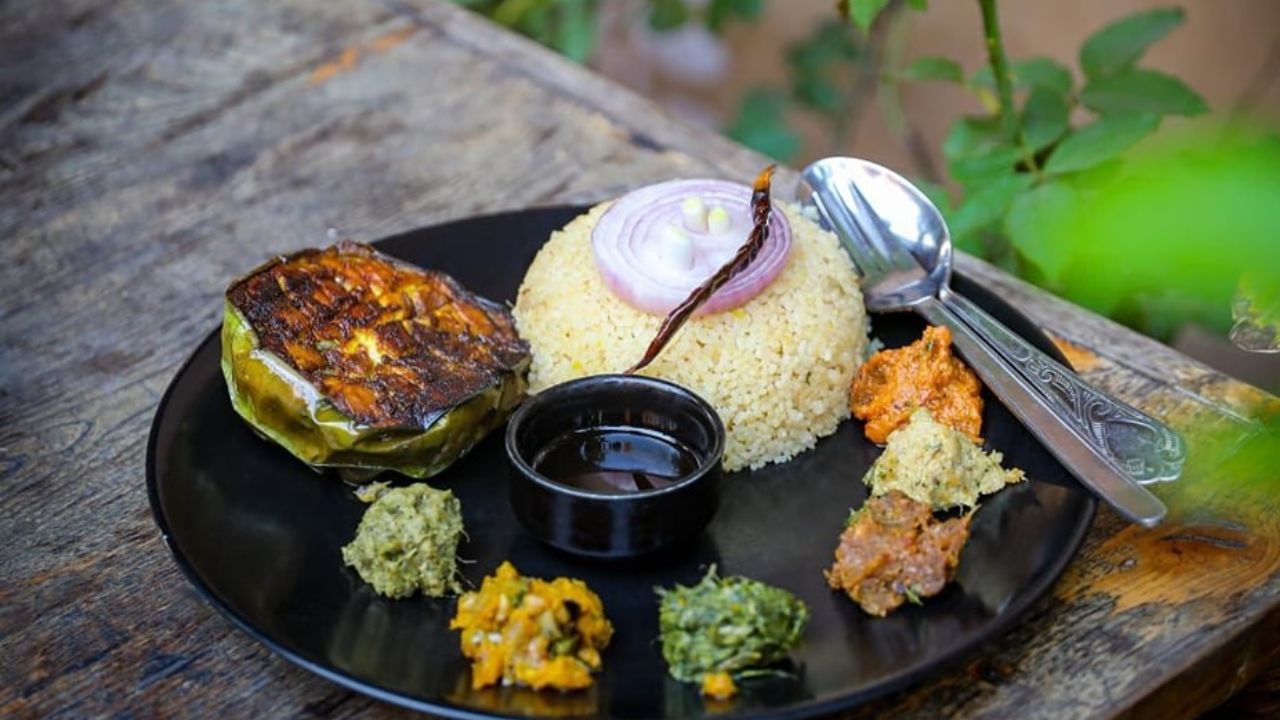
Evening turns the space into something magical. Hariken lamps glow softly, steam rises from clay cups of tea, chilled drinks wait in glass jars, and baskets of fuchka arrive with neatly folded gamchas. Vegetarian food, carefully prepared, nourishes both body and mind.
Jatra is alive with rhythm. During festivals, it changes colors and moods. Sometimes, it opens its gallery for concerts and private events. Drop by on an evening, you might catch an open mic session – poetry whispered, dance unfolding, songs carrying unspoken emotions.
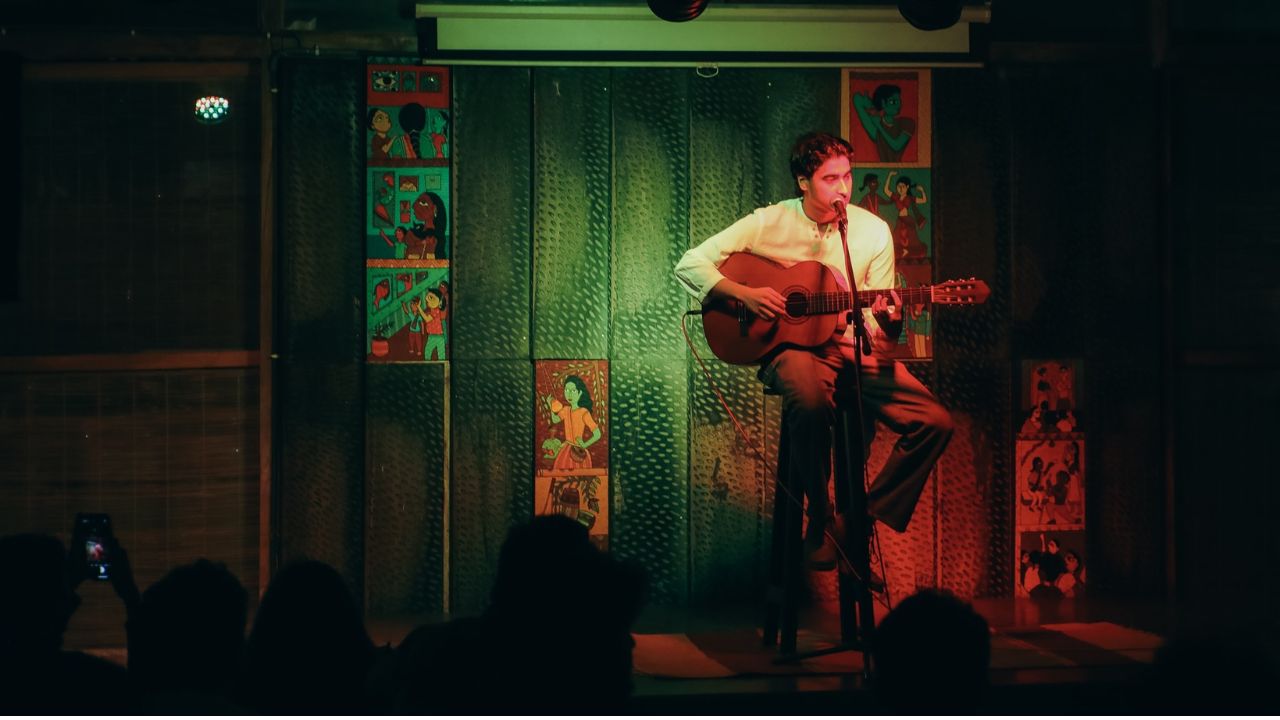
Classes in meditation, music, or dance invite those willing to linger even longer. Weddings and gaye holud ceremonies happen here too, all suffused with light-hearted joy.
Mrinmoyee Das, Jatra’s manager, calls it a cocoon of positive energy. “We believe positivity grows when it is shared,” she said. “Our food, our fashion – everything reflects our slogan ‘Nomro hok pothchola’ (Let the journey be humble). We are all different, yet we come together through this shared belief.”
And it is true. At Jatra, joy returns to work itself. Conversations, music, togetherness – they dissolve the city’s harsh edges into something softer, more human. When you leave, the calm lingers in your chest, and your mind exhales.
In Dhaka’s artificial rush, Jatra feels like a breath of fresh air. No advertising is needed, it has woven itself so naturally into people’s lives. So, step inside someday. Laugh, explore, share stories and leave with your hands, and your heart, full.