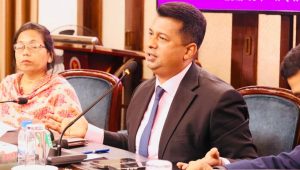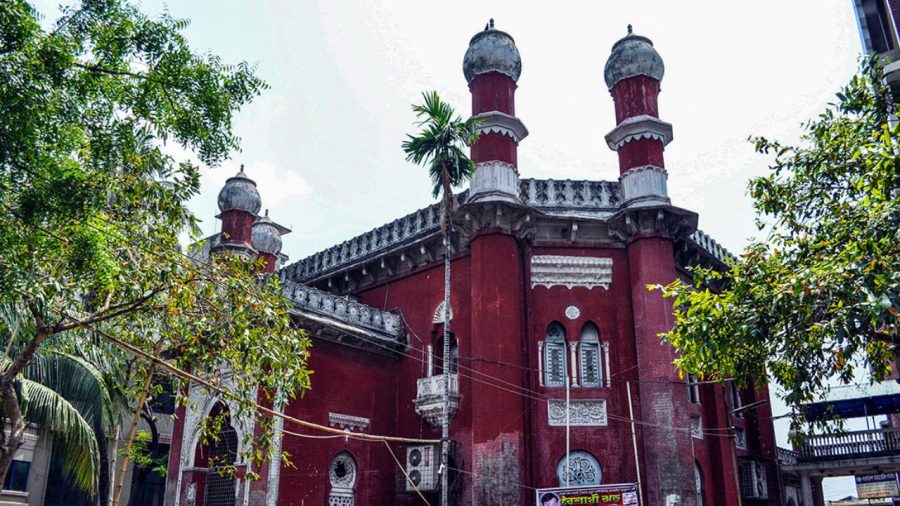

To build a world-class city, Dhaka must protect its historic landmarks alongside modern development, World Bank Group Vice-President for the South Asia Region Johannes Zutt has said.
Speaking on Monday after inspecting the renovated Northbrook Hall (Lalkuthi) and adjacent Johnson Hall Library in Old Dhaka, he said holding onto history connects residents to their culture and passes heritage down to the new generation.
While acknowledging that old buildings may sometimes need to be demolished for new infrastructure to modernise the city, Zutt emphasised that preserving sites carrying memories, culture, and heritage is equally important.
Praising the meticulous restoration of Lalkuthi and Johnson Hall Library, he noted that workers discovered the building’s foundation was deeper than anticipated, prompting plaza excavation to restore it to its original level.

Zutt added that the surrounding staircases, landscaping, traditional window frames, and old brick masonry were also properly restored.
Implementing such projects in densely populated areas while adhering to environmental and social safeguard policies poses a major challenge. Without directly involving local communities, such development would not be sustainable in the long term, he observed.



Dhaka South City Corporation (DSCC) Administrator Md Abdus Salam explained that the Lalkuthi project is part of a broader plan to revitalise Old Dhaka and create open public spaces for residents.
The site will host regular literary gatherings, art exhibitions, and cultural programmes, while the historic Johnson Hall Library will reopen for readers and researchers.
Salam noted that although primary restoration work is complete, remaining ancillary tasks will be completed using DSCC’s own funding. A specialised management wing has also been formed for long-term maintenance.
During the visit, DSCC sought technical and financial assistance from the World Bank for future infrastructure and civic amenity projects.
In response, Zutt confirmed the World Bank’s interest in discussing new plans, but clarified that new loans and financing depend on Ministry of Finance approval, which decides where and how World Bank support is allocated nationwide.
The renovation began on 1 June 2023 under the World Bank-funded “Dhaka City Neighbourhood Upgrading Project.”
Despite hurdles such as the COVID-19 pandemic and administrative shifts, the project was successfully completed with the active involvement of residents.