

Skills training for women must be tied to clear employment and income opportunities, Chattogram Deputy Commissioner Mohammad Zahidul Islam Mian has said, warning that training without regard to market demand risks wasting both public funds and participants’ time.
He said programmes should be designed only after assessing local demand, job prospects and opportunities for trainees to put their newly acquired skills to use.
Zahid was speaking as chief guest at a sewing machine distribution programme for participants of the Department of Women’s Affairs’ skills-based livelihood training programme.
“Our responsibility should not end with training 20 people simply because we were assigned to do so. We must also think about where they will work and how they will use those skills afterwards,” he said.
The DC said socioeconomic conditions and employment opportunities vary from one region to another, and a one-size-fits-all approach to skills development may therefore fail to produce meaningful results.

He urged the Department of Women’s Affairs and partner NGOs to tailor training to local demand and focus on outcomes rather than the number of people completing courses.
“If a woman completes training but has no opportunity to use her skills and becomes frustrated, the purpose of the training is defeated,” he said.




Addressing the trainees, Zahid said completing a course should be the beginning of continuous learning, as technology, consumer preferences and market demand are constantly changing.
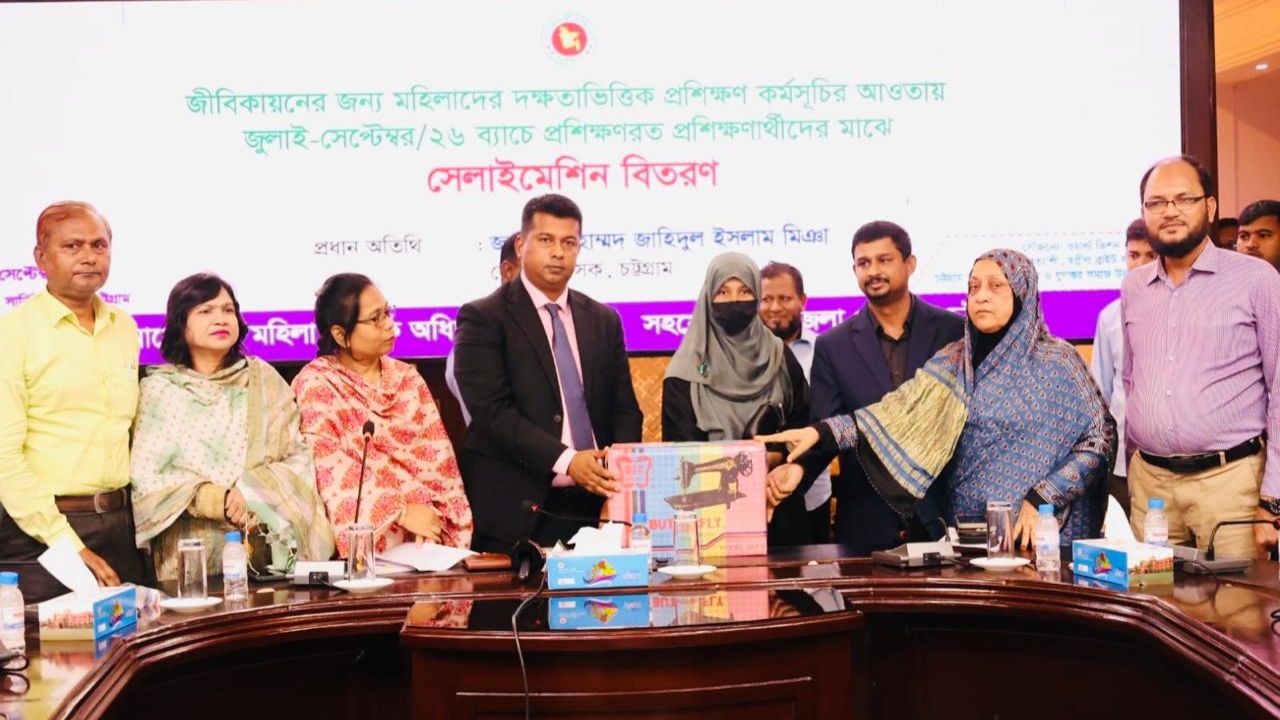
“Whatever you produce involves your time, labour and investment, so there must be demand for it,” he said. “You should keep asking yourself what new skills you have learned and how much you have improved,” he added.
He also encouraged the trainees to pass on their skills to other women, saying the impact of such programmes should extend beyond their direct beneficiaries.
“A sewing machine will make a real difference when your skills also help others improve their livelihoods,” he said.
Zahid urged the women to take their own initiatives rather than rely solely on government assistance, while calling on NGOs to design projects based on local needs and bring those needs to the attention of the relevant authorities.
Bangladesh’s large young population could become a major economic asset if equipped with market-relevant skills, he said.
“The number of people trained should not be the measure of success. If you can help even 10 people improve their lives, others will come forward to receive training,” he added.
The DC also urged the trainees to continuously upgrade their skills to keep pace with technological changes and evolving domestic and international markets.
“Today’s training is not the end. The world is constantly changing, and you have to move forward with those changes,” Zahid said.