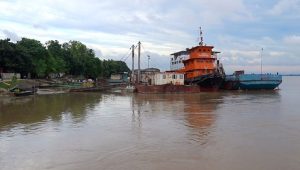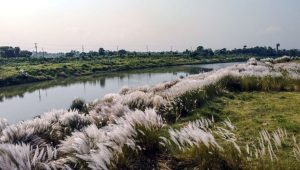



Once known as a rich source of native fish, Jamalpur’s rivers — the Jamuna, Brahmaputra, Jhinai, Dashani and Subarnakhali — are now witnessing a sharp decline in fish populations, leaving around 22,000 registered fishermen facing a severe livelihood crisis.
Many fishermen are being forced to abandon their ancestral profession and move to other occupations, while some are migrating to cities in search of work.
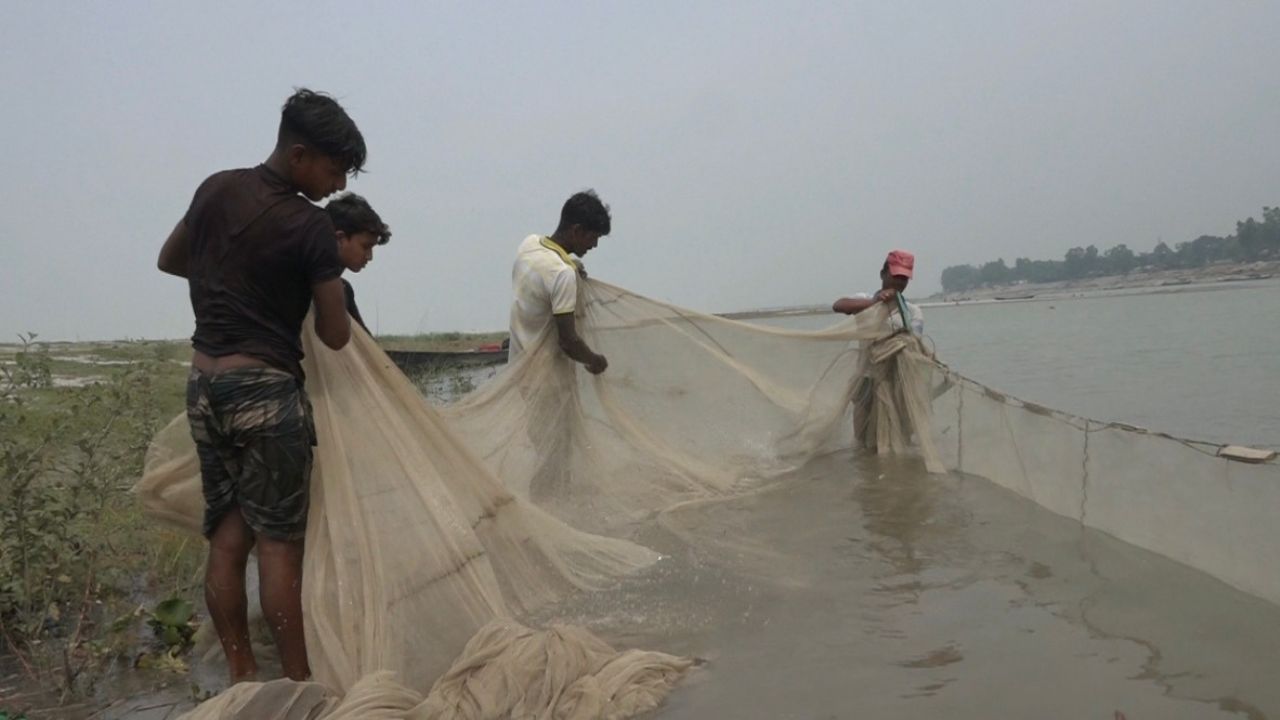
From dawn to dusk, fishermen now pull their nets across the rivers but rarely find the varieties that were once abundant, including bata, banshpata, bou mach and shrimp.
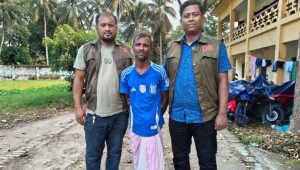
The struggle of Jaladhar Namshudra, a fisherman from Guthail area of Islampur Upazila, reflects the harsh reality faced by many. Every morning, he goes to the Jamuna with fellow fishermen, but after hours of fishing, he earns only Tk100 to Tk200 from his catch.
With this meagre income, he struggles to support his three daughters’ education and meet household expenses.
“Earlier, it took one to one and a half hours to cast a net and we could earn much more. Now we get fish worth only Tk100 or Tk150. I spent Tk50,000 to Tk60,000 buying nets and a boat. This work is no longer sustainable for me,” Jaladhar said.

“The water level is almost the same, but the fish are gone,” he added.
The situation is similar for most fishermen dependent on Jamalpur’s rivers. Jagannath Namshudra, who has been fishing for 35 years, said fish that were once plentiful are now rarely seen.
“Earlier, the rivers had an abundance of fish, but now they have almost disappeared,” he said.


With river fishing becoming increasingly unprofitable, many fishermen are switching professions. Nitai Namshudra, a fish trader from Islampur, said he now depends on buying and selling farmed fish because river fish can no longer support his family.
Local fishermen blame the widespread use of illegal current nets, Chinese nets and fine-mesh nets for destroying fish fry. They also point to reduced river depth, water pollution and the construction of dams in several areas as major factors shrinking fish breeding grounds.
Fisherman Niranjan Chandra Das said large seine nets and Chinese nets are destroying huge numbers of juvenile fish.
“Twenty or 30 years ago, we used to see, catch and eat many types of fish that are no longer available. When large nets are used, thousands of fish are destroyed. The eggs and tiny fish are thrown away because people do not realise their value,” he said.
“Using these nets, people may catch five fish but destroy 20 others. This is why the country is facing a shortage of fish,” he added.
Assistant Professor Dr Abdus Sattar of the Fisheries Department at Jamalpur Science and Technology University said the decline in fish stocks has scientific causes.
“The reduction in the depth of water bodies and drying up of water sources are destroying fish habitats. The construction of dams in different areas is preventing fish from accessing flowing water environments, creating major obstacles to reproduction,” he said.
He also attributed the declining quality of naturally sourced fish to food contamination and the loss of ecological balance.
Jamalpur District Fisheries Officer ANM Ashraful Kabir said around 50 of the district’s 250 native fish species are now at risk of extinction.
He said seven fish sanctuaries have been established across the district’s seven upazilas, while work is underway to build two more permanent sanctuaries in the Brahmaputra River.
“The plan is to establish more sanctuaries in every upazila in the future. Efforts are continuing to increase native fish populations by stopping illegal fishing nets, controlling fishing during breeding seasons and expanding conservation areas,” he said.
According to the Fisheries Department, Jamalpur currently has 21,318 registered fishermen. The traditional river-based lifestyle of this community is now under threat.
Fishermen and experts warn that without effective measures, many native fish species could disappear and the centuries-old fishing profession of the district’s communities could gradually become extinct.