Jamaat-e-Islami, serving as the opposition party in the National Parliament, has for the first time presented a shadow budget for the 2026-27 fiscal year.
The party proposed a Tk8,39,505 crore “people-oriented budget” at a press conference held at the Al-Falah Auditorium in Moghbazar, Dhaka, on Tuesday.
In the proposed budget, the deficit is estimated at Tk1,68,321 crore, representing 2.43 per cent of the GDP. This is lower than the current fiscal year’s national budget deficit, which was set at Tk2,21,000 crore. Saiful Islam Khan Milon, a member of Jamaat’s Executive Council and Member of Parliament for the Dhaka-12 constituency, presented the proposal.

The event was attended by the Ameer of Jamaat and Leader of the Opposition, Md Shafiqur Rahman, alongside Chief Whip Nahid Islam and leaders of the 11-party alliance.
Regarding sector-wise allocations, the proposal recommends Tk2,02,245 crore for public administration, Tk1,27,500 crore for the payment of loan interest, and Tk1,25,575 crore for the education and technology sector.
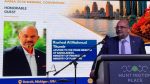



Significant allocations were also suggested for transport and communication, agriculture, health, social security, local government, defence, and energy.
During the presentation, Saiful Islam Khan Milon remarked that this is the first time in the history of Bangladesh that an opposition party in the National Parliament has presented an alternative budget to the nation. He said Jamaat’s goal is not just economic growth, but the creation of a humane economic system founded on justice, good governance, and equality.
Milon emphasised that education must receive the highest priority for the country’s future development. He stressed the need for a budget that is employment-oriented, investment-friendly, and supportive of industrial growth. Identifying corruption as the main barrier to national progress, he highlighted the importance of establishing good governance in the financial sector, preventing money laundering, and fostering an environment conducive to investment.
To enhance revenue collection, the proposal includes expanding the tax net, implementing automation in tax administration, and reducing corruption. Furthermore, considering the cost of living for the general public and the need to encourage new entrepreneurs, the party proposed increasing the minimum tax-free income threshold to Tk4,50,000.