In 1986, Mordechai Vanunu, an Israeli former nuclear technician walked out of southern Israel’s Dimona nuclear facility at Negev Desert with 57 grainy photographs hidden in his pocket. He detonated one of the most carefully maintained silences in modern geopolitics.
Those images, later published in The Sunday Times of London, revealed what Israel had long denied and the world had politely ignored: the Jewish state was not experimenting with atomic energy — it was building nuclear weapons.
Experts quickly concluded Israel had assembled between 80 and 200 warheads, making it the Middle East’s only nuclear power. For Vanunu, the act of truth telling came at a staggering personal cost as he was lured from London to Rome by a Mossad operative named “Cindy”, drugged, abducted, and flown back to Israel. Tried behind closed doors, he was sentenced to 18 years in prison, 11 of them in solitary confinement.
“I am a hostage for nuclear weapons,” Vanunu said years later. Nearly four decades on, his life remains tightly circumscribed: barred from leaving Israel, silenced by security restrictions, and hounded by surveillance.
His ordeal highlights not only the cost of whistleblowing in Israel but also a larger, unresolved question: why has Israel’s arsenal remained exempt from the rules that bind nearly every other nuclear actor in the world?
According to a June 2025 briefing from the UK House of Commons Library, Israel is now estimated to hold roughly 90 nuclear warheads. Its arsenal is believed to rest on a “triad” of delivery systems: Jericho ballistic missiles, long-range strike aircraft, and German-built Dolphin-class submarines capable of firing nuclear cruise missiles.

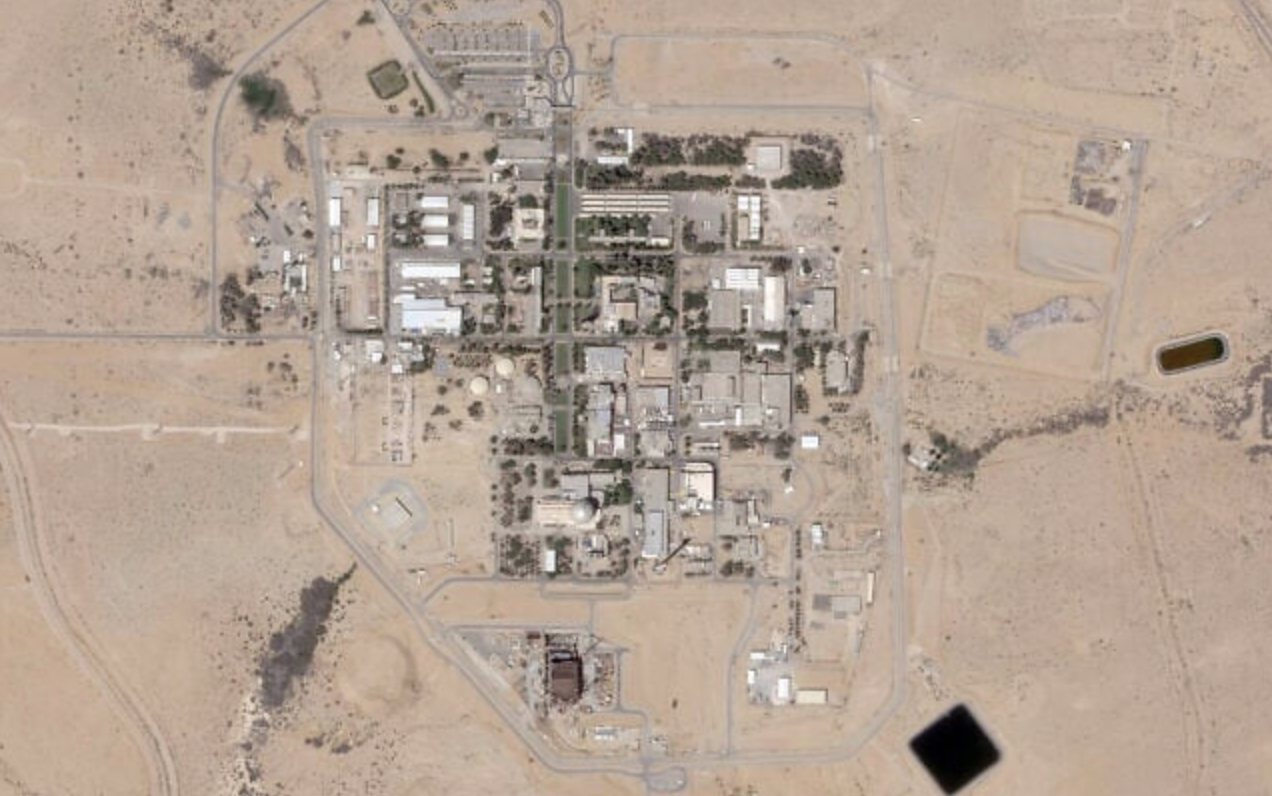
Israel has never signed the Nuclear Non-Proliferation Treaty (NPT). It has not ratified the Comprehensive Test Ban Treaty. And it has resisted every proposal for a nuclear-free Middle East.
Instead, it has embraced a doctrine known as amimut — strategic ambiguity. The government neither confirms nor denies possessing nuclear weapons, a posture that has allowed it to avoid the obligations imposed on other nuclear powers while enjoying the protection of its chief ally, the United States.
The contrast with Iran could not be sharper. Between 2006 and 2010, the United Nations Security Council passed four resolutions — 1696, 1737, 1747, and 1929 — that imposed sweeping sanctions on Tehran. These targeted banking, shipping, oil exports, and access to global markets. The trigger: uranium enrichment is far below weapons grade.



Iran, unlike Israel, is a member of the NPT. In 2015, it signed the Joint Comprehensive Plan of Action (JCPOA), dismantling thousands of centrifuges and submitting to daily inspections by the International Atomic Energy Agency (IAEA). For three years, the IAEA certified Iran’s compliance.
Yet in 2018, the United States withdrew unilaterally from the deal, reimposing sanctions that devastated Iran’s economy.
Israel, meanwhile, has faced no sanctions, no resolutions, and no inspectors. Washington continues to provide $3.8 billion in annual military aid.
The pattern extends beyond the Middle East. When India and Pakistan conducted nuclear tests in 1998, the U.S. swiftly imposed sanctions, and the Security Council passed Resolution 1172 condemning both. North Korea’s tests have triggered escalating sanctions and international isolation. Israel’s arsenal, though widely acknowledged, remains officially invisible.
The NPT is often described as a fragile bargain: non-nuclear states agree never to pursue weapons, while nuclear powers commit to eventual disarmament and the sharing of peaceful technology. Israel’s exemption has put that bargain under strain for decades.
Critics argue that Israel’s nuclear arsenal, shielded by U.S. protection and unmonitored by international inspectors, undermines the global non-proliferation framework and sets a dangerous precedent for other nations. Arab governments have long argued that the double standard incentivises proliferation rather than restraining it.
Proposals for a nuclear-free Middle East — raised at the U.N. since the 1970s — have repeatedly collapsed, blocked by U.S. vetoes and Israeli refusal to even acknowledge its arsenal.
Vanunu’s story remains the most visible reminder of how far Israel will go to protect its secret. Amnesty International has described him as a “prisoner of conscience.” Israel calls him a traitor. Washington largely ignores him.
But the truth he revealed — that Israel possesses nuclear weapons and shields them behind ambiguity — remains central to the region’s security dilemma. The whistleblower was silenced. The weapons were not.
Nearly 40 years after Vanunu’s photographs, the silence is harder to sustain. Wars in Gaza and Lebanon, Iran’s growing nuclear capabilities under sanctions, and the erosion of trust in international institutions have made Israel’s protected exception stand out more starkly than ever.
Analysts warn that selective enforcement is destabilising. “Non-proliferation cannot survive if it applies only to enemies and never to allies,” said a London-based nuclear expert. “The credibility of the entire system is at stake.”
As the 80th session of the United Nations General Assembly convenes under the theme, ‘Better Together: 80 Years and Beyond for Peace, Development, and Human Rights,’ Israel’s nuclear arsenal remains officially unacknowledged yet tacitly accepted. Nearly four decades after Mordechai Vanunu revealed its existence, he remains under strict confinement, while the global non-proliferation regime continues to operate on a perilous contradiction—one that grows increasingly dangerous the longer it is ignored.
The writer is a journalist