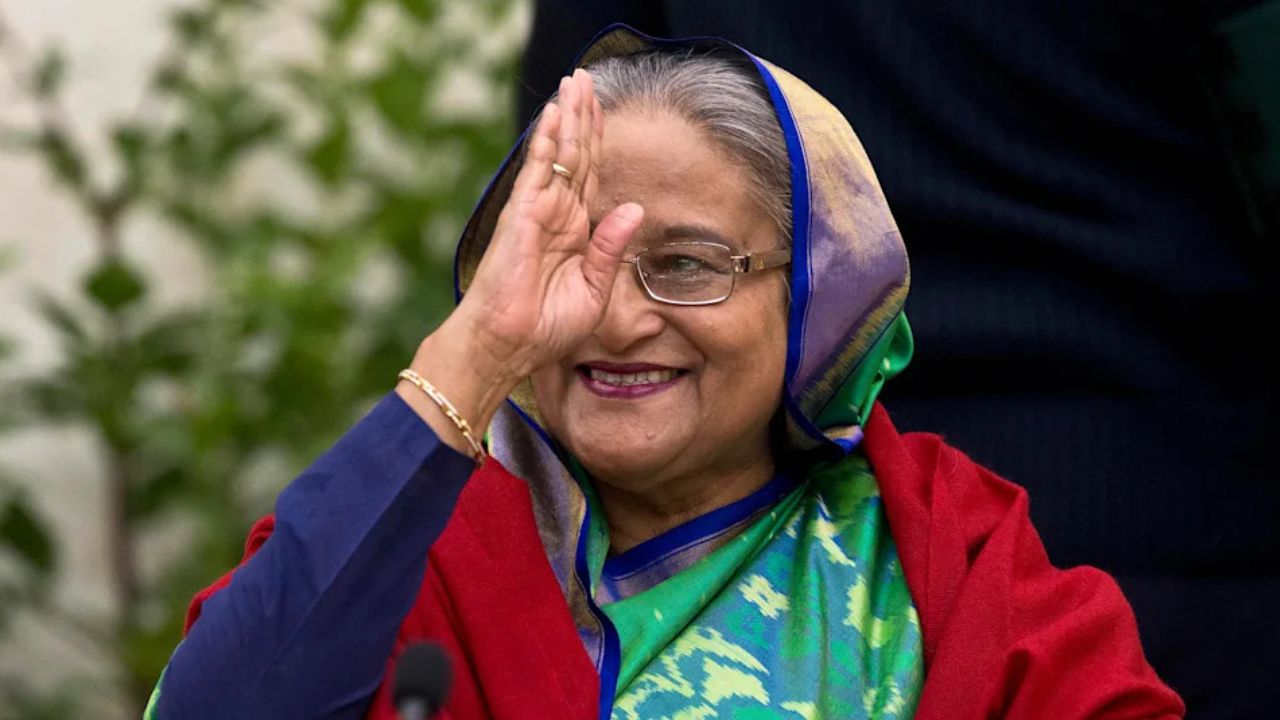
An unusual pattern emerged in India’s mainstream media in the days preceding the 17 November sentencing of deposed prime minister Sheikh Hasina, who has remained in hiding since August last year.
The International Crimes Tribunal (ICT) handed her the death penalty for her direct role in the massacre of nearly 1,500 protestors in 2024, a sequence of events that ultimately triggered her downfall.
Yet it was this tightly coordinated wave of publicity before the verdict that drew widespread attention. Between 7 and 17 November, eight major Indian media outlets published lengthy question-and-answer interviews with Hasina.
English-language national dailies The Indian Express, The Hindustan Times, The Times of India, The Hindu, and The New Indian Express, Bengali daily Anand Bazar Patrika, NDTV Online, and the Press Trust of India all claimed “exclusive” access.
The content, however, appeared strikingly uniform, with questions and replies almost indistinguishable from one publication to another. Each outlet explained that Hasina had provided written responses from an “undisclosed location,” while one described communication from “her secret shelter in New Delhi.”
Every publication asserted that this exchange marked her first engagement with the media since fleeing Bangladesh on 5 August 2024.

Scale and timing of exposure
Three dailies — The Hindu, The Hindustan Times and The New Indian Express — published their interviews on 7 November. The Indian Express and Anand Bazar Patrika followed on 13 November, a day after PTI, while NDTV Online and The Times of India ran theirs on 17 November, coinciding with the announcement of her death sentence in absentia.
The scale and timing ensured extensive exposure for the 78-year-old former leader at a critical moment. The synchronicity of the interviews pointed to a meticulously planned public relations operation, almost certainly organised by a professional lobbying firm.
While the journalists and media outlets involved were not accused of accepting bribes, the firm that coordinated the campaign and orchestrated the media spectacle to shape a narrative before the sentencing surely charged someone a big fat sum for its professional services.
In her replies, Hasina denied responsibility for the 2024 killings, attributing them to the security forces’ actions during the July-August uprising. She criticised interim administration head and Nobel laureate Muhammad Yunus, accusing him of seizing power with external backing.



She argued that the upcoming parliamentary elections would be meaningless due to the Awami League’s exclusion.
She claimed that Hindus in Bangladesh had been “orphaned” in her absence and warned India and Western nations of the resurgence of “Islamic extremism” due to the re-emergence of Jamaat-e-Islami.
She also expressed deep gratitude to New Delhi for sheltering her and for standing firmly by her side.
Absence of critical questions
However, the absence of critical questions across all eight interviews raised concerns about journalistic rigor. Commentators noted that critical queries surrounding her escape, her long-term stay in India, and her dealings with Indian officials were conspicuously absent.
Among the unanswered questions were who in India authorised her entry on 5 August 2024; whether she had met Prime Minister Narendra Modi, External Affairs Minister S Jaishankar or National Security Adviser Ajit Doval; and what assurances, if any, were given.
Also unexamined were Jaishankar’s remarks to Indian Parliament on 6 August 2024 stating that Hasina had requested entry “for the moment” at very short notice, leaving unanswered how that temporary arrangement has stretched to nearly sixteen months.
There was no reference to whether she had sought asylum from other countries, including reports of an unfavourable response from the United Kingdom.
Other areas left untouched included the specific advice New Delhi offered during the escalating crisis in Bangladesh; whether her assessment differed from India’s; and even simple, humanising questions such as whether she left pets behind when the army allegedly gave her only half an hour to leave Ganabhaban.
Interviewers also avoided exploring comparisons with her earlier exile following Sheikh Mujibur Rahman’s assassination in 1975, or how she was coping with Delhi’s air pollution given her respiratory issues.
The omissions fuelled criticism that the coverage fell short of the basic scrutiny expected when interviewing a fugitive former prime minister who remains a significant figure in South Asian geopolitics.
Dhaka responded swiftly
On 12 November, Bangladesh summoned Indian Deputy High Commissioner Pawan Badhe to protest what it termed New Delhi’s facilitation of media engagement for a fugitive.
The interviews also triggered political backlash, with Shafiqul Alam, spokesperson for interim government chief Muhammad Yunus, describing the participating Indian journalists as “bootlickers,” prompting demands for an apology from the Press Club of India.
Observers noted that Q&A formats, when used rigorously, can function as powerful tools of public accountability and historical documentation.
Yet the Hasina interviews, widely viewed as polarising and inadequate, have been criticised as a missed journalistic opportunity at a moment of profound regional significance.