India and the European Union (EU) have concluded a landmark free trade agreement (FTA), ending nearly two decades of periodic negotiations and signalling a shared commitment to deeper economic integration amidst global trade volatility.
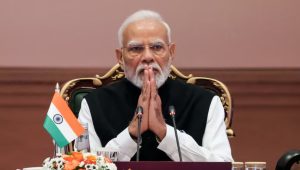
Following a bilateral summit in Delhi on Tuesday, European Commission President Ursula von der Leyen characterised the accord as the “mother of all deals,” while Indian Prime Minister Narendra Modi described it as “historic”.
The pact establishes a free trade zone encompassing two billion people and representing approximately 25% of global gross domestic product (GDP), reports BBC.
The agreement is designed to significantly lower tariffs and broaden market access for both regions. According to the European Commission, the deal will eventually eliminate duties on most exports of chemicals, machinery, electrical equipment, and aerospace technology through phased reductions.

Notably, import duties on motor vehicles, which currently reach 110%, will be slashed to 10% for a specific quota of 250,000 units.
While the agreement reduces costs for European machinery and agricultural products entering India, sensitive domestic sectors such as dairy and sugar have been specifically excluded to protect local interests.
Prime Minister Modi noted that the deal would facilitate easier access to European markets for Indian farmers and small businesses while stimulating the manufacturing and services sectors.



The announcement arrives as both Delhi and Brussels navigate economic pressures from the United States. India currently faces 50% tariffs imposed by the Trump administration, while the EU has contended with threats of an escalated trade war.
European Council President António Costa remarked that the pact sends a vital political signal that both parties favour structured trade agreements over rising protectionism.
Beyond commerce, the two powers are advancing separate dialogues on security, defence co-operation, and climate action.
Indian Defence Minister Rajnath Singh met with European Commission Vice-President Kaja Kallas on Tuesday to discuss the integration of supply chains and the development of “trusted defence ecosystems”.
Reports suggest both sides are drafting a security partnership to address maritime security and cyber threats.
The EU remains India’s primary trading partner for goods, with bilateral merchandise trade reaching $136 billion (£99.4 billion) in the 2024-25 period. Although negotiations initially commenced in 2007 before stalling in 2013, they were formally revitalised in July 2022.
The formal signing of the FTA is expected later this year, contingent upon approval by the European Parliament and the European Council.
This agreement follows recent trade successes for India, including deals with the UK, Oman, New Zealand, and the European Free Trade Association.