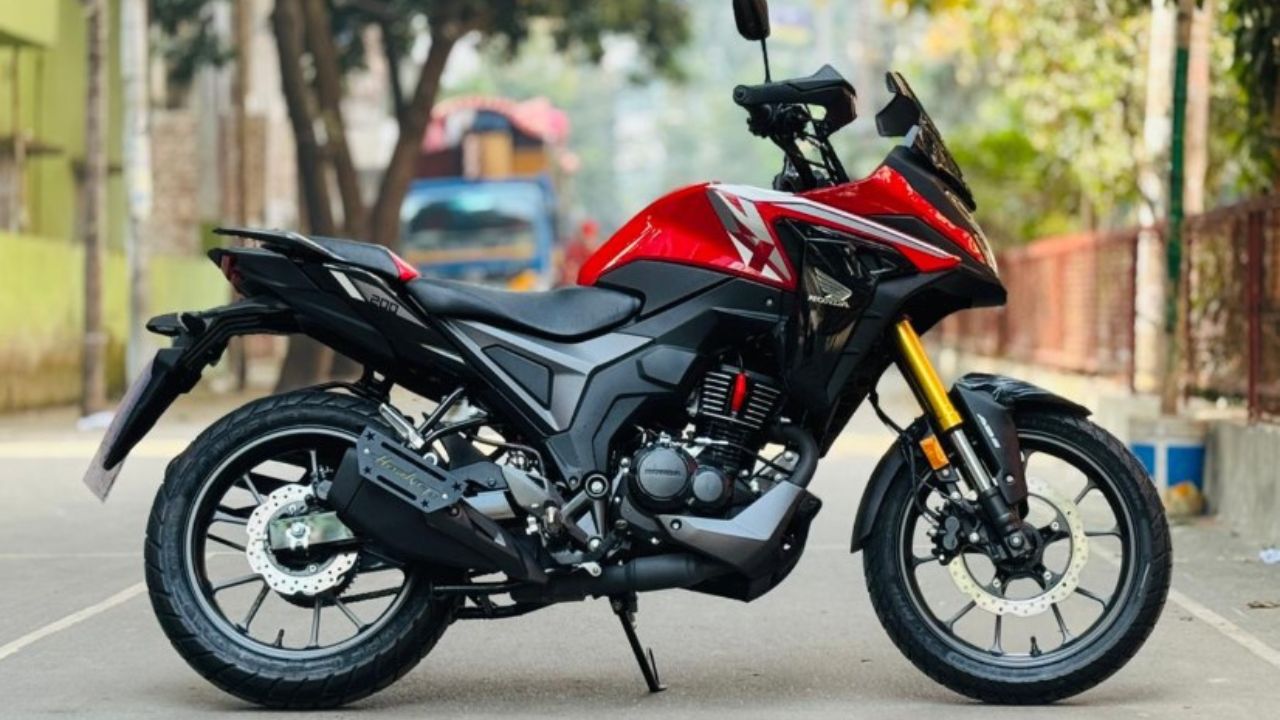



Bangladesh Honda Private Limited (BHL) is expanding beyond its domestic market by exporting the Honda NX200 motorcycle to Mexico, testing whether local manufacturing can become part of Honda’s global supply chain and positioning Bangladesh as an emerging export base for two-wheelers.
The shipment marks BHL’s second export destination after Guatemala and comes as the company seeks to diversify markets, increase localisation and improve manufacturing competitiveness.
BHL, a joint venture between Bangladesh Steel and Engineering Corporation (BSEC) under the Ministry of Industries and Honda Motor Co Ltd of Japan, held an export ceremony at its Munshiganj factory on Saturday.
According to Bangladesh Honda Private Limited Chief Marketing Officer Shah Muhammad Ashequr Rahman, the company has so far exported 78 motorcycles in three consignments — 14 units of the X-Blade model to Guatemala in September 2024 on a trial basis, 32 units of the NX190, marketed as NX200, to Mexico in April 2026 and another 32 units of the same model to Mexico on 30 July 2026.
“Our first shipment to Guatemala served as a successful test case. Building on that experience, we have now expanded to Mexico and aim to sustain exports and progressively increase volumes by strengthening operational efficiency and achieving greater cost competitiveness,” Ashequr told TIMES of Bangladesh.
The export to Mexico reflects Honda’s strategy of integrating Bangladesh into its global manufacturing network. The company allocates production for international markets based on manufacturing efficiency, cost competitiveness and production scale rather than geographical proximity.
Although Honda has manufacturing facilities in Mexico, it sources certain models from other production bases to optimise production capacity, model specialisation and overall cost competitiveness.

Honda currently imports a significant number of motorcycles for the Mexican market from other Asian countries with more mature two-wheeler manufacturing ecosystems.
BHL views the Mexico shipment as a strategic opportunity to gradually integrate Bangladesh into Honda’s global supply chain and build a sustainable presence in international markets.
“We are assessing the possibility of becoming an export base alongside other countries,” Ashequr said.
Export challenge: Competing with other Asian countries
While the Mexico shipment opens a new market opportunity, BHL faces cost competitiveness challenges against more established motorcycle manufacturing countries.



India benefits from a stronger supplier ecosystem, larger production volumes and export incentives.
Ashequr said motorcycle exporters receive export subsidies in several countries, while Bangladeshi manufacturers have faced challenges in accessing duty-free facilities for exports.
“If Bangladesh provides stronger support in areas such as testing facilities, duty benefits, export incentives, policy support aligned with international standards, backward linkage industries and vendor development, we can compete in export markets,” he said.
The latest shipment is also being used as a test case for Bangladesh’s new duty incentive framework.
BHL imported components under the newly introduced bank guarantee arrangement at zero duty for the Mexico shipment and expects to secure the release of the guarantee after completing the export process.
Earlier shipments faced delays in recovering duties paid on imported components under the duty drawback system.
Ashequr said the company had applied to the Duty Exemption and Drawback Office (DEDO) for refunds related to previous exports and remained optimistic that the payments would be processed.
“The release of the bank guarantee will demonstrate the successful implementation of the new export support mechanism, and we are confident it will continue to operate effectively and facilitate further export growth,” he said.
Industry seeks global role
BHL’s export move comes as the company strengthens its position in Bangladesh’s domestic motorcycle market.
Industry insiders said Honda became the third-largest wholesale player in fiscal year 2025-26 with around 19 per cent market share, behind Yamaha and Suzuki, after wholesale sales crossed 86,000 units out of an industry total of more than 4.58 lakh units. It ranked second in the retail market with around 20 per cent market share, behind Yamaha.
The company is also planning to export additional models in future, Ashequr said.
“The domestic market remains our top priority, while exports will create new opportunities for export diversification, accelerate localisation, strengthen industrial capabilities and position Bangladesh as a competitive motorcycle manufacturing base in the global market,” he said.
He believes Bangladesh, where motorcycle penetration remains low, could follow the growth path of other Asian markets, where motorcycles have become a key mode of daily transport and economic activity.
At the export ceremony, Special Assistant to the Prime Minister Md Sakirul Islam Khan said the government remained committed to creating a business-friendly environment to encourage manufacturing, exports and investment.
He said BHL’s Mexico shipment would contribute to export diversification, employment generation and global recognition of Bangladesh’s manufacturing capability.
BHL Managing Director and CEO Susumu Morisawa said the export expansion reflected improvements in production capability, quality assurance and the dedication of the company’s workforce.
“We remain committed to enhancing local procurement, improving manufacturing competitiveness and continuously expanding our export activities,” he said.