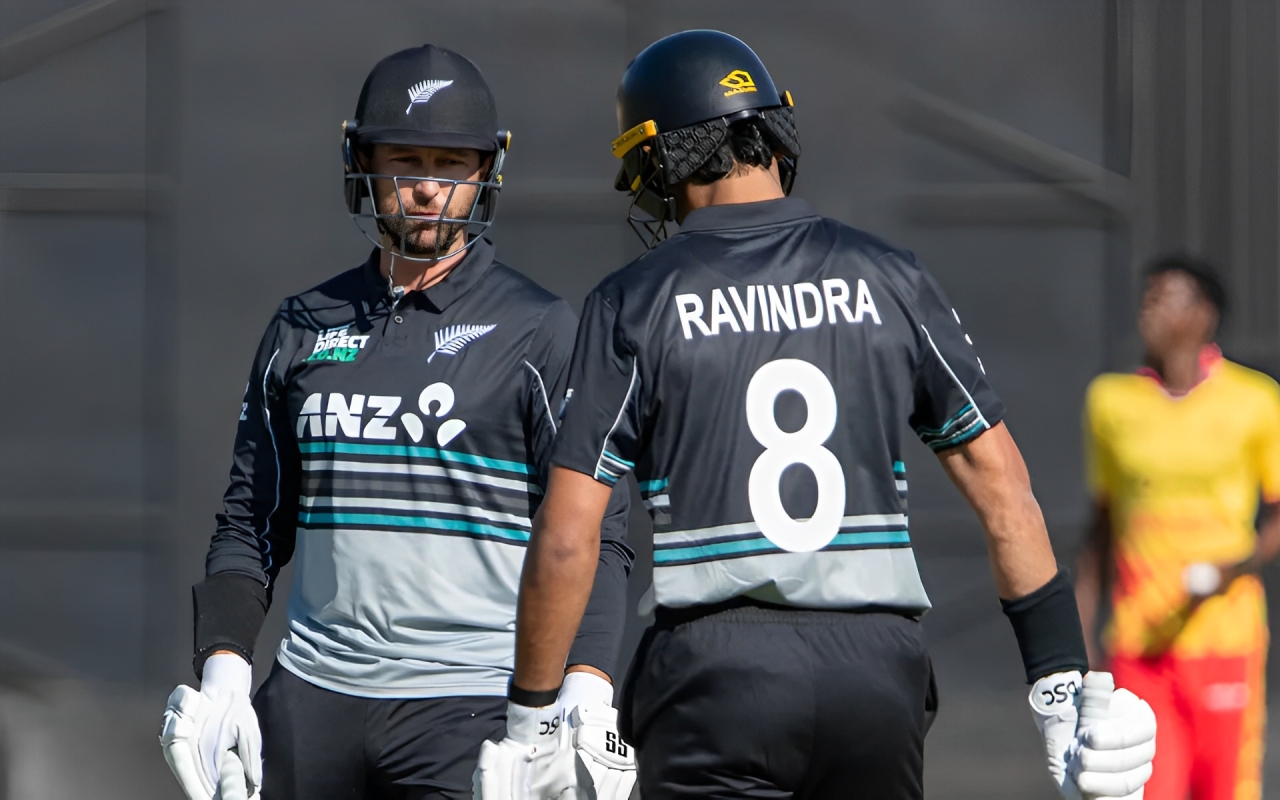

Matt Henry’s incisive pace and Devon Conway’s composed half-century steered New Zealand to an eight-wicket victory over Zimbabwe in their T20 tri-series clash at Harare Sports Club on Friday, 18 July.
After being sent in to bat, Zimbabwe made a brisk start but faltered against disciplined bowling to post just 120 for 7. Henry was the pick of the bowlers with figures of 3 for 26, using short-pitched deliveries to good effect. Spinners Mitchell Santner and Rachin Ravindra also extracted bounce and turn from a dry surface to keep the hosts in check.
Zimbabwe’s openers Wessly Madhevere and Brian Bennett added 37 for the first wicket, but the momentum didn’t last. Bennett fell for 21 in the sixth over, top-edging a Henry bouncer to square leg. Madhevere, who took 11 runs off Henry’s first over, lacked fluency in his 36 off 32 deliveries, and the middle order struggled to cope with New Zealand’s spin attack.

“They came out quite aggressive in the powerplay, but we adapted well with the ball,” said New Zealand captain Mitchell Santner.




In response, New Zealand chased down the target with ease, reaching 121 for 2 in just 13.5 overs. Player of the match Conway anchored the innings with an unbeaten 59 off 40 balls. He survived an early scare after being dropped on 1 at backward point off Richard Ngarava in the first over. Tim Seifert departed for 3 in the next over, caught at cover off Blessing Muzarabani, but Conway and Ravindra steadied the innings with a 59-run stand for the second wicket.


Daryl Mitchell joined Conway to see New Zealand over the line, a result that all but secures their place in the final scheduled for 26 July.
“I got a bit lucky early on,” Conway admitted, crediting Ngarava and Muzarabani for their accuracy on what he described as a “challenging” surface. “It was nice to get through that period.”