
Experts in a discussion on Wednesday stressed the growing importance of healthy eating in combating hypertension and non-communicable diseases (NCDs) in Bangladesh.
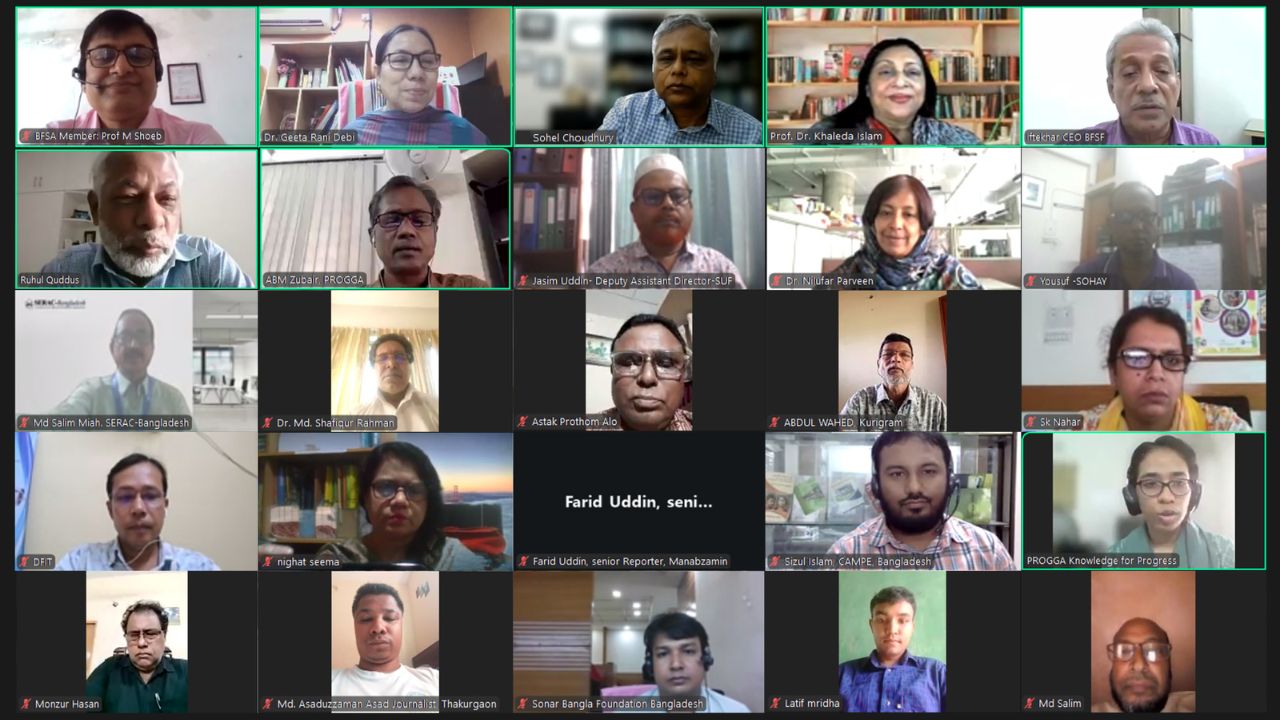
The webinar on the eve of World Food Day 2025, titled “Dietary Habit and Hypertension Risk,” organised by research and advocacy organization PROGGA (Knowledge for Progress), with support from Global Health Advocacy Incubator (GHAI), addressed key dietary factors influencing hypertension and highlighted actionable recommendations to reduce its prevalence.
The World Health Organization (WHO) has long identified high salt and trans-fat consumption as significant contributors to hypertension, with the potential for lifestyle and dietary changes to substantially lower the risks.
Speaking at the event, WHO experts shared that unsafe eating habits are increasing the burden of hypertension, a leading cause of death in Bangladesh.
According to the WHO, inadequate intake of fruits and vegetables caused an estimated 3.9 million deaths worldwide in 2017. The evidence suggests that a diet rich in fruits and vegetables, low in fat, sugars, and salt, plays a vital role in preventing risk factors for a range of NCDs, including hypertension.

Regulatory efforts, community action needed
Professor Dr Mohammad Shoeb, Member of the Bangladesh Food Safety Authority (BFSA), emphasized that alongside implementing regulations to control trans fats, the BFSA is also focusing on front-of-pack labeling.
This initiative aims to make it easier for consumers to understand food contents, potentially encouraging healthier choices and supporting the fight against NCDs.




Dr Geeta Rani Devi, Program Manager of the Community Based Health Care (CBHC) Program, discussed the need for community-driven efforts to address hypertension.
She advocated for the development of a comprehensive action plan at the policy level, starting from grassroots initiatives to foster sustainable change in dietary habits.
Professor Dr. Sohel Reza Choudhury, Head of Epidemiology and Research at the National Heart Foundation, stressed that awareness campaigns alone were insufficient.
He called for systems that allow consumers to easily identify harmful ingredients like excessive salt in processed foods, thus empowering informed decision-making during shopping.
Lifestyle changes crucial for disease prevention
Dr Khaleda Islam, Professor at the Institute of Nutrition and Food Science, University of Dhaka, reinforced that reducing hypertension and other NCDs required a dual approach – healthy eating combined with regular lifestyle modifications.
She also highlighted that education on proper nutrition needs to be embedded into the daily lives of individuals, with a focus on reducing harmful habits.
The webinar, chaired by PROGGA’s Executive Director ABM Zubair and moderated by Sadia Galiba Prova, saw participation from experts, health professionals, and individuals from various sectors.
Mustak Hassan Md Iftekhar, founding chairman of BFSA, and Muhammad Ruhul Quddus, Bangladesh country lead of GHAI, also took part in the discussion, contributing their insights on regulatory changes and the role of advocacy in promoting public health.
The session concluded with a call to action for the promotion of healthy eating habits to combat the rising tide of hypertension and other preventable diseases, in alignment with this year’s World Food Day theme – “Hand in Hand for Better Foods and a Better Future.”