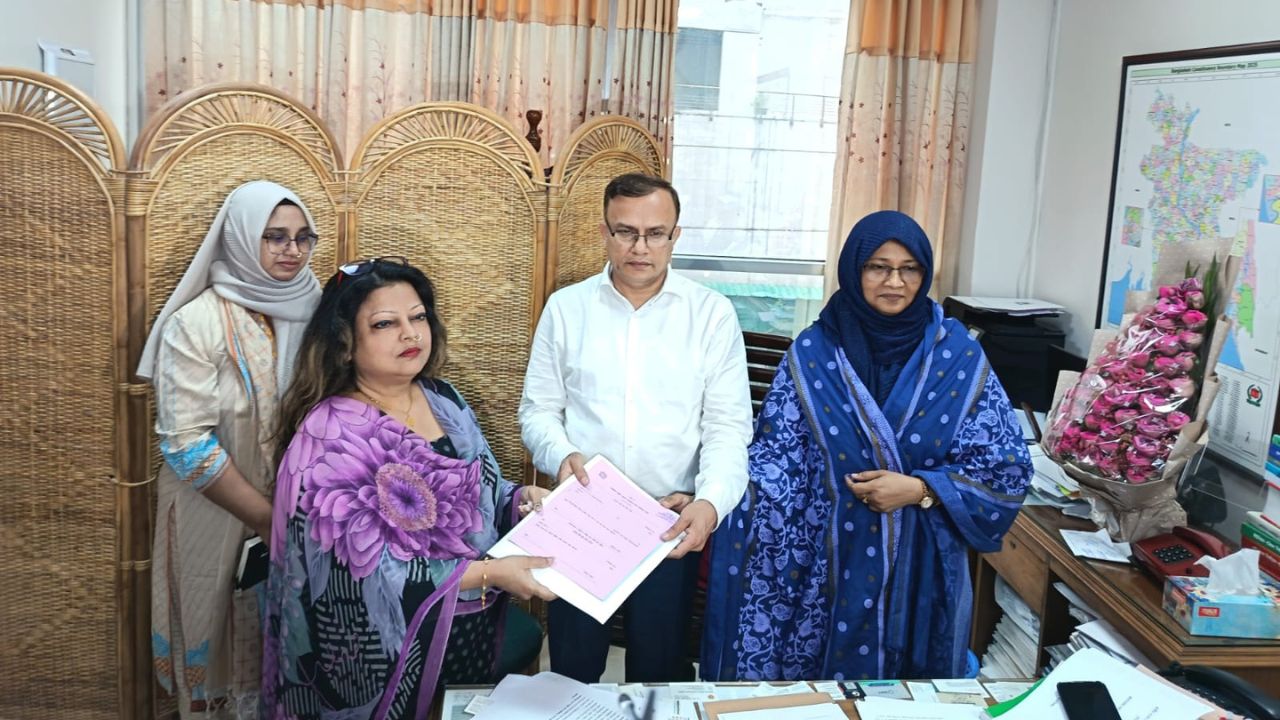
Hasnat Abdullah: A name unknown to most even at in July 2024. Since then, however, Hasnat has emerged as a very significant leader in the movement that eventually led to the Awami League’s ouster.
After the Awami League government fell, he became the driving force behind many events in the political arena. At his call, thousands of people took to the streets, demolishing Bangabandhu Sheikh Mujib’s residence in Dhanmondi.
Since then, Hasnat Abdullah has become a leader of the National Citizen Party (NCP). He will contest the election in Cumilla-4 (Debidwar) constituency as a candidate of the Jamaat-led 11-party alliance.
A new political wind is blowing in Cumilla, but in what direction is it blowing Hasnat’s fate in the electoral field?

In Cumilla-4, strategic battle has become more important than the traditional battle for votes. Analysing past election statistics reveals that this constituency has historically been a strong stronghold of BNP. From 1991 to 2001, BNP candidate Manzurul Ahsan Munshi won this seat in three consecutive elections.
In 1991, he won with 29 per cent of the votes, while the Jamaat-e-Islami candidate received about 15.6 per cent of the votes. In the 2001 election, Manzurul Ahsan Munshi was the candidate of the BNP-Jamaat four-party alliance. That time, with Jamaat’s votes added, he won with over 59 per cent of the votes.
In 2008, although he lost, he did so with about 41 per cent of the votes. That, too, was under the BNP-Jamaat alliance.


Historical precedent would indicate that BNP has a large and stable vote bank in this constituency, fluctuating between 30 and 37 percent.
Jamaat-e-Islami’s standalone vote bank in this constituency is also quite significant. Although they received over 15 per cent of the votes in 1991, in 1996 it decreased to 5.7 per cent. It is believed that the candidate of the Jatiya Party encroached upon their votes that time.
However, political analysts believe that due to the current political context and Awami League being out of the electoral field, Jamaat’s votes have increased. This is why the unity between Jamaat and NCP has created a strong foundation for Hasnat Abdullah.
The question now is regarding Hasnat Abdullah’s own vote bank. It is believed that due to being one of the central figures of the student-led mass uprising, he has gained significant influence among the young generation of voters. Especially among those who will vote for the first time or those who were disillusioned with the conventional political parties over the past decade and a half, a large segment supports Hasnat’s “new wave of politics.”
Analysts say that if Hasnat Abdullah’s personal popularity is combined with Jamaat’s disciplined cadre-based votes, it will be a major cause for concern for BNP.
If BNP can maintain its votes in line with its previous trend, then Manzurul Ahsan Munshi’s chance of winning is strong, with Munshi expected to get votes from a segment of the Jatiya Party and Awami League camp in this area.
On the other hand, even if Hasnat Abdullah’s own youth vote bank is added to Jamaat’s 15 to 20 per cent votes, the chance of winning is low. However, if he can attract a portion of voters from the Jatiya Party and Awami League camp, the result is more likely to go in Hasanat Abdullah’s favor.
Overall, the battle in Cumilla-4 is no longer limited to just individuals. It has now turned into a battle of BNP’s historically held dominance versus the united strength of the new generation.
And the main factor in this battle could be the strategy of pulling votes from the Jatiya Party and Awami League. Whichever side is successful in this strategy, the scales of victory will tilt towards them.