


The year 2025 can be characterised as the “year of misinformation” for Bangladesh, marked by a significant evolution in the nature and spread of false content. Deposed prime minister Shiekh Hasina appeared the most in fake content across platforms, followed by Chief Adviser Muhammad Yunus.
According to a detailed analysis by Dismislab, nine fact-checking organisations working on Bangladesh identified 30 per cent more misinformation than in the previous year.
The analysis revealed that nearly two out of every three verified reports were political, one in ten involved Artificial Intelligence (AI), and half were in video or reel format. Throughout 2025, these organisations published 5,706 fact-check reports, uncovering 4,131 unique instances of misinformation, compared to 3,167 in 2024.
Hasina, Yunus top the list
The analysis of over 4,000 unique fact-check headlines identified the top 10 individuals most frequently targeted by misinformation. Ousted prime minister Sheikh Hasina topped the list, appearing in 274 headlines.
These reports largely involved old videos or photos presented as “recent,” rumours of her imminent return to power, and AI-generated “confessions” or fake statements.

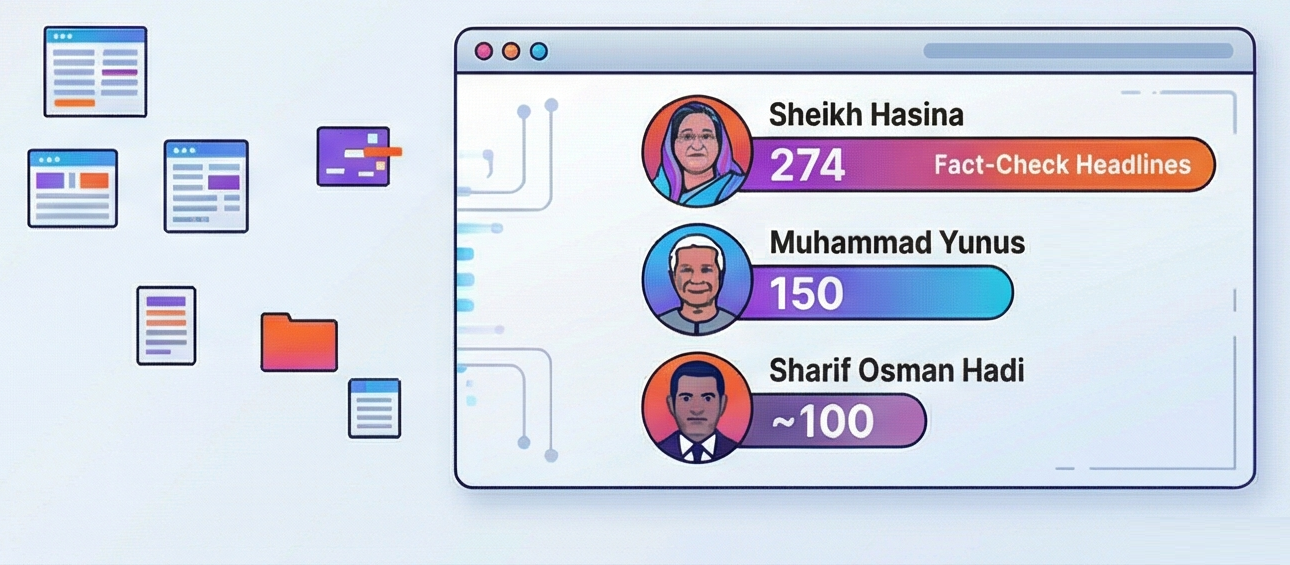
Muhammad Yunus, chief adviser of the interim government, followed with 150 headlines. Misinformation against him aimed to portray his government as “illegal” or unstable, often using fake photo cards from media outlets or fabricated quotes from international leaders like US President Donald Trump.
Other prominent figures in the top ten included late spokesperson of Inqilab Mancha Sharif Osman Hadi (nearly 100 headlines), BNP Chairperson Tarique Rahman, (72 headlines), and NCP leader Hasnat Abdullah (58 headlines).
Names also included Chief of Army Staff General Waker-Uz-Zaman, BNP Secretary General Mirza Fakhrul Islam Alamgir, Indian Prime Minister Narendra Modi, US President Donald Trump, and former prime minister Begum Khaleda Zia.



Proliferation of AI, video content
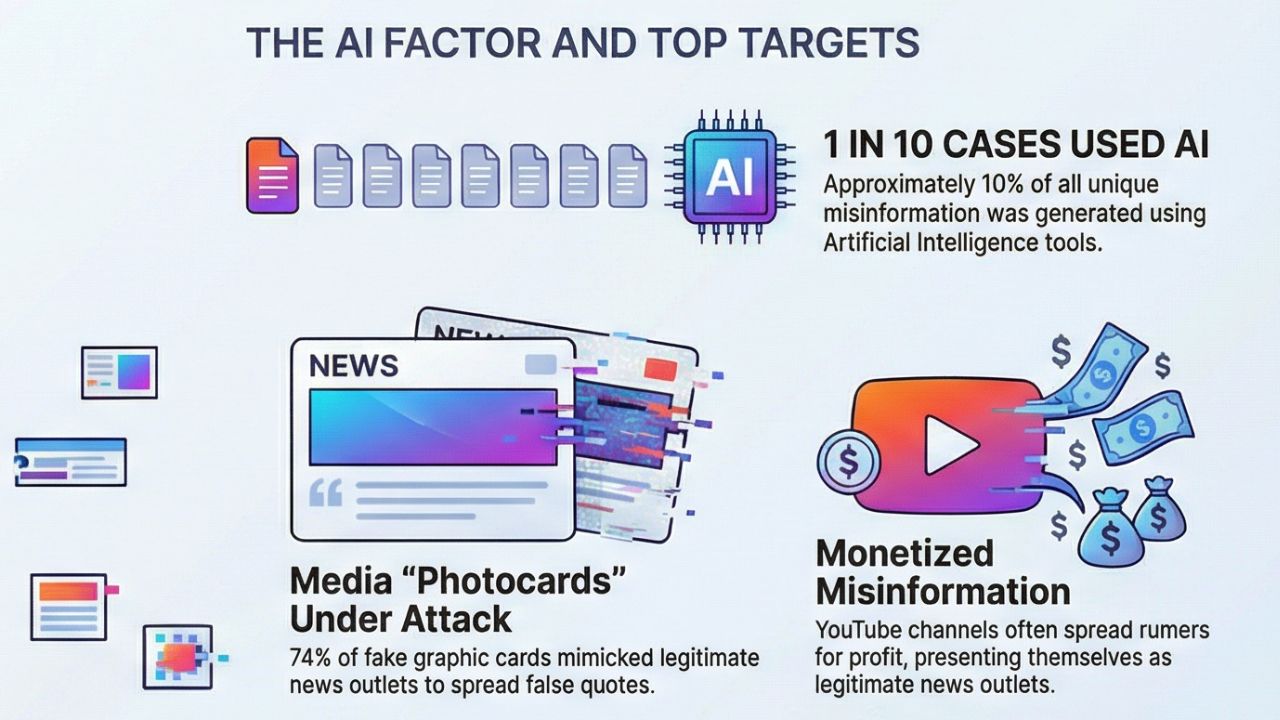
Artificial Intelligence has become a significant tool for deception, accounting for 10 per cent (417 cases) of all unique misinformation identified in 2025.
AI was used to create fake images of Tarique Rahman arriving at the airport, videos of Sheikh Hasina addressing the Indian Parliament, and manipulated “deepfake” content involving cultural figures like Farjana Shithi and Sadia Ayman.
In terms of format, video content was the primary medium, accounting for 52% of all misinformation. This was followed by graphic cards (21%) and photos (18%). Notably, 74% of fake photo cards were created by mimicking the templates of established media houses.
Political agendas, commercial interests
The sources of misinformation varied across platforms.
On Facebook, accounts like “Gurudaspur Upazila Jubo League” (114 instances) and “Amra Harbo Na” (81 instances) were the top spreaders, primarily sharing content supporting the Awami League while targeting the BNP, Jamaat, and the interim government.

Conversely, YouTube misinformation was largely driven by commercial interests. Monetised channels such as “Bijoy Shorts YT,” “Public Insight,” and “Alo Entertainment News” presented themselves as news channels while spreading sensationalist falsehoods about all parties.
On X (formerly Twitter), the handle “Voice of Bangladeshi Hindus” was the top spreader of religious misinformation before being suspended.
Triggers of misinformation
Political events served as the biggest catalysts. Misinformation surged between September and December due to student union elections, discussions regarding the national election, and the killing of Sharif Osman Hadi. In December alone, political misinformation cases rose to 408.
Outside of politics, law and order (7%), religion (6%), international affairs (6%), and disasters (4%) were the other major categories. International misinformation was most prevalent in May and June, centering on conflicts such as India-Pakistan and Iran-Israel.
This analysis was based on data from nine fact-checking organisations – Rumor Scanner, Boom BD, Newschecker, Fact Crescendo, Fact Watch, AFP Bangladesh, Ajker Patrika, Dismislab, and The Descent.
The study categorised reports into 17 themes and analysed over 22,000 social media posts to identify the trends of 2025.