Thousands of protesters clashed with police in Georgia on Saturday as they tried to breach the presidential palace in Tbilisi during a municipal election boycotted by major opposition parties. The demonstrations, which were met with water cannons and pepper spray, were part of a larger protest against the ruling Georgian Dream party, which critics accuse of steering the country away from its pro-democracy values and closer to Russia’s sphere of influence.
Protesters, many waving Georgian flags and holding placards advocating for European Union membership, voiced their anger at the government’s decision to halt EU accession talks. This move sparked a wave of protests, compounded by mass arrests and police violence, following allegations that the ruling party rigged the last election.
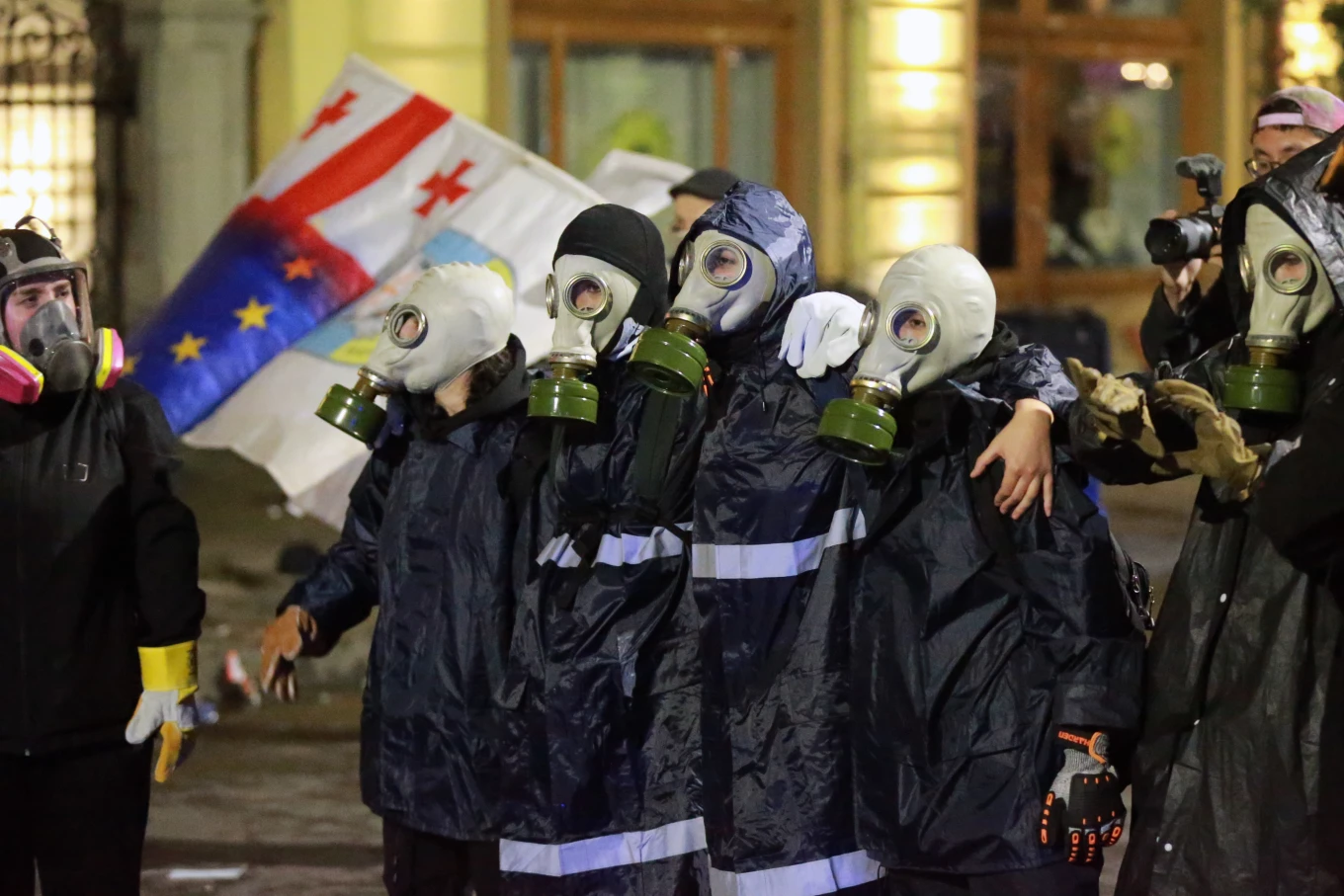
The protests have persisted despite a government crackdown on dissent, including laws targeting demonstrators, human rights organizations, and independent media—some of which are seen as inspired by Russian legislation that suppresses opposition.

“We fight for our rights, for independence,” said protester Sophio Asatiani. She expressed a fear of Georgia slipping back into the Soviet era, under Moscow’s control.
Opera singer Paata Burchuladze, one of the organizers, urged protesters to “take power back into the hands of the people,” in a direct challenge to a government accused of jailing opposition leaders, attempting to shut down critical media, and using mass arrests and fines against demonstrators.



The protests intensified when some attempted to storm the presidential palace, smashing a gate before being dispersed by riot police.
The municipal elections, boycotted by most opposition parties, saw a turnout of less than 30% according to preliminary data from the Central Election Commission. Political analyst Giorgi Rukhadze criticized the election, calling it a “mock election” and emphasized that the only way to remove Georgian Dream from power was through peaceful non-compliance.
Authorities, citing violations of public assembly laws, did not provide further details about the rally. Shortly after polls closed, the Central Election Commission announced that the election had concluded without major disturbances, and results would be revealed shortly.
International observers were notably absent from this election, with more than 50 local groups registered to monitor the vote. Major international organizations, including those that had observed previous elections, chose not to participate due to concerns over the country’s increasingly repressive political environment.