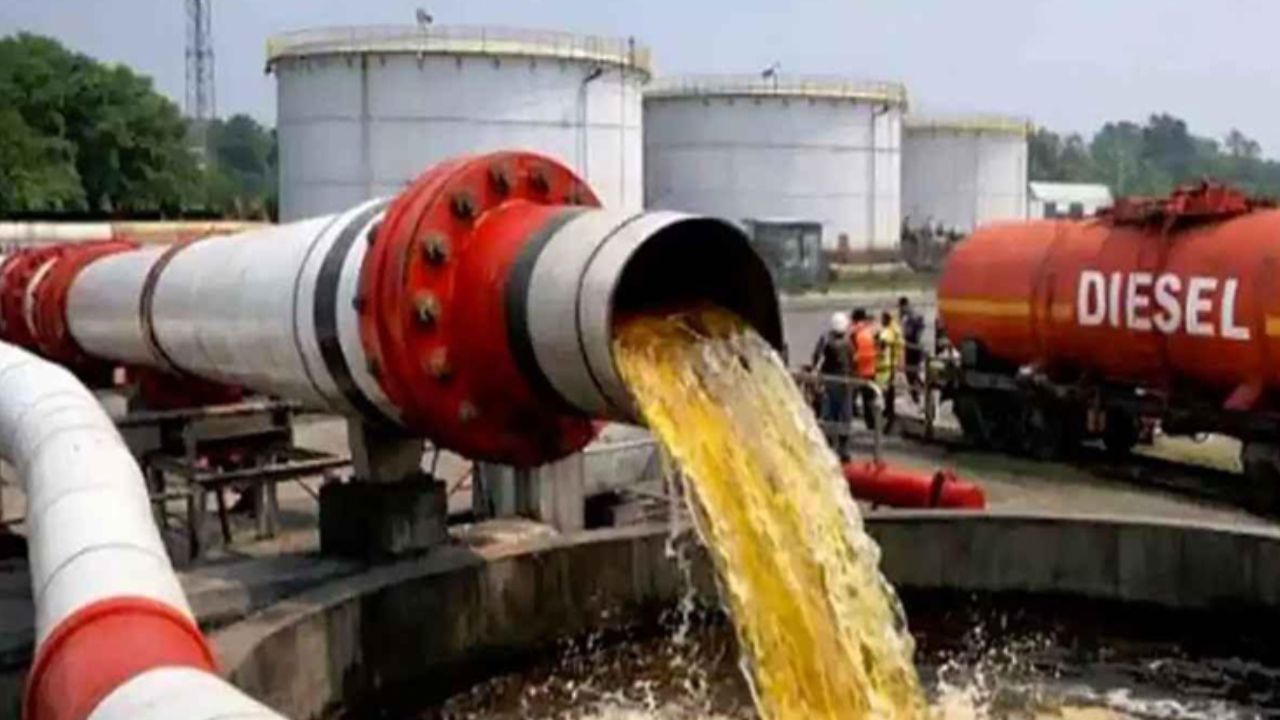



The Bangladesh Petroleum Corporation (BPC) has pressed the government to raise the price of diesel as the Iran-US conflict and disruptions in the Strait of Hormuz have pushed global fuel costs higher and deepened the state-run corporation’s losses.
BPC placed the proposed price increase before the Energy and Mineral Resources Division in its latest monthly assessment, warning that the current retail price of Tk115 per litre is no longer sufficient to cover the cost of supplying diesel to the domestic market.
Diesel accounts for around 70 per cent of Bangladesh’s total petroleum consumption, making any price increase significant for transport, agriculture, industry and household costs.
The corporation said the supply cost of diesel has risen to around Tk167 per litre. Selling it at the current price leaves BPC with a substantial loss on every litre sold.
The proposal comes as global oil prices have risen sharply following the Iran-US conflict and disruptions to shipping through the Strait of Hormuz. Before the conflict, refined diesel was trading at around $80 a barrel, but prices reportedly surged above $250 at one point. Although prices have since eased, they remain around $150 a barrel, according to BPC officials.

BPC’s cash cushion shrinks
BPC’s bank deposits fell from Tk36,964 crore on 28 February, when the conflict began, to Tk18,524 crore by June as the corporation used reserves to finance fuel imports and meet other obligations. The Tk18,440 crore decline was nearly 50 per cent in four months.
The fall comes despite BPC accumulating around Tk53,000 crore in profits over the past decade. Of this, it deposited Tk11,000 crore with the government as surplus funds, paid Tk5,150 crore in dividends, repaid around Tk5,000 crore in earlier loans and spent Tk11,000 crore on development projects, including the Single Point Mooring and Dhaka-Chattogram pipeline projects. The remaining funds were retained as working capital.
BPC suffered losses of nearly Tk6,000 crore in June and Tk1,100 crore in July. Officials said renewed global price increases have pushed losses higher again in August, with the corporation now absorbing around Tk90 crore a day.
The government is considering three options: raising diesel prices, reducing BPC’s tax burden or providing direct subsidies.




BPC Director (Finance) Naznin Parveen told Times of Bangladesh that the corporation had already informed the ministry about its financial position.
“The situation of BPC has been reported to the ministry. The government will now take the decision,” she said.
Why diesel is under pressure
Officials said BPC was not seeking comparable increases in petrol and octane prices because their import and supply costs are significantly lower. The pressure is concentrated on diesel because of its dominant share in total fuel consumption and larger import requirement.
The proposed Tk147 price would effectively align the retail price with BPC’s current supply cost, allowing the corporation to avoid or substantially reduce losses from selling diesel below cost.
However, any increase in diesel prices could affect transport fares, food prices, irrigation costs and inflation as diesel is widely used in public and private transport, agricultural irrigation, power generation and industrial operations.
Tax relief emerges as alternative
Alongside the price proposal, BPC has sought changes to the tax structure on imported petroleum products. Under the current invoice-value-based taxation system, BPC pays taxes and duties based on actual import prices. The structure includes 15 per cent VAT, 6 per cent advance import tax, 2 per cent import duty and 2 per cent advance income tax.
BPC argues that the shift from the previous tariff-value-based system to invoice-based taxation has substantially increased its tax burden, particularly as international fuel prices have risen.
The corporation paid around Tk12,700 crore in taxes in FY2024-25 under the previous tariff-value-based system. In the current fiscal year, BPC says its tax burden has risen to almost twice that level because taxes are now calculated on higher actual import values.
BPC has proposed a temporary revision of the tax structure until December as an alternative to a major increase in fuel prices. It has also sought urgent government financial support to cover losses and keep major development projects running.
“Whatever decision the government takes regarding BPC will be implemented accordingly,” said Dr Mohammad Rubayet Khan, Joint Secretary (Budget and Audit) of the Energy and Mineral Resources Division.
The government now faces three options: raising diesel prices and passing the international oil shock on to consumers, reducing BPC’s tax burden and sacrificing part of its revenue, or providing subsidies and absorbing the cost through the state budget.
With international oil prices remaining elevated, pressure for a diesel price hike is increasing.