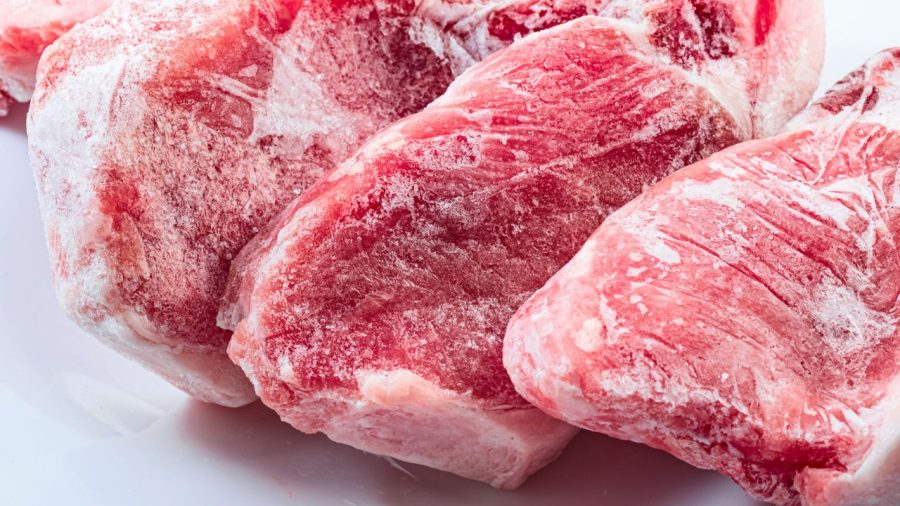



The near-total halt in frozen buffalo meat imports has narrowed access to relatively affordable boneless meat, adding to the financial pressure on ordinary consumers and restaurant operators in Chattogram as prices of locally sourced beef continue to rise.
Department of Livestock Services (DLS), however, says the government has not approved frozen meat imports in recent years, citing the availability of domestic supplies and the need to protect local producers.
Imported boneless meat, which previously sold for around Tk500-600 per kg, is now largely unavailable in the market. All types of local restaurants that once relied on imported supplies are increasingly turning to the domestic market for alternative red meat, where boneless beef costs Tk1,000-1,100 per kg, according to restaurant owners.
Against this backdrop, calls are growing for the government to reconsider its restrictions on frozen meat imports and allow internationally certified, packaged Halal meat under appropriate quality and safety standards.

Supreme Court lawyer Md Mahmudul Hasan Mamun on 11 October served a legal notice on the government demanding the withdrawal of restrictions on commercial imports of live cattle and internationally certified packaged Halal meat, alongside a rationalisation of import duties to make beef more affordable. The lawyer also warned of a public interest writ petition before the High Court if the authorities fail to take the requested steps within 15 days.
According to National Board of Revenue (NBR) data, the combined assessment value, duties and taxes on imported frozen boneless buffalo meat amounted to Tk566.37 per kg in FY2021-22. The figure rose to Tk588.30 in FY2022-23 before easing slightly to Tk584.81 in FY2023-24.
These figures represent the assessed import value plus applicable duties and taxes, rather than the importers’ full costs or the final retail price. Transportation, cold storage, refrigeration, handling, marketing and other overheads would add to the cost of bringing the product to consumers. Which means the final retail price might be higher than this figure.




The Meat Importers and Traders Association, however, claimed that round 2020, frozen meat was sold for approximately Tk200-250 per kilogram. After the total tax burden on meat imports reached 89.32 per cent in 2021, the selling price rose to Tk350-400 per kg, according to the association.
Meanwhile, Lawyer Mahmudul Hasan’s notice also sought steps to bring the price of beef down to Tk250 per kg. The figure, however, is a demand stated in the notice, not an established estimate of the price that imports would necessarily deliver.
The notice was sent to the Cabinet Secretary, the secretaries of the ministries of Commerce and Fisheries and Livestock, the director general of the Department of Livestock Services, the chairman of the Bangladesh Trade and Tariff Commission and the chairman of the NBR.
Restaurant owners say the absence of imported frozen meat has increased their procurement costs, particularly for establishments that depend on boneless meat for their menus. Emtiaj Uddin Nowshad, president of Chattogram metropolitan branch of Bangladesh Restaurant Owners Association, said many hotels and restaurants previously used imported frozen meat but had been unable to source it from the market for around three years. As a result, businesses have had to purchase more expensive meat from local suppliers, putting additional pressure on operating costs.
He said boneless frozen meat imported from countries such as India previously cost around Tk450-550 per kilogram. “Now, we have to buy boneless beef from the local market at Tk1,000-1,100 per kilogram to run our restaurants,” he said adding that imports could help ease the pressure on restaurant operators if the government permitted them under strict quality controls and internationally recognised standards. According to Emtiaj, suppliers should be able to ensure product quality and arrange delivery within five to seven days of slaughter.
Data from NBR show a decline in frozen boneless buffalo meat imports through Chittagong Port over the past five fiscal years. In FY2021-22, the country imported 13,192.32 metric tonnes of the product through the port. The volume plunged to 974.03 tonnes in FY2022-23, a year-on-year decline of 92.62 per cent. Imports fell further to just 27.99 tonnes in FY2023-24, arriving in a single shipment. No imports of the product were recorded through Chittagong Port in either FY2024-25 or FY2025-26.
The figures illustrate how a once-established supply channel has virtually disappeared. However, the port data relate specifically to frozen boneless buffalo meat and do not, by themselves, represent the country’s entire meat import market.
Md A Mannan Mia, deputy director (Import) of DLS, told TIMES of Bangladesh that domestic farms and production were meeting the country’s meat demand. “Frozen meat was imported in the past, but such imports have not been permitted for the last two to three years. There are currently no approvals or directives regarding the matter,” he said.
Protecting domestic livestock farmers remains a central consideration in the government’s position. Officials and stakeholders have concerns that comparatively cheaper imported meat could put local producers under pressure. Animal-health risks, including the possible introduction of infectious diseases from abroad, as well as the need to ensure safe transportation, refrigeration and storage, are also relevant considerations when assessing any import policy.