The Trading Corporation of Bangladesh (TCB) has removed nearly 59 lakh fake and ineligible applications from its subsidised food programme while verifying almost 80 lakh beneficiaries, as a broader digital overhaul cuts annual operating costs by about Tk80 crore.
Of 79.90 lakh verified beneficiaries, 73.07 lakh smart family cards have been activated after electronic know-your-customer checks and verification against national identity card data, according to figures presented at a TCB business event in Dhaka on Thursday.
The state trading agency is seeking to tighten control over a subsidy programme designed to supply essential commodities to one crore low-income families every month while simultaneously expanding procurement and reducing financing costs.
TCB plans to procure goods worth Tk8,000 crore in fiscal 2026-27 and expects sales revenue to increase 83 per cent from the previous year, according to a keynote presentation at the event. It is also targeting a 17 per cent reduction in subsidy per beneficiary family.

Digital financial management is expected to save about Tk60 crore annually by allowing dealers to make payments directly through bank application interfaces, while TCB estimates another Tk20 crore in savings from its own warehouse management system.
The corporation also expects bank interest expenses to fall sharply to around Tk106 crore in fiscal 2026-27 from Tk533 crore in fiscal 2023-24.
TCB is trying to bring more domestic and foreign suppliers into its procurement network as its purchasing needs grow.




At the business talk, titled “Trade with TCB,” the agency highlighted electronic government procurement for tendering, public bid opening and digital processing of security deposits and payments as measures intended to make procurement faster and more accessible.
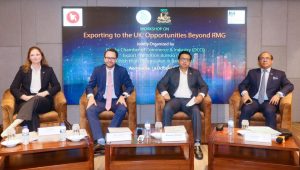
Commerce Minister Khandakar Abdul Muktadir attended the programme, while TCB Chairman Brigadier General Mohammad Foyshol Azad delivered the opening address. Bangladesh Institute of Development Studies Senior Research Fellow Badrun Nessa Ahmed presented the keynote paper.
The digitisation drive also extends to distribution.
TCB’s “Upokari” application allows beneficiaries to locate nearby sales points, check product availability and collect subsidised goods using encrypted quick-response codes. Beneficiaries can continue receiving services through the app even if their physical smart cards are lost.
The corporation has also introduced hotline and WhatsApp services for customer support and complaint handling.
TCB is planning to widen its product range beyond subsidised essentials by adding soap, detergent, salt, tea, flour and spices for open-market sales, a move intended to generate additional revenue and ease pressure on subsidies.
Its longer-term plans include using smart cards to integrate other social safety-net benefits, deploying artificial intelligence to monitor market prices and expanding its own warehouse capacity.
The event also included representatives from cement, consumer goods, international business, policy research, banks, financial institutions, government agencies and local and foreign suppliers.