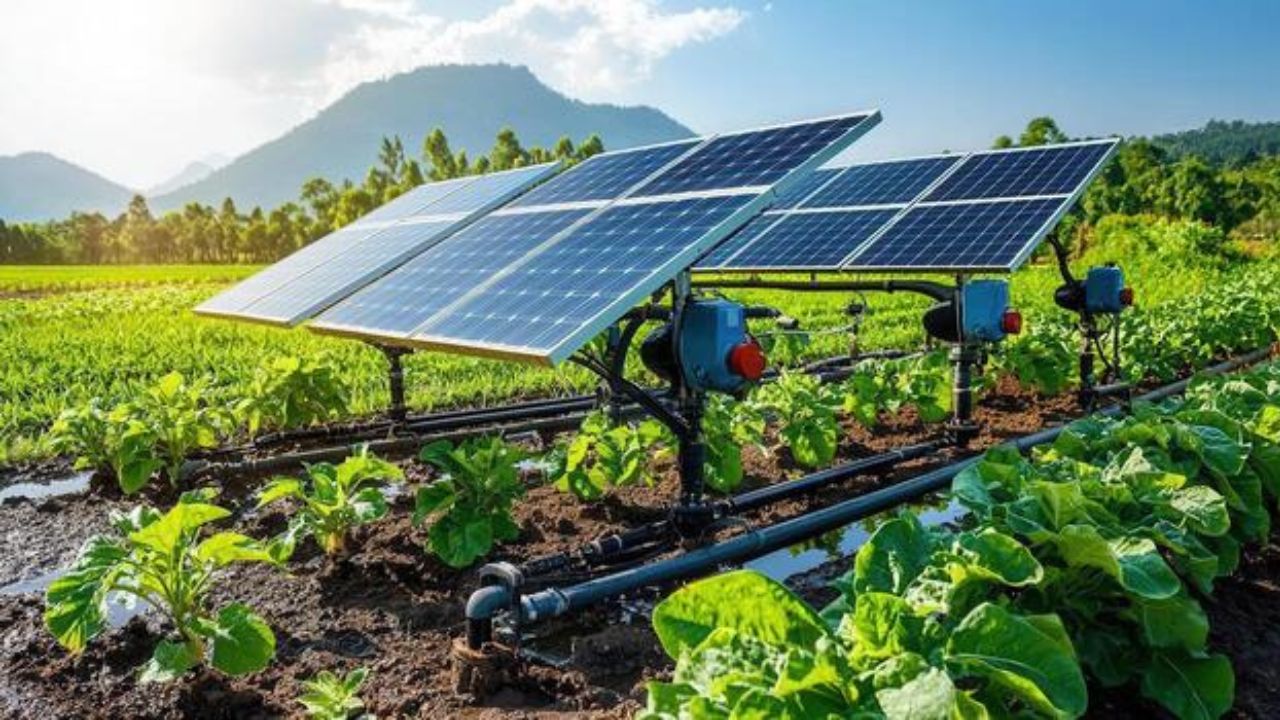



Replacing one-third of Bangladesh’s diesel-powered irrigation pumps with solar systems could save the country nearly $244 million a year in diesel imports while adding around 4,000 megawatts (MW) of solar capacity, according to a study by the Institute for Energy Economics and Financial Analysis (IEEFA).
The shift would also reduce annual diesel consumption by about 862.4 million litres, underscoring the untapped potential of distributed renewable energy to curb Bangladesh’s reliance on imported fossil fuels.
IEEFA’s report, “Role of Distributed Energy Resources in Energy Transition: A Multi-country Perspective,” found that despite 3,556 solar irrigation pumps already in operation, more than one million diesel-powered irrigation systems remain in use across the country.
Distributed Energy Resources, including rooftop solar, battery storage and biogas systems, are gaining traction as industries invest in rooftop solar to lower electricity costs. However, policy bottlenecks, limited financing and implementation challenges continue to slow wider adoption.

Net metering delays curb expansion
Delays in securing net metering approvals remain the biggest obstacle to expanding rooftop solar and solar irrigation, IEEFA said.
Although regulations set approval timelines, developers frequently face delays from power distribution utilities, hurting project viability.
More than 93 per cent of Bangladesh’s solar irrigation capacity operates off-grid. Since irrigation pumps run only 110 to 150 days a year, the lack of net metering leaves them idle for much of the year, preventing owners from exporting surplus electricity to the grid and earning additional income.




Limited financing is another major hurdle.
Despite green finance schemes, available funds remain inadequate and most banks are reluctant to finance rooftop solar and solar irrigation projects because of perceived risks and limited borrower information. Apart from Infrastructure Development Company Limited, lenders largely avoid the sector, while small-scale biogas projects struggle as many businesses cannot meet collateral requirements.
The report identified biogas as another promising technology, particularly for rural clean cooking and decentralised energy supply. However, installed capacity remains just 0.69MW nationwide, highlighting the sector’s limited development.
Policy reforms needed
IEEFA also warned that weak oversight has allowed substandard rooftop solar systems, particularly in newly built apartment buildings, to enter the market, undermining consumer confidence.
Although the government has reduced import duties on several distributed solar components, project implementation contract requirements may still prevent households and smaller investors from benefiting from the incentives.
The report recommended broader duty waivers for distributed solar technologies and solar irrigation projects, expansion of Bangladesh Bank’s green finance programme and a credit guarantee scheme to encourage bank lending.
It also urged the Sustainable and Renewable Energy Development Authority and the Ministry of Power, Energy and Mineral Resources to accelerate net metering approvals, introduce quality standards for small-scale distributed energy systems and regularly update installation data to support policymaking.
“Compared to the grid-scale variable renewable energy capacity of 859MW as of June 2026, the country’s growing rooftop solar capacity provides an encouraging signal for Bangladesh’s power sector,” said Shafiqul Alam, Lead Analyst for Bangladesh Energy at IEEFA South Asia and co-author of the report.
He said engineering, procurement and construction companies already have more than 500MW of rooftop solar projects in the pipeline, but Bangladesh needs to accelerate efforts to unlock several thousand megawatts of rooftop solar potential in the industrial sector.