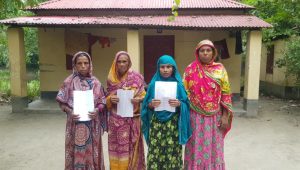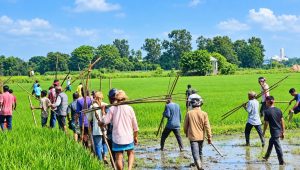
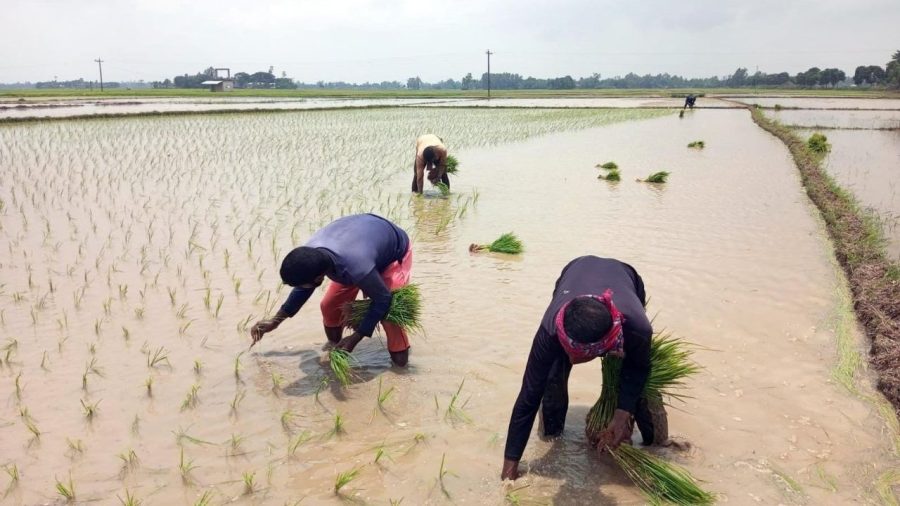



Naogaon farmers are facing a fresh squeeze on their earnings as a Tk20 per litre diesel price hike pushes up costs across farming activities, from land preparation and irrigation to threshing and transport.
With diesel now selling at Tk135 per litre, growers fear that the gap between production costs and crop prices will widen further, leaving little room for profit ahead of the Boro season.
Agriculture dominates Naogaon’s economy, with diesel-powered irrigation pumps, tractors, power tillers and threshers widely used across the district’s fields. Farmers say higher fuel prices have increased expenses at nearly every stage of production.
They said costs of fertiliser, seeds, pesticides and labour had already risen, while crop prices had not increased at the same pace. The latest fuel price adjustment has added further pressure on growers already struggling to balance income and expenditure.
Farmers in different parts of the district said irrigation costs could rise by several hundred taka to nearly Tk1,500 per bigha, depending on land conditions and water requirements. Including land preparation, threshing and transport costs, they expect total production expenses to increase by Tk1,500–2,500 per bigha.

The concern is particularly high among Boro paddy growers, as the crop requires irrigation for an extended period. Many farmers are now calculating whether cultivation will remain profitable if diesel prices stay at the current level.
“Buying fertiliser, seeds and pesticides already costs much more than before. Now the rise in fuel prices will affect every step, from preparing the land to bringing home the harvest,” said Jamilur Rahman, a farmer from Goali area of Naogaon Sadar.
“We do not get a price in the market that matches our production costs. If expenses continue to rise, it is uncertain whether Boro cultivation will remain profitable,” he added.




Golam Hossain, a farmer from Abadpukur area of Raninagar, said many farmers in his area require more water for irrigation, making them more vulnerable to higher diesel costs.
“A fuel price hike does not only increase irrigation expenses. Tractor use for ploughing, levelling and threshing also becomes more expensive. For small farmers like us, managing these extra costs is difficult,” he said.
Sudhir Chandra, a sharecropper from Mainam area of Manda, said farmers working leased land had even less scope to absorb additional costs.
“After giving the landowner’s share, we have to cover irrigation, cultivation, threshing and transport expenses from what remains. With fuel prices rising, it feels like losses are being calculated even before the rice reaches the house,” he said.
Rubel Hossain, a farmer from Bhandarpur area of Badalgachhi, said the biggest challenge was the lack of balance between production costs and selling prices.
“The cost of cultivation, irrigation and harvesting is increasing, but rice prices are not rising accordingly. How will farmers survive if this continues?” he said.
Naogaon district coordinator of the Socialist Party of Bangladesh (BASAD) Zainal Abedin Mukul said rising agricultural costs in Naogaon could affect consumers beyond the farming community, as the district supplies crops to other parts of the country.
“If farmers fail to recover production costs, their interest in cultivation may decline. Fuel expenses should be considered separately and support measures or subsidies should be introduced to keep agriculture sustainable,” he said.
However, Naogaon Department of Agricultural Extension Deputy Director Md Monjur Rahman said the diesel price increase could have some impact on farming, but the government was providing support and incentives to reduce production costs.
“Farmers are also being encouraged to use cost-saving irrigation technologies. Alongside diesel-powered pumps, we are focusing on expanding solar-powered irrigation systems, which can reduce irrigation costs in the long run,” he said.