
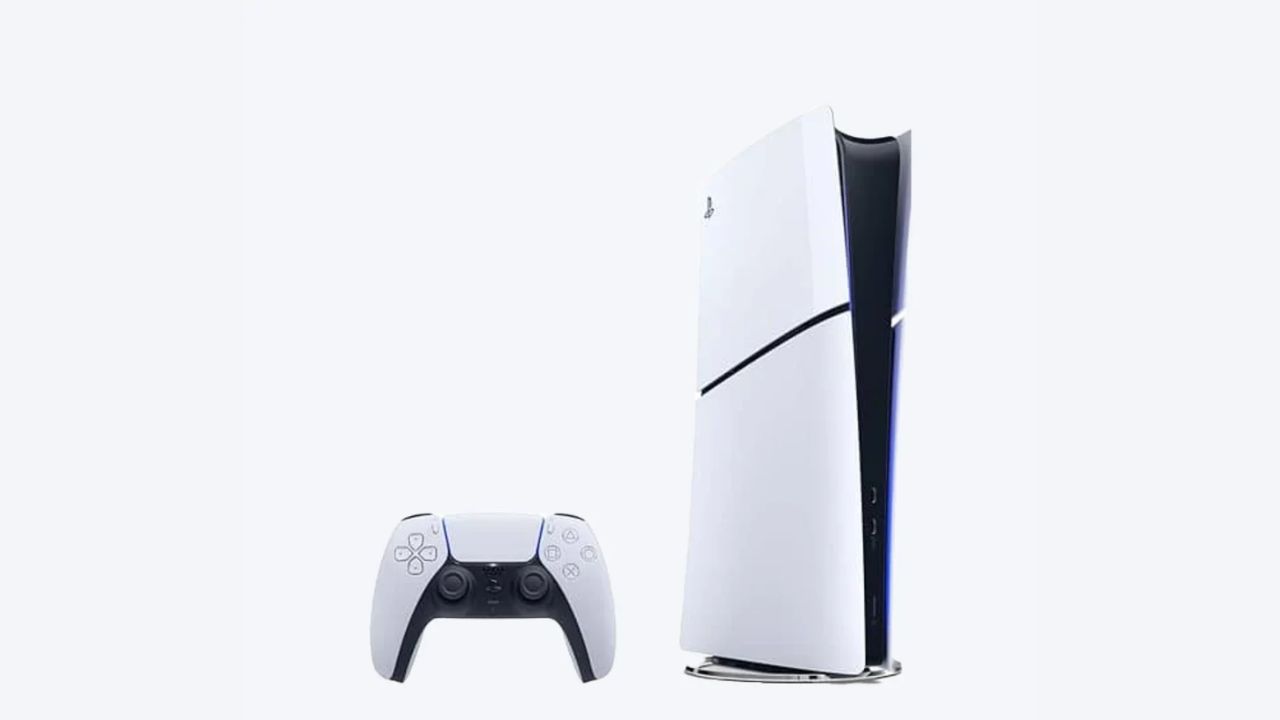

The future of console gaming is undeniably heading towards the digital age, with Sony formally announcing the discontinuation of physical game discs starting from 2028. This announcement comes just a few days after Rockstar Games confirmed the fully digital release of GTA VI.
The decision has caused significant controversy in gaming world with many indicating this to be the end of a culture built on collecting, trading and preserving physical game discs.
For decades, the culture of console gaming has been centered around plastic cases containing discs. The norm is simple: You buy the case, unwrap it, pull out the disc, put it into the disc drive and play the game. The point was ownership of the game and adding it to your personal collection. But the recent announcements have indicated a cultural shift which could fully change the overall gaming experience.
Starting from January 2028, Sony will officially cease its production of physical discs for their system. From that point onwards, all games will have to be purchased digitally from the PlayStation Network (PSN).
In a statement published on the PlayStation Blog, Sid Shuman the Senior Director of Content Communications at Sony Interactive Entertainment (SIE), has explicitly stated that the decision is a “response” to the shifting trends in consumer preference.
“This is a natural direction for Sony Interactive Entertainment to adapt to consumer trends as the general preference for digital media significantly outpaces physical discs. This transition will enable us to align more closely with how most of our community prefers to access and play games today,” the company wrote in its announcement.

According to TechCrunch, Sony’s accompanying financial reports heavily back their reasoning as digital downloads account for around 85 per cent of full game software sales on the PS4 and PS5, leaving physical discs with a mere 15 per cent market share.
On the other hand, experts and analysts have pointed out cost cutting, neutralisation of secondhand markets and avoiding piracy as potential reasons.
Analyst Piers Harding-Rolls noted to IGN, calling this move a deliberate win for Sony in managing rising hardware manufacturing costs. By omitting a disc drive, the company is slowly cutting costs for next generation of consoles and suggested that in the future they might start selling separate add-on disc drives.




Local tech expert and retailer Sadman Hossain also shares the same sentiment stating that Sony will potentially save millions just by stopping disc production. He added that the digital copies are bound to a single online account, so nobody will be able to resell their games, forcing everyone to buy their own copies.
Thus, the secondhand markets will be neutralised by maximising profit.
On the contrary, some positives of this model include the instant access to games upon release, where nobody will have to go to the stores to buy and no chance of any physical damage to the game and getting lost or stolen. Eco-friendly manufacturing has also been pointed out as positive aspect.
The issue of ownership became a point of concern as digital market purchases don’t exactly translate to owning the game. It’s basically paying for a temporary conditional license where if an account gets hacked or falsely reported Sony can legally revoke or alter at any time. In some cases, accounts might get terminated, which would cause gamers to lose their entire digital libraries.
For example, when Rockstar Games announced that the physical versions of GTA VI will be a code in a box rather than a disc, many sarcastically termed it as paying high prices for a piece of paper.
Several prominent industry figures shared the same sentiment. Designer and writer Hideo Kojima expressed his concern on X stating, “Eventually, even digital data will no longer be owned by individuals on their own initiative. Whenever there is a major change or accident in the world, in a country, in a government, in an idea, in a trend, access to it may suddenly be cut off.”
Concerns of market monopoly were also brought forward as without any retail competition; Sony has the advantage of controlling prices and sales.
Sony’s announcement has raised concerns among developers and publishers as well. Many of whom consider physical discs to be important part of the gaming ecosystem.
“As a company on a mission to preserve video games, we are deeply saddened by the recent news from PlayStation on ending physical disc production from 2028,” said publisher Lost in Cult to GameIndustry.biz in a statement.
Some companies expressed their commitment to developing physical copies regardless of Sony’s decision. According to these publishers’ physical editions are important for experience and celebration of games.
“We remain committed to game preservation and creating products for fans for whom collecting physical editions is an important part of their gaming experience, along with physical items that allow them to celebrate their favorite games,” said Atari in a statement to GamesIndustry.biz. They added, “We strive to make the games we develop and publish as accessible as possible, which includes distributing physical editions whenever feasible. As the market evolves, we’ll continue to explore new and compelling ways to satisfy collector demand.”
As the industry moves toward an increasingly digital future, the debate is no longer about discs and downloads. It is about who truly controls the games.
For many, the end of physical discs represents more than a technological shift, it marks the end of a chapter in gaming culture that has defined generations of gamers. Whether Sony’s decision ultimately proves to be a step forward or a mistake remains to be seen.