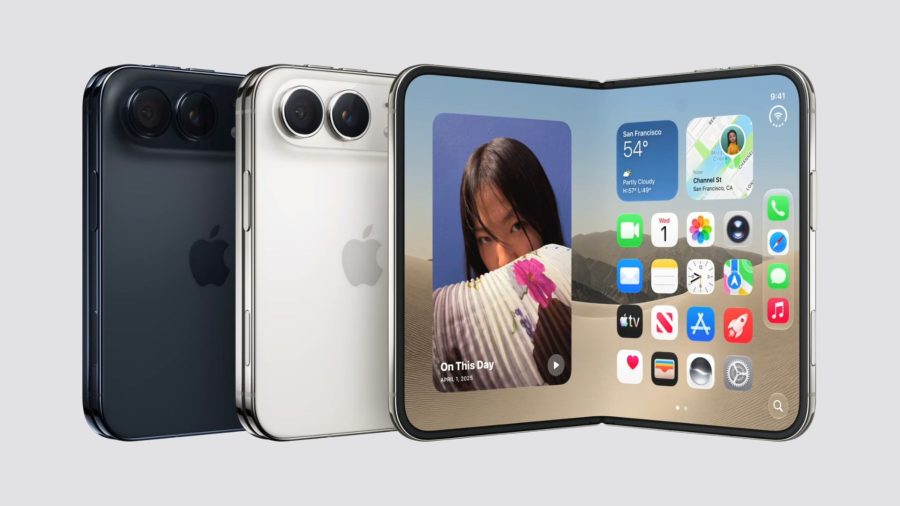

For years, the foldable phone has existed as a curious contradiction. It promised the convenience of a pocket-sized device with the screen of something much larger, but the technology often came with compromises: visible creases, bulky hinges, uncertain durability and software that sometimes felt like it was trying to catch up with the hardware.
Apple has now decided it is ready to enter that world. The company has unveiled the iPhone Duo, its first foldable iPhone and one of the most significant changes to the product line since the original iPhone. Rather than simply making an iPhone that bends, Apple is attempting to rethink how the device behaves when it opens, closes and moves between the two states.
At the centre of that idea are two displays. Folded, the iPhone Duo has a 5.4-inch outer screen designed for one-handed use. Open it, and the device expands into a 7.6-inch inner display, the largest screen ever put on an iPhone. Apple says the inner display is 50 per cent larger than the iPhone 18 Pro Max, while both screens maintain the same aspect ratio so content can transition between them without feeling completely rearranged.

That transition is perhaps the most important part of Apple’s pitch. The company has designed iOS 27 specifically around the folding form. Applications can occupy different sides of the larger screen, allowing users to run two apps simultaneously for the first time on an iPhone.
Safari windows can sit beside one another, while conversations with Siri can continue alongside other content. It moves the iPhone closer to the territory traditionally occupied by tablets and laptops without asking users to carry another device.




Apple is also betting that the hinge will matter as much as the screen. The mechanism contains more than 100 components and is designed to support the centre of the display when the phone is open. Grade 5 titanium, Ceramic Shield materials and an IP68 rating are part of Apple’s effort to answer the obvious question surrounding every foldable: how well will it survive everyday life?
The camera system gains new possibilities from the unusual shape. The 48MP Fusion Main camera can be used with the outer display as a preview screen, allowing users to take higher-quality selfies using the rear cameras. The phone can also stand on its own for video calls, photography and time-lapse recording. Apple’s Smart Take feature uses on-device AI to recognise when people are ready for a photograph and automatically capture the moment.
Underneath it all sits Apple’s A20 Pro chip, paired with a custom vapour chamber and dual-battery architecture. Apple claims up to 35 per cent better sustained performance than the iPhone 17 Pro, while battery life can reach up to 31 hours of video playback on the inner display.
But the biggest shift may be philosophical. The iPhone Duo arrives at a moment when smartphones are no longer competing simply on camera megapixels or processor speed. They are increasingly becoming interfaces for AI, productivity and personal computing. Apple’s new Siri AI, integrated with Apple Intelligence, is designed to understand personal context, interact with onscreen information and perform tasks more conversationally.
The price makes clear that this is still a premium experiment. The iPhone Duo starts at $1,999 in the US, with pre-orders beginning October 16 and sales starting October 23.
Apple may be late to foldables. But the company has rarely been interested in being first. Its bet with the iPhone Duo is that being late gives it time to make folding feel less like a novelty and more like the next ordinary shape of the smartphone.