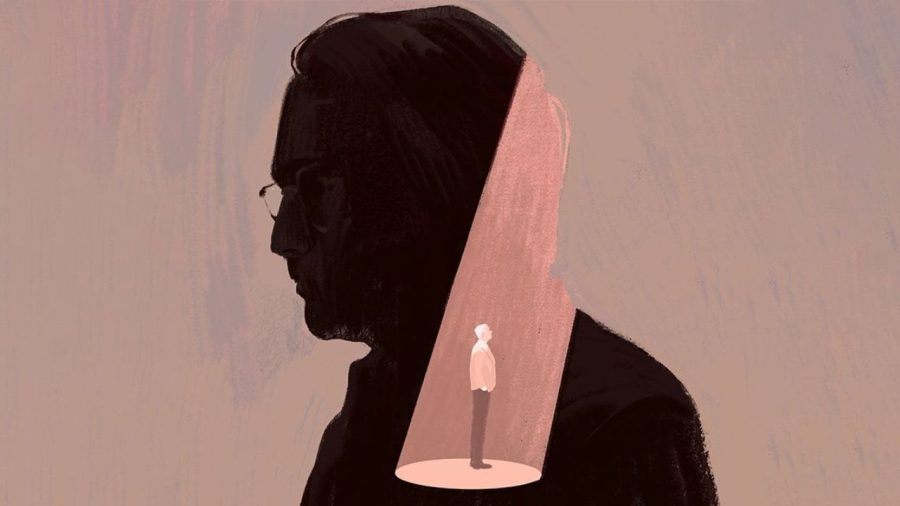

A person’s name holds immense importance throughout human life, serving as the very foundation upon which social identity is established following birth. It is through this name that an individual is addressed, identified, and evaluated regarding their life’s successes and failures.
Virtually every formal and informal marker of identity – including education, career, wealth, and personal relationships – remains tied to a name. Yet, following death, the language of that identity undergoes a complete transformation.
While an individual is recognised strictly by their name during their lifetime, that name frequently vanishes from daily conversation after death. Instead, people simply ask, “Where is the body?”, with conversations shifting to phrases such as “the body is at home,” “the body is at the hospital,” or “the body has been taken for burial.”
Although such phrasing seems to be ordinary, daily vocabulary, a deeper reflection reveals a stark reality regarding the transience of life. The social necessity of a name carried across an entire lifetime suddenly appears to end upon death.
Nevertheless, behind that single name lies the story of a complete life.

Under that identity, an individual may have been known as a teacher, a doctor, a journalist, a businessman, or a worker. To their family, they were a father, mother, child, or spouse, whilst to a friend, they were the closest companions.
Entangled with that name were the memories, affection, grievances, and reliance of countless individuals.
When death removes an individual from our presence, it leaves behind only their personal belongings, photographs, writings, work, memories, and sometimes a long, unfinished story. The house remains, but the person is no longer inside it. The workplace chair remains, yet the individual no longer sits in it.



Although contact lists on mobile phones, social media profiles, old photographs, and message threads continue to preserve the name, and modern technology can store a deceased person’s digital identity for many years, no technology can ever fill the void of their real-life absence.
Herein lies death’s greatest lesson – an individual lives on in the hearts of others not so much through material wealth, but through their behaviour and relationships.
In daily life, there is rarely room for such a realisation, as people remain consumed by competition to acquire more money, wealth, recognition, and power.
Whilst spending a substantial part of life striving for these achievements and securing the future of oneself and family is natural and necessary, losing one’s humanness amidst that busyness strips all achievement of its true meaning.
Amid this constant pursuit, people frequently delay asking for forgiveness, fail to find time to talk to loved ones, or postpone returning what is due to someone until tomorrow.
Simple gestures – such as a phone call, a sincere “sorry”, or a caring “how are you?” – can become extraordinary, precisely because no one knows which encounter, conversation, or farewell will be the final one.
Remembering death does not mean fearing life, but acknowledging its inherent limitations.
Because everyone’s time is limited, what we leave behind during this brief existence is far more important than how much money was accumulated, how big a house was built, or how high a position was achieved.
Ultimately, an individual’s identity extends far beyond a mere name; it is defined by how they treated others, how responsible they were, the love they gave, and how deeply people feel their absence.
Though the necessity of pronouncing a name may eventually pass after death, a person’s deeds, behaviour, and memories can endure in the lives of others.
For this reason, it is essential to make one’s identity meaningful whilst still alive, before the day arrives when someone inevitably asks, “Where is the body?”. On that day, the name will no longer serve as an answer.
The only remaining answer will be what kind of human beings we were.