
In a rare diplomatic push, a new peace initiative is underway to de-escalate conflict in Myanmar’s Rakhine State.
The effort, facilitated by the United Nations and the interim government of Bangladesh, seeks to bring together the Arakan Army (AA), the Rohingya Solidarity Organisation (RSO) and the Arakan Rohingya Salvation Army (ARSA).
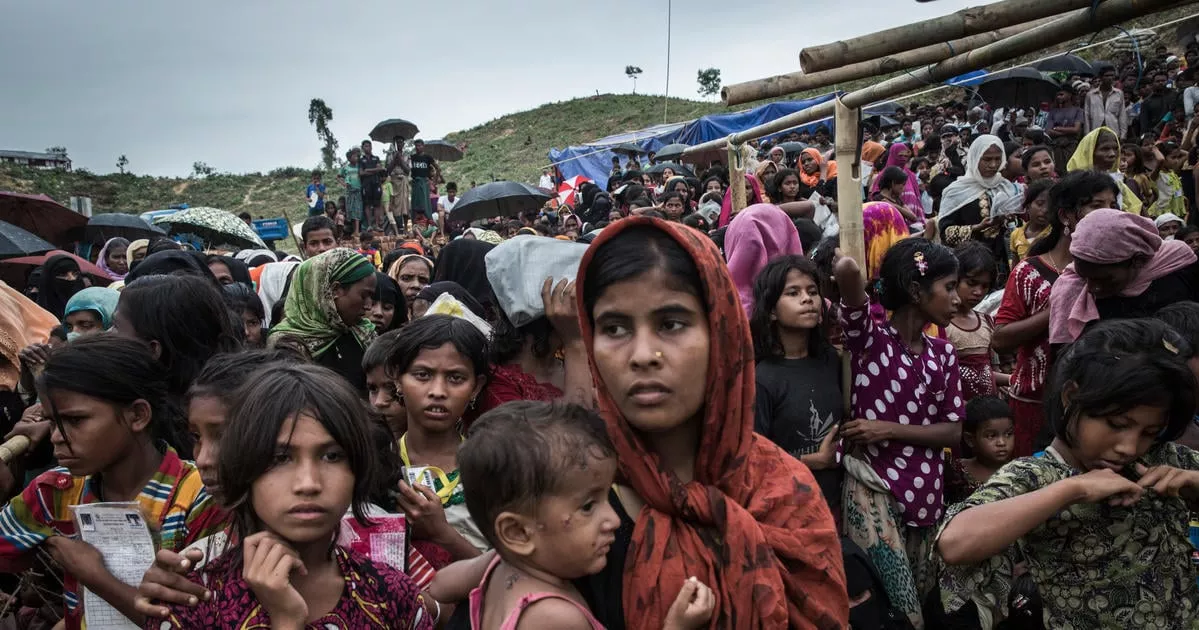
Despite the junta’s retreat in Rakhine, tensions remain high as the AA reportedly targets the Rohingya, forcing many to flee. The humanitarian and security crisis continues.
“The situation in Rakhine State is very difficult, with serious problems emerging from the conflict,” said Thomas H Andrews, UN Special Rapporteur on Human Rights in Myanmar.
“There’s a war, and those caught in the middle—many now at the Bangladesh border—need and deserve support. It’s a terrible situation,” he told Times of Bangladesh in Cox’s Bazar.

Certainly, the situation in Rakhine State is very difficult. There have been significant issues and problems that have emerged from the conflict, according to Andrews.
The peace initiative aims to unite long-divided Rakhine and Rohingya armed groups amid growing international pressure to ease Rakhine’s violence and enable future Rohingya repatriation from Bangladesh.
On the sidelines of the recent stakeholder conference on Rohingya in Cox’s Bazar, security adviser and high representative Khalilur Rahman of the interim government said, “These are the necessities, and we are in contact with the Arakan Army over border issues.”




Referring to an earlier UN-led repatriation effort that failed due to a lack of national consensus, the goal remains the safe return of the Rohingya to Rakhine through inclusive dialogue, he added that not every step of the process can be made public.
UN involvement in the process
Sources said, the UN officials in the region have restarted their repatriation effort to bring together all parties involved in the Rohingya crisis to find a lasting solution.
“All regional players must engage in dialogue to address the crisis. I’m promoting engagement with everyone in the region—all stakeholders. Nothing specific, but all need to be part of the process,” Andrews told the TIMES.
About reports of a crack-up in Bangladesh’s informal understanding with the AA, Andrews, who has been active in encouraging contact between Bangladesh officials and AA’s policy-making level and promoting broader regional engagement, said: “I’m not aware of this.”
The upcoming UN- and Qatar-hosted Rohingya conference in December may also include the AA alongside Rohingya representatives in future dialogues, officials confirmed.
AA, RSO, AND ARSA
At the recent dialogue in Cox’s Bazar, Chief Adviser Muhammad Yunus said, “It will be a historical blunder if we wait for seeing the very last Rohingya leaving Rakhine.”
After taking the office in August 2024, the government extended support to an initiative aimed at stabilising conditions in the refugee camps as part of broader peace efforts.
Officials involved in Rohingya management said the situation began to calm from last December, following a halt in clashes between two powerful Rohingya factions—the RSO and the ARSA.
Rohingya factions are working to bridge divisions, with new camp representatives chosen through a community process. Meanwhile, talks are also underway to engage the Arakan Army to reflect on-the-ground realities.
Officials on the ground told the Times of Bangladesh, in field-level communication with the AA, which controls most of Rakhine, while the group has not opposed Bangladesh’s policy to safe Rohingya repatriation directly, but Dhaka does not endorse AA activities in the areas it governs.
Regarding the reconciliation between the AA and Rohingya groups, Sujauddaula, an international activist on Rakhine issues, said hostility towards the Rohingya has increased after a large part of the Myanmar army defected to the AA.
Khaing Thu Kha, an AA spokesperson, did not respond to email requests for comment on the reconciliation issue. However, Ran Nin Soe, a senior AA adviser, expressed his gratitude and appreciation to his neighbours in a Facebook post on Friday.