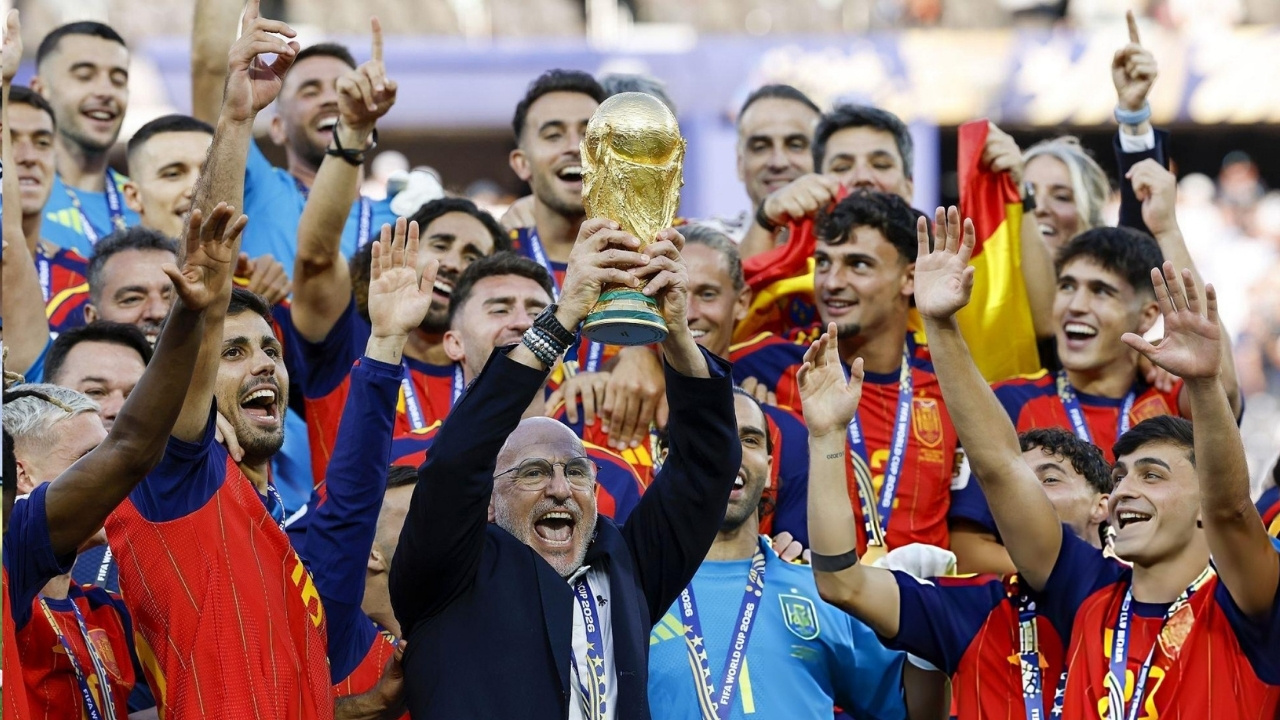



Football won. Toni Kroos said as much moments after the final whistle, and for once a footballer’s post-match platitude landed less like a cliche and more like a verdict. Spain wore the victory the way a conductor wears silence, not absence but total control. Argentina wore something else entirely, a night that curdled into shoves, skulduggery and squealing to the referee, the sound of a team that had run out of football and reached for anything else instead.
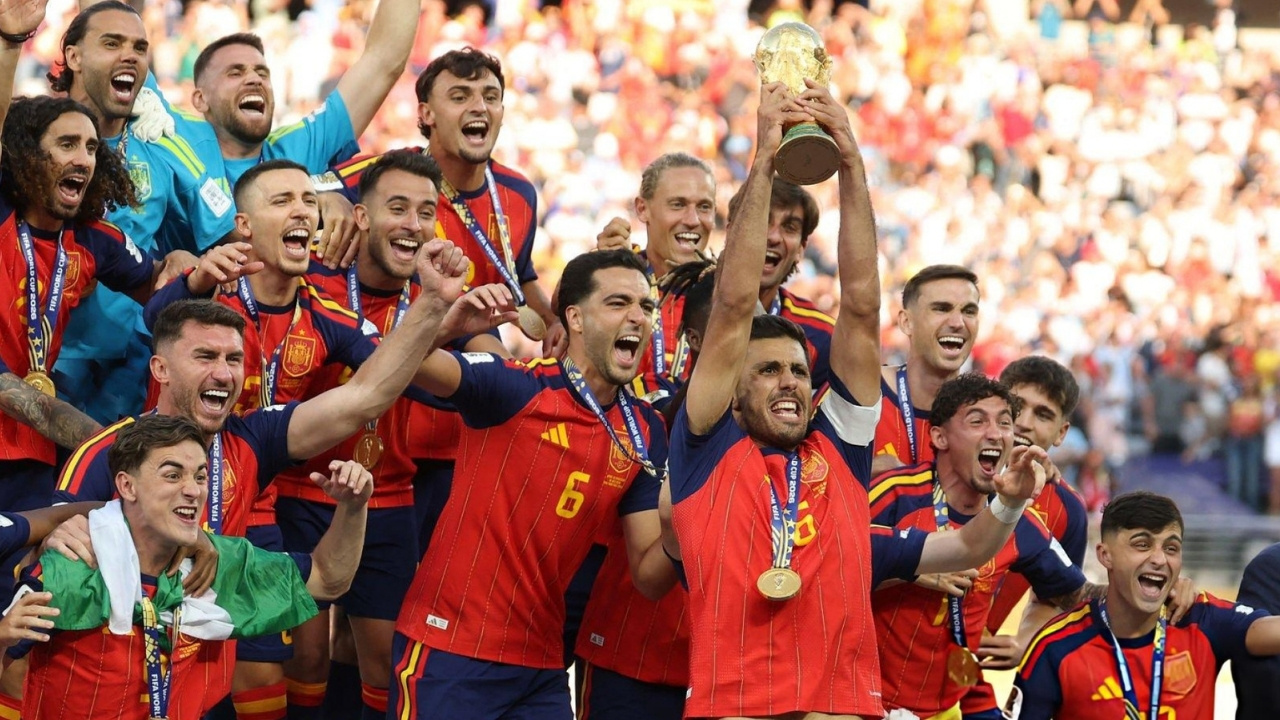
A Ferran Torres strike six minutes into the second period of extra time separated the sides in the end, but the scoreline barely told half the story of a final in which Spain were, on every conceivable measure, the superior side, and Argentina, for long stretches, barely looked like a team trying to win a football match at all. By the time Rodri lifted the trophy under the New Jersey floodlights, Spain had claimed their second World Cup, their status as the era’s dominant football nation, and, in the eyes of most neutrals, the moral high ground too.
A one sided final by every metric
Strip away the theatre and the numbers alone make uncomfortable reading for Argentina. Spain held 65 percent of the possession, completed 852 passes to Argentina’s 464, and finished with an expected goals tally of close to two from 20 attempts on goal, 11 of them on target. Argentina, by contrast, became the first team in the tournament’s history to fail to record a single shot inside the regulation 90 minutes of a World Cup final, with their first attempt of any kind, from Messi, not arriving until the 117th minute. There were just three shots in the entire first half, all of them Spain’s, the fewest ever recorded in the opening 45 minutes of a World Cup final, and the first time on record that Argentina failed to muster a single attempt before the break.
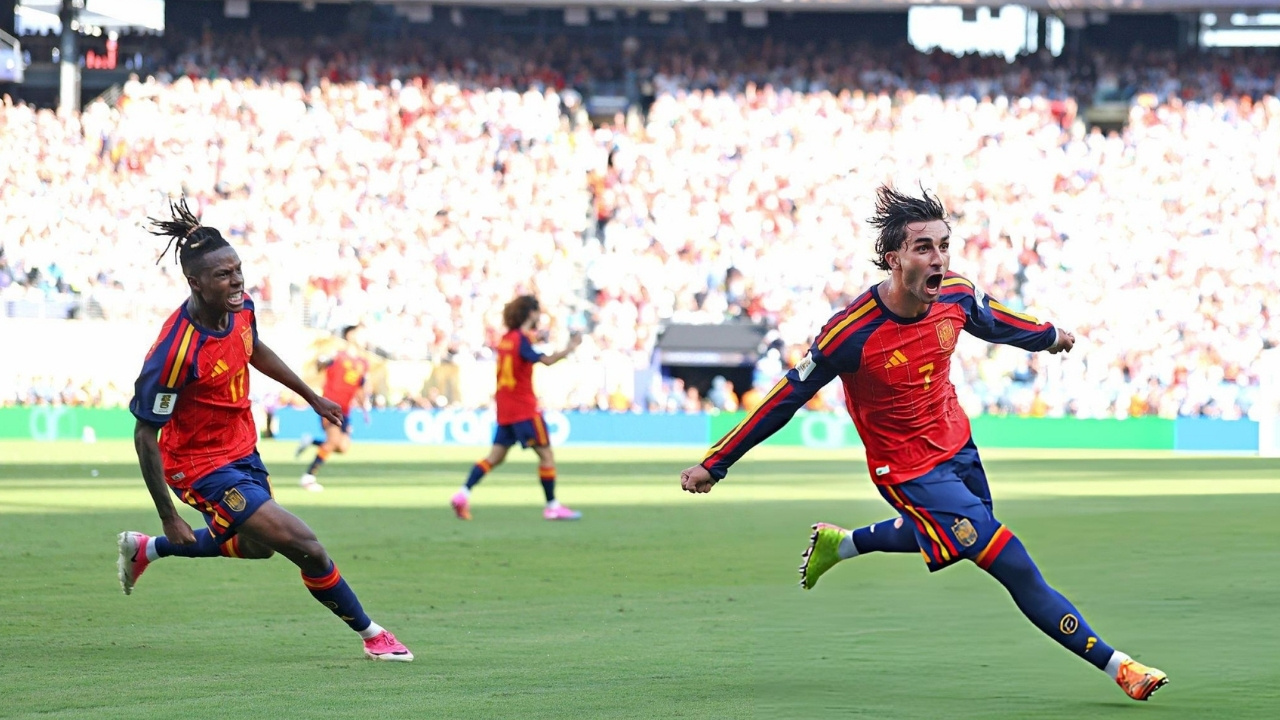
Spain finished the match with 20 shots to Argentina’s two, a difference of 18 that stands as the second largest shot differential ever recorded in a World Cup final, behind only West Germany’s 23 shots to Argentina’s single effort in the dour 1990 final, another match Argentina lost 1-0. Spain’s territorial control was similarly overwhelming, completing 235 passes in the final third of the pitch compared with Argentina’s 47, giving them a field tilt of 83.3 percent across the match.
At the other end, Argentina goalkeeper Emiliano Martinez was forced into 11 saves, the most on record by any goalkeeper in a World Cup final, a stat that flatters Argentina’s overall effort rather than showcasing the story of Spanish dominance.
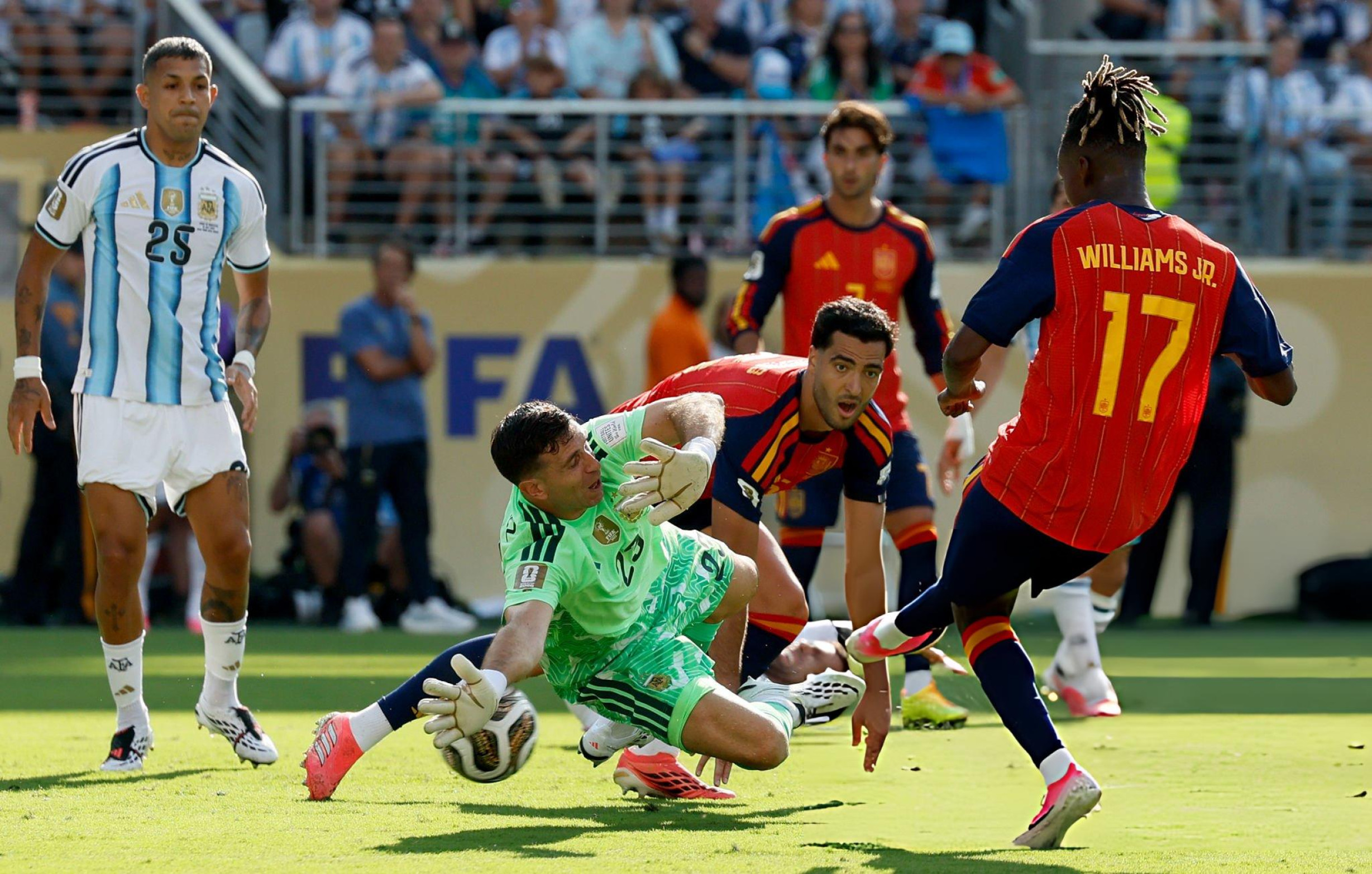
Unai Simon, meanwhile, was barely troubled all evening, adding a seventh clean sheet in eight matches to collect the Golden Glove and helping Spain concede just a single goal across the entire tournament, the fewest of any winning side in World Cup history. Spain allowed their opponents only 2.3 expected goals across the whole campaign, an average of 0.3 per match, the best such figure recorded by any team at a men’s World Cup.

How Spain smothered Messi and Argentina with him
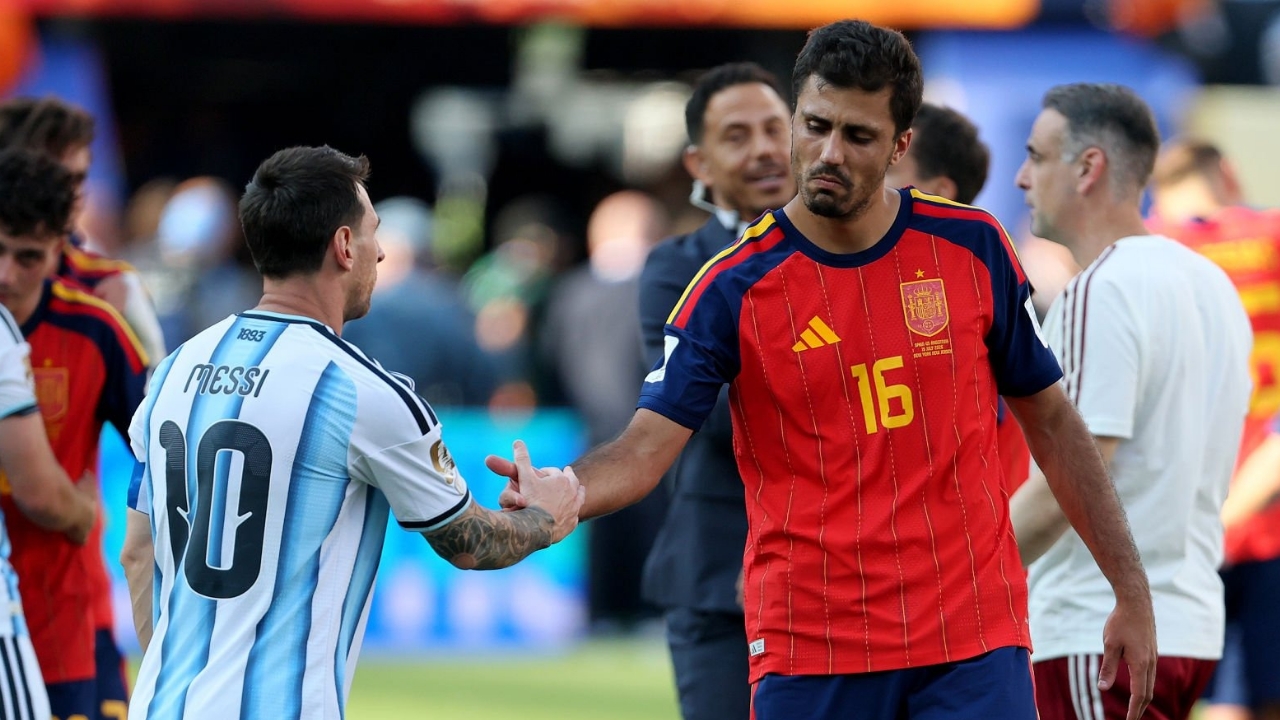
If there was a tactical story to this final, it was one of suffocation rather than spectacle. Spain set out to deny Lionel Messi space from the first whistle, pushing their back line high to compress the pitch and trusting Simon to sweep up anything played in behind. It worked almost to perfection. Messi, at 39 playing what is widely expected to have been his final World Cup match, managed just 15 touches in the opening half, his lowest tally in three tournaments, and finished the game having failed to register a shot on target. When he tried his familiar trick of drifting right to conjure something from nothing, as he had against England and Egypt earlier in the competition, Spain simply doubled up and closed the lane before he could turn provider or scorer.
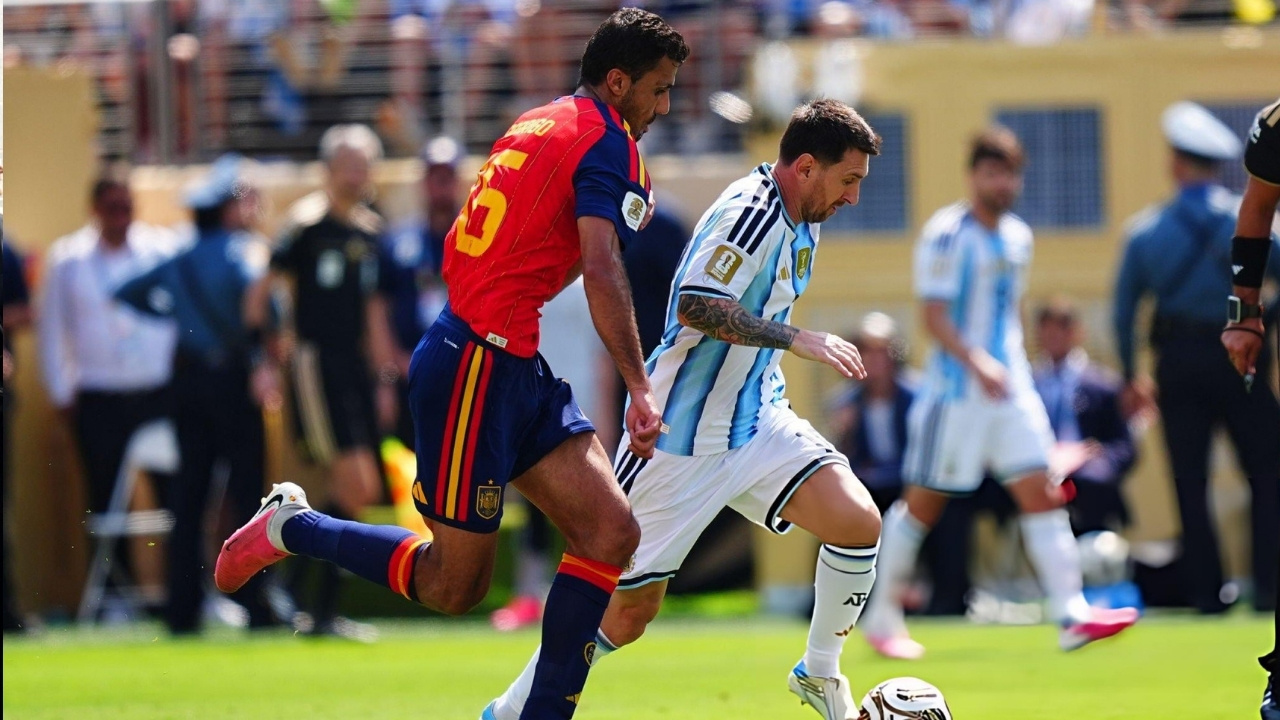
Deprived of their talisman’s influence, Argentina had strikingly little else to offer. Julian Alvarez toiled in isolation up front, while the supply from midfield dried up almost entirely under the weight of Spain’s relentless counter pressing, a facet of their game that received less attention than their famed possession but proved just as decisive. No side at the tournament won the ball back more often inside two seconds of losing it than Spain, and they did so six times in the final alone, repeatedly strangling Argentina’s attempts to build any rhythm of their own.
Amid all that defensive discipline, one performer stood above the rest. Rodri was later confirmed as the tournament’s outstanding player, collecting the Golden Ball ahead of both Messi, who took the Silver Ball, and Kylian Mbappe, who claimed the Bronze after finishing as the competition’s top scorer for France despite their own semi-final exit.
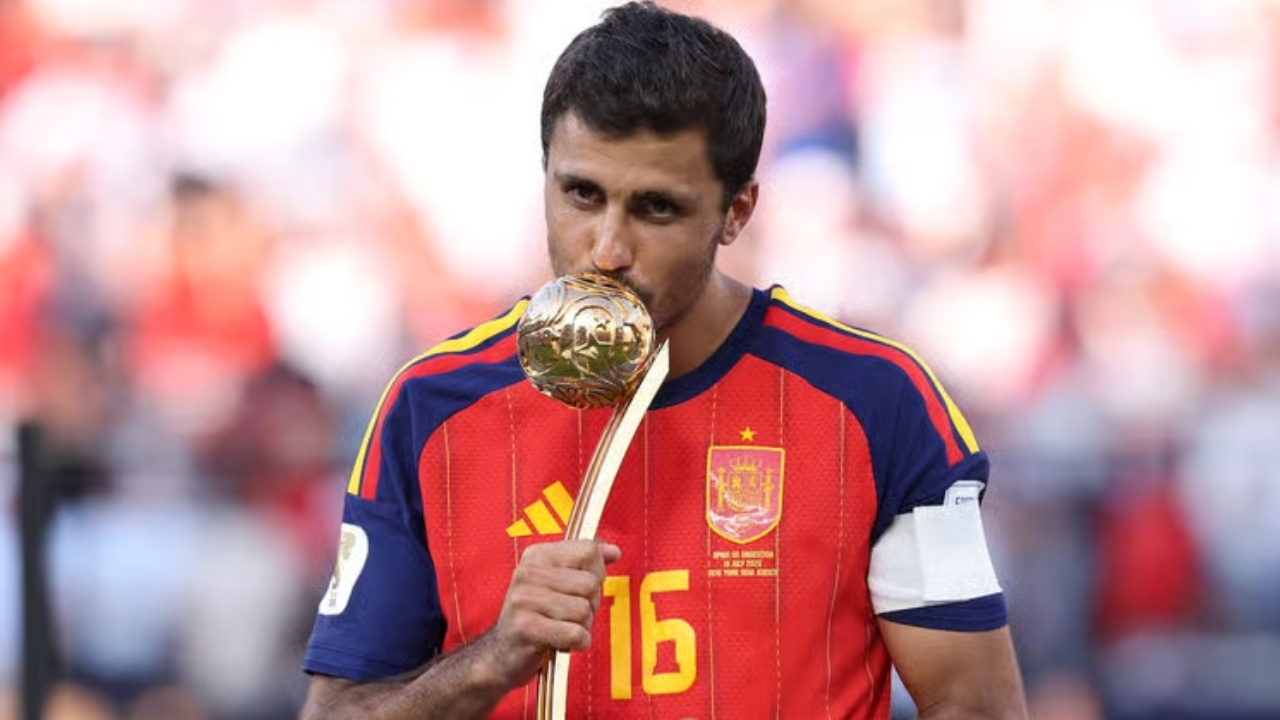
The Manchester City midfielder was everywhere in the final, breaking up attacks, dictating tempo and even nullifying Messi at source with a well timed tug of the shirt when Argentina threatened a rare break. Alongside him, teenage centre back Pau Cubarsi was named the tournament’s best young player, having anchored Spain’s defence with a composure well beyond his 19 years throughout the campaign. Rodri and Cubarsi both completed more than 100 passes in the final, joining Brazil’s Dunga in 1994 as the only players on record to do so in a World Cup final, with Cubarsi’s 121 the most of the night and Rodri’s 101 not far behind.
Yamal completes football as Messi’s era ends in tears
At 19 years and six days, Lamine Yamal became the third youngest player to feature in a World Cup final, behind only Pele in 1958 and Giuseppe Bergomi in 1982. With Cubarsi also starting, at 19 years and 178 days, Spain became the first side ever to field two teenagers in a World Cup final, against an Argentina XI that averaged 30 years and 101 days, the second oldest starting lineup in the fixture’s history, behind only Brazil’s against Czechoslovakia in 1962. Messi, meanwhile, became only the second player, after Brazil’s Cafu, to appear in three World Cup finals, and at 39 years and 25 days is the second oldest finalist on record, behind only Italy’s Dino Zoff in 1982.
The contrast produced one of the enduring images of the tournament. As Messi stared long into the ranks of Argentina’s supporters, perhaps sensing this was the last time he would take such adoration at a World Cup, it was Yamal, two decades his junior, who stepped in to console him before the pair fell into each other’s arms, Barcelona’s current number 10 embracing the man who made the shirt legendary. It offered a fitting bookend to the photograph, which resurfaced in the buildup to this final, of a 20 year old Messi bathing a five month old Yamal at a charity shoot in September 2007, one generation’s torch passing to the next in real time. Messi did not dispute the result afterwards. “They were better, to be honest,” he said. “We lost the game, and we accept that. That doesn’t mean that we will forget everything we’ve done so far, so I’d like to thank my people, my players and the country.”
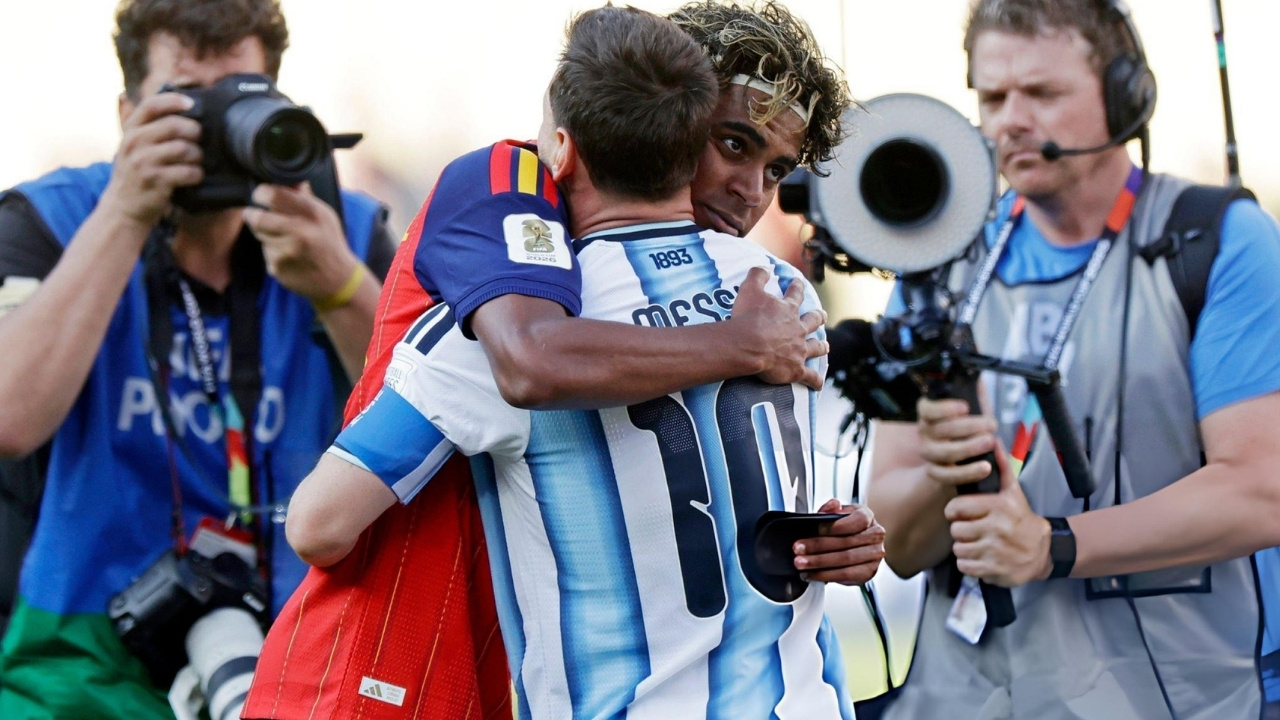
Yamal has now effectively completed international football at 19, becoming the youngest player to win both a World Cup and a European Championship, having also lifted the Euros with Spain in 2024. Spain coach Luis de la Fuente praised his growth. “He has played great football that will help him to mature and be even a greater footballer than he already is,” de la Fuente said. “He really sacrificed for the collective good. This is very important in my squad. In my opinion, he played a great World Cup.” Yamal also showed a temperament to match his talent, repeatedly targeted by Nicolas Tagliafico without ever reacting, prompting BBC pundit Joe Hart to single him out afterwards. “Not only did Lamine Yamal not react, he stood up to it,” Hart said. “He was not rattled and he did not back down. He had the entire team trying to smash him. He just stayed real cool.”
A final that turned nasty
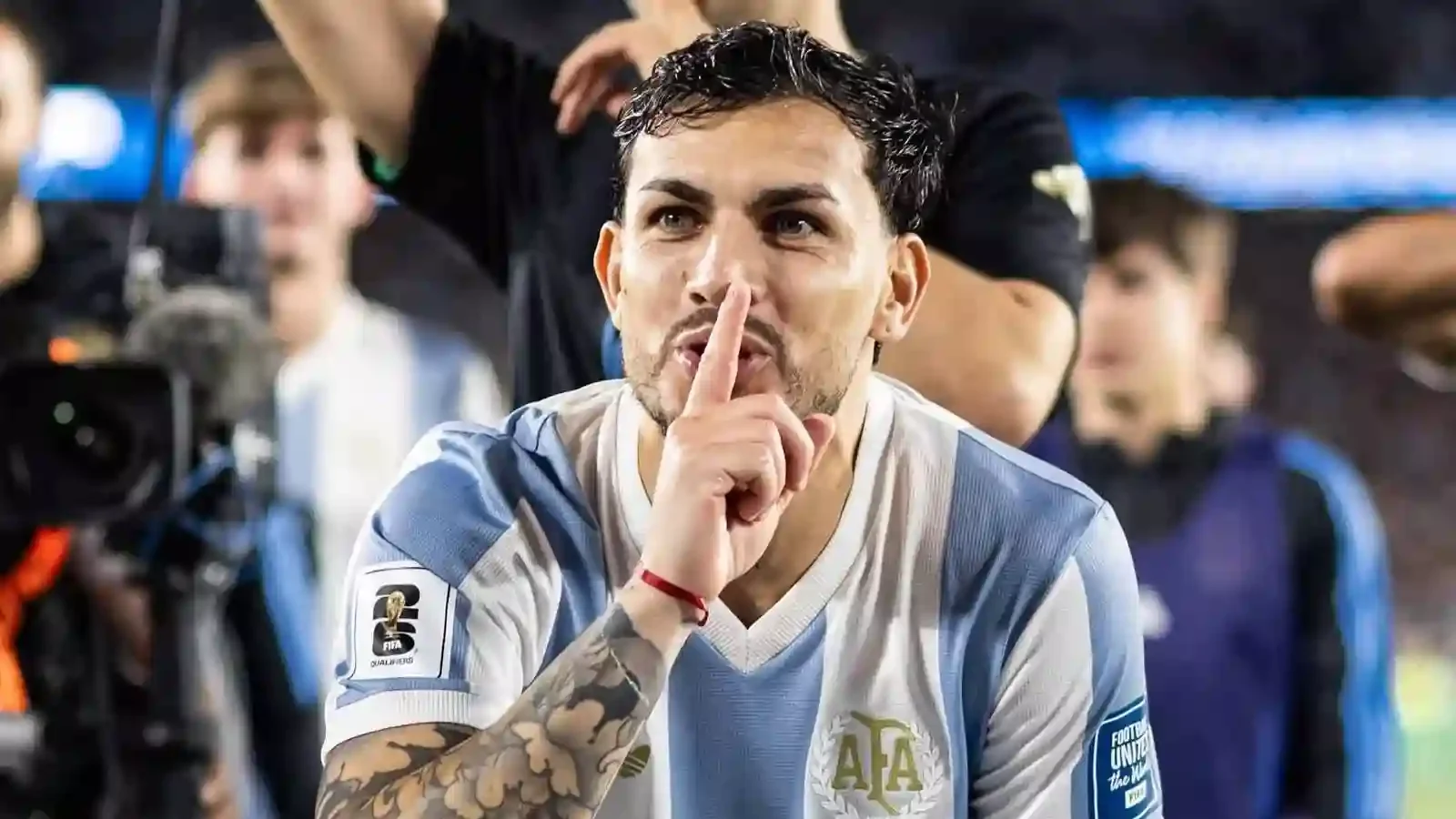
For all the football on show, it was Argentina’s conduct that dominated the conversation once the whistle blew. Frustration had been building for some time before Fernandez’s dismissal, with Alexis Mac Allister escaping punishment for a reckless first half challenge on Dani Olmo, and Nicolas Tagliafico doing similarly after hauling down Yamal. Lisandro Martinez eventually became the first man booked, scything into Mikel Oyarzabal as Argentina sought to slow Spain’s momentum by any means available. Leandro Paredes, introduced at half time, wasted little time adding to the mood, earning a yellow card of his own for an elbow into Rodri’s back, a moment Rodri did little to play down himself, going to ground theatrically enough to draw criticism of his own. Argentina finished the match with 25 fouls, the most by any side in a World Cup match since their own tally of 26 in the 2022 final against France, and in a chaotic opening half committed more fouls than passes in the final third, nine to eight.
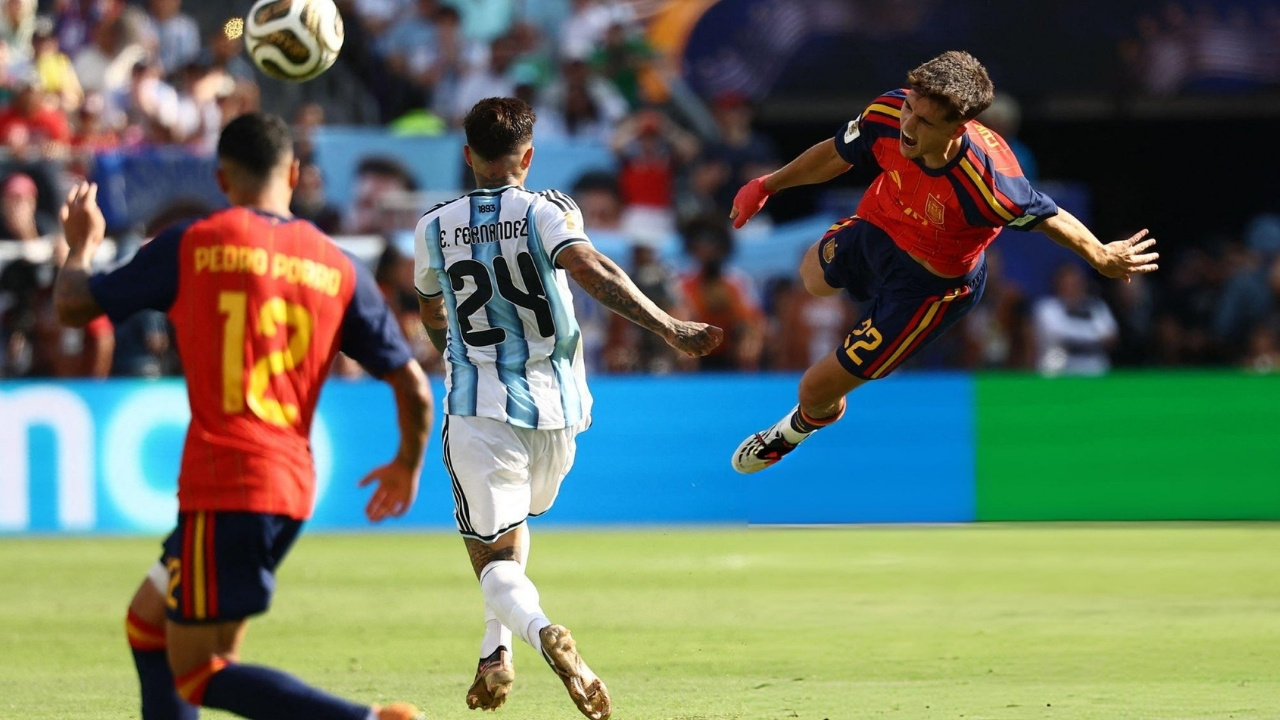
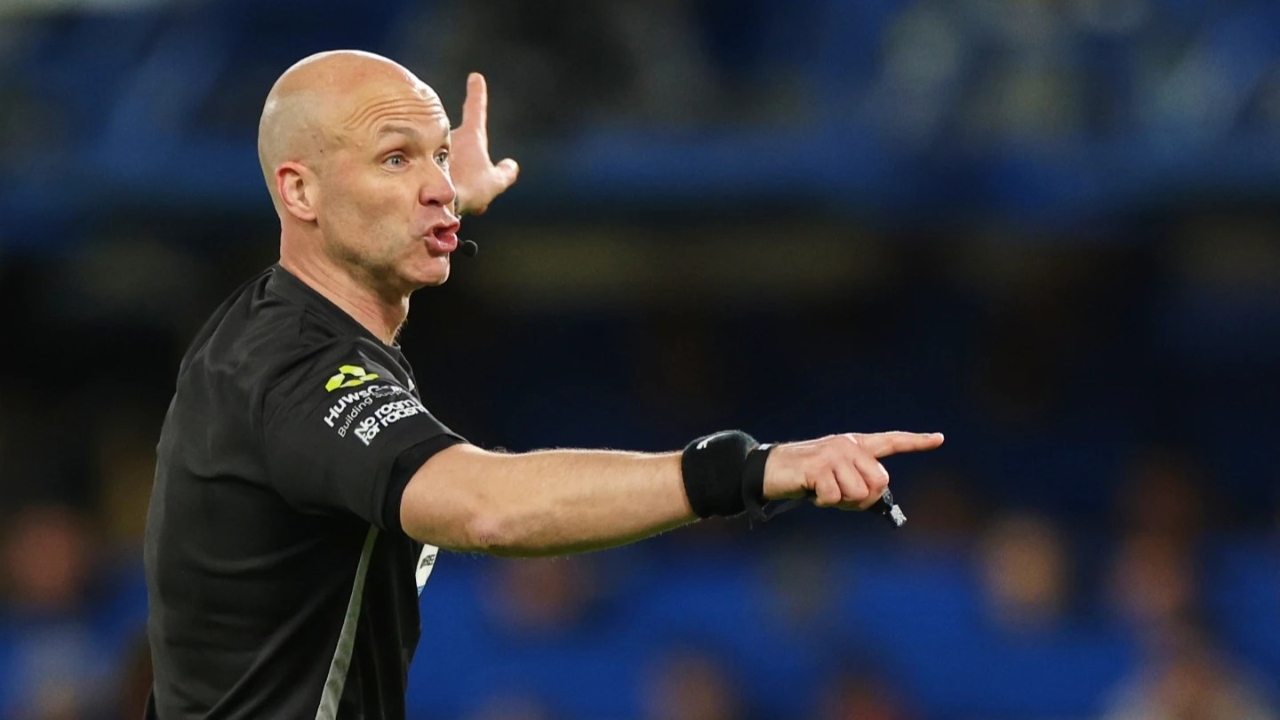
The pivotal moment arrived in second half stoppage time, when Fernandez, already booked for dissent after sarcastically applauding referee Slavko Vincic, caught Cubarsi late and studs down as the pair contested a loose ball, sending the young defender spiralling through the air. Vincic reached for a second yellow and a red without hesitation, reducing Argentina to ten men. Fernandez became only the sixth player sent off in a World Cup final, and the third from Argentina, following Pedro Monzon and Gustavo Dezotti in the 1990 final. Even Messi found himself drawn into the disorder that followed, appearing to gesture toward the referee that Marc Cucurella had covered his mouth while speaking to him during a heated exchange, an accusation, punishable by a red card if used to conceal insults, that went nowhere and drew comparisons to a schoolboy telling tales.
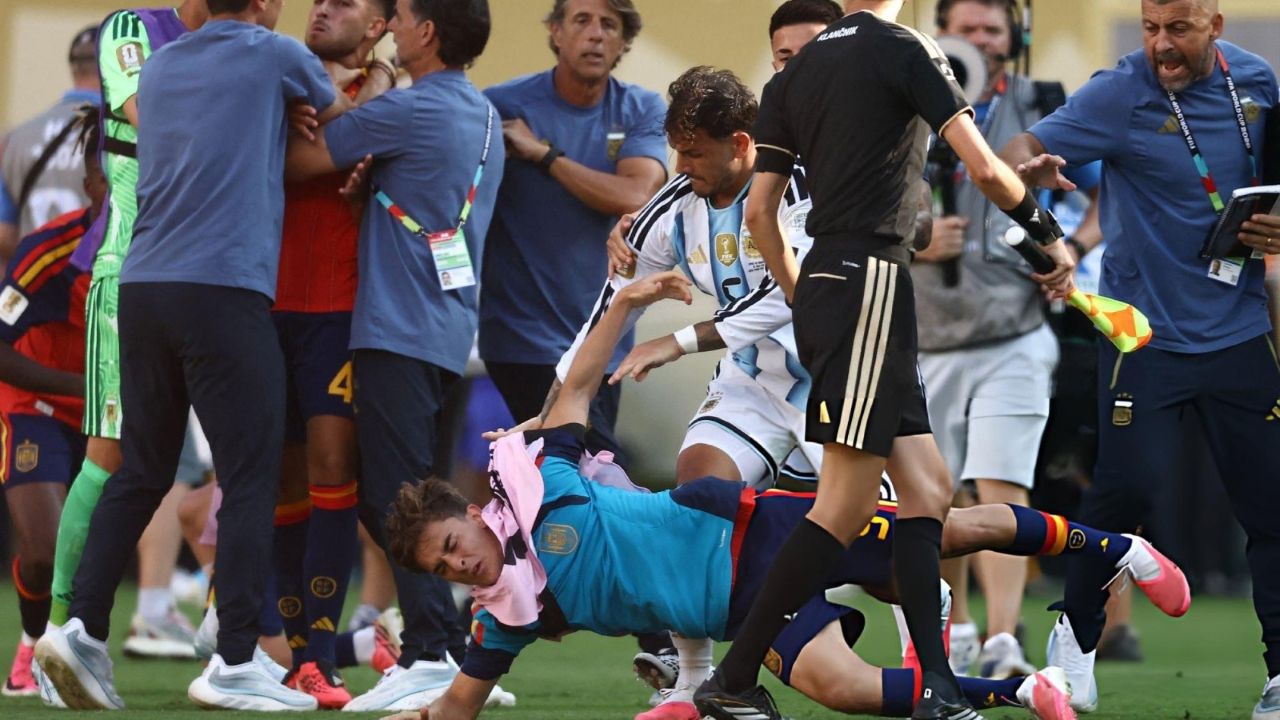
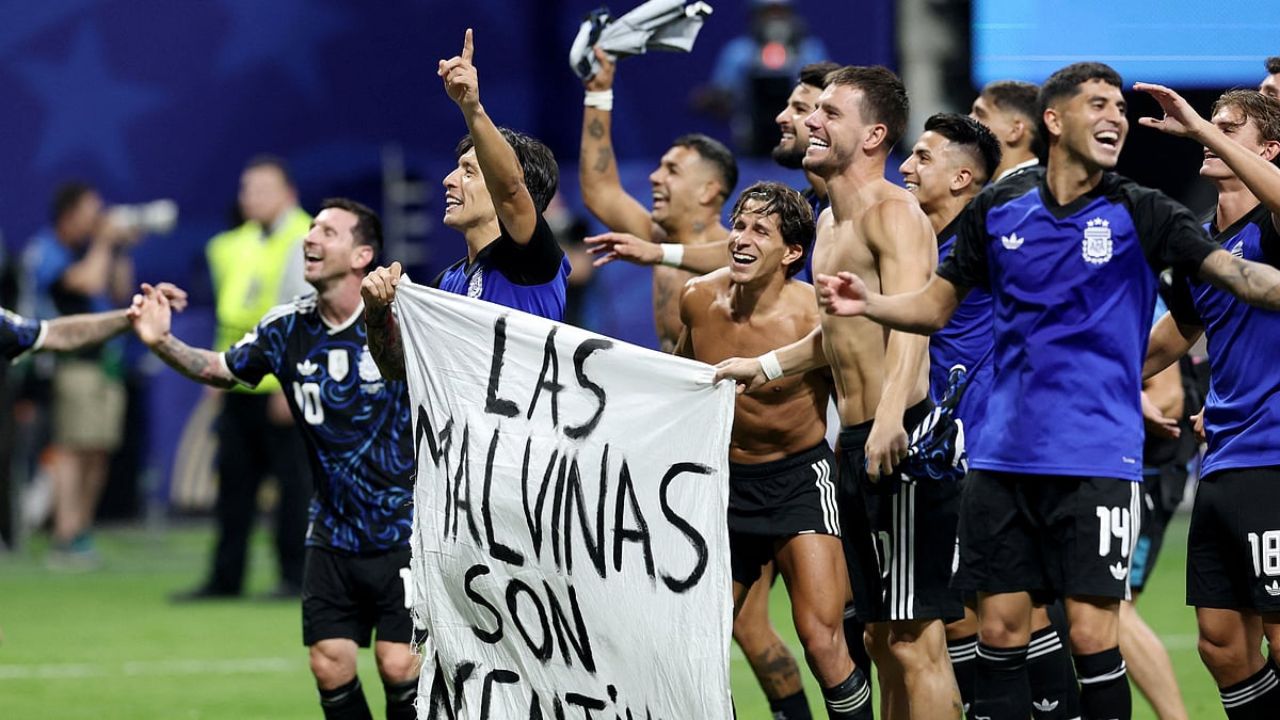
Matters deteriorated further once the final whistle sounded. As Spain’s players celebrated, Nahuel Molina appeared to catch Rodri with his arm as he ran past, sparking a confrontation in which Rodri squared up to the Argentina defender before Spain’s Eric Garcia stepped in to pull his teammate away. Paredes then arrived on the scene, grabbing Garcia around the throat, before turning his attention to Gavi, shoving the Barcelona midfielder to the ground twice as Thiago Almada also became briefly entangled. Argentina coach Lionel Scaloni rushed onto the pitch in an attempt to restore order. When it came time for the trophy presentation, Argentina’s players gathered at their own end of the stadium rather than join the ceremony, turning their backs as Spain’s squad were honoured, and several supporters could be heard drowning out Rodri’s Golden Ball presentation with chants for Messi instead.
Scaloni, fighting back tears afterwards, did not shy away from the reality of what had unfolded. “We couldn’t compete head to head today when it comes to football,” he admitted, adding that Spain had deserved their victory. It was a rare moment of clarity amid a night that otherwise did little to enhance Argentina’s reputation, with former Germany international Thomas Hitzlsperger among those unimpressed, writing that Messi remained “a genius on the ball” while several of his teammates behaved like “thugs with no sense for the beautiful game.”
Spain’s era of total dominance
Whatever chaos surrounded the final’s closing moments, it did nothing to dim the scale of what Spain have now built. This is their second World Cup, matching the record of seven of the eight nations to have ever won the tournament, with England alone still holding just one title. It arrives 16 years after their first triumph in South Africa, and comes on the back of their European Championship win in 2024 and an unbeaten run now stretching to 38 matches in all competitions, the longest of any European or South American nation in history. Spain conceded just a single goal across their eight matches this summer, the fewest by any winning side in World Cup history, having also become only the second consecutive eventual champion to fail to win their opening game, following Argentina’s own defeat to Saudi Arabia in 2022, after this tournament began with a goalless draw against Cape Verde.
Spain remain the only country to hold the men’s and women’s World Cup titles simultaneously, having beaten England to win the women’s tournament in 2023, and their trophy cabinet across every age group now runs to 16 major titles in the last five years alone. Much of that transformation has been overseen by head coach Luis de la Fuente, appointed in December 2022 after more than a decade spent almost entirely in Spain’s youth and lower league setups, a background that initially drew scepticism given he had never managed at senior club level. Since then, he has delivered the Nations League, the European Championship and now the World Cup, all built on a footballing culture that prizes patience, possession and a refusal to be provoked, exactly the qualities that were on display again against Argentina.
France great Thierry Henry, working as a pundit throughout the tournament, put Spain’s rise down to structural change rather than a passing golden generation. “I want to give credit to the system and what they put in place,” he said. “Because Spain never used to win like that. And now they win at every level.”
Spain’s trophy haul over the last four years:
| Competition | Result | Year(s) |
|---|---|---|
| World Cup | Winners | 2026 |
| European Championship | Winners | 2024 |
| Nations League | Winners | 2023 |
| Women’s World Cup | Winners | 2023 |
| Women’s Nations League | Winners | 2024, 2025 |
| Olympic gold (men’s) | Winners | 2024 |
| Under-19 European Championship (women’s) | Winners | 2022, 2023, 2024, 2025, 2026 |
| Under-20 World Cup (women’s) | Winners | 2022 |
| Under-19 European Championship (men’s) | Winners | 2026 |
| Under-17 World Cup (women’s) | Winners | 2022 |
| Under-17 European Championship (women’s) | Winners | 2024 |
For Argentina, this was a fourth World Cup final defeat, matching Germany for the most runners up finishes in the tournament’s history, alongside 1930 and 1990 and Brazil’s own 2014 defeat on home soil. History suggests retaining the World Cup remains one of football’s hardest feats, achieved only by Italy in 1938 and Brazil in 1962, with four of the last four defending champions, Argentina in 1990, Brazil in 1998, France in 2022 and now Argentina again, all falling short in the final itself. On this occasion, Argentina were undone as much by their own conduct as by anything Spain did to them, a final defined less by what they lacked in talent than by what they lacked in discipline when it mattered most.