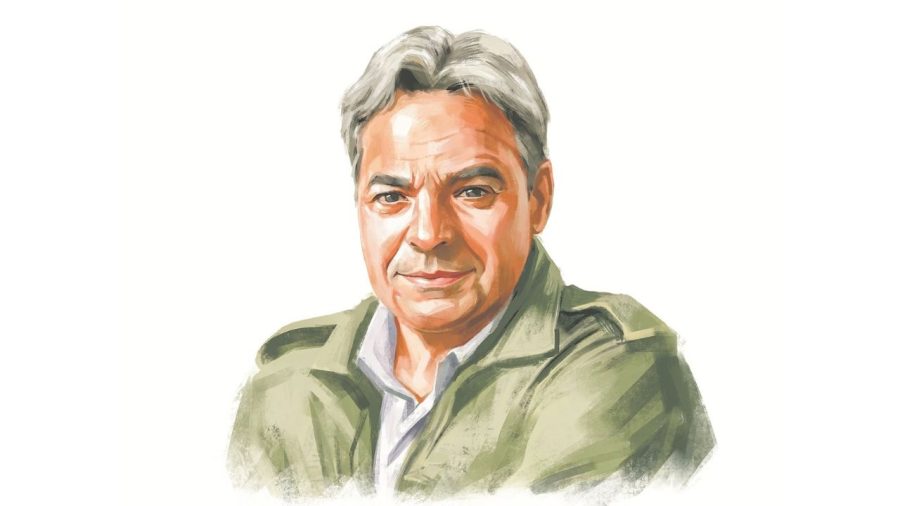



In an exclusive exchange, world-renowned investigative journalist and filmmaker Julian Sher warns that the intersection of democratic backsliding and digital technology is driving an unprecedented explosion in transnational crime and corruption.
Research enthusiast Shafi Mawla conducted the interview. The following are the excerpts.
Across the globe, the architecture of international justice is facing a quiet, multi-front crisis.
From human trafficking networks operating across digital borders to state-sanctioned financial corruption, transnational crime is not merely adapting to the modern era; it is expanding at a rate that far outpaces global enforcement mechanisms.
In a wide-ranging discussion on the current trajectory of global security and human rights, veteran Canadian investigative journalist, author, and documentary filmmaker Julian Sher painted a sobering picture of world trends over the past decade.
“I think crime, organised crime, human rights abuses, and corruption are increasing at very frightening levels,” Sher stated. “You see the statistics around the world: corruption, human trafficking, abuse of children, organised crime, drugs they are all exploding.”

According to Sher, whose decades-long career includes landmark investigations into organised crime networks, child exploitation, and state corruption, this surge is not an accident of history.
Rather, it is driven by two powerful, compounding forces: the borderless reach of the internet and the global resurgence of authoritarianism.
While the digital revolution was once heralded as a tool for transparency and connection, Sher emphasises that it has rapidly become the primary engine for sophisticated criminal networks.




The internet, he noted, has dramatically lowered the barriers to entry for illicit activity while providing criminals with unprecedented anonymity.
Global syndicates can now orchestrate cross-border human trafficking, traffic illicit narcotics, and launder billions of dollars in illicit gains with a few keystrokes. “The internet has made crime and global corruption much easier to carry out by organised crime groups and also to hide their connections and their work,” Sher observed.
By exploiting encrypted communication channels, decentralised financial systems, and regulatory loopholes across jurisdictions, criminal cartels operate with a level of coordination that traditional law enforcement agencies constrained by national borders and bureaucratic red tape struggle to counter.
Yet, while technological acceleration provides the apparatus for modern crime, Sher points to a second, even more alarming catalyst: the worldwide decline of democratic governance.
Over the past decade, democratic institutions have faced systemic erosion across Europe, the Americas, and Asia. As autocratic regimes consolidate power, the fundamental pillars required to expose and combat crime an independent judiciary, autonomous law enforcement agencies, and a free press are deliberately dismantled.
“We’ve seen an increasing number of countries turn autocratic, with less democracy, a lot less freedom for newspapers and media to investigate,” Sher explained. “When you have less democratic countries, that means there’s going to be more corruption, more crime, and especially fewer efforts to monitor that through independent media, independent courts, and independent police.”
This institutional decay creates a fertile environment for corruption to thrive unhindered. When state authorities are no longer subject to public oversight, the boundary between organised crime and governance often begins to blur.
For investigative journalists on the frontlines, the consequences of this autocratic shift are immediate and dangerous. Sher highlighted that silencing the press is consistently among the first moves made by authoritarian regimes seeking to insulate themselves from accountability.
“One of the things that autocrats always do when they come to power is curtail the media and make sure that the police don’t investigate corruption,” Sher warned. “In some cases, they have explicitly passed laws or repealed laws that previously allowed government agencies to investigate corruption.”
When independent reporting is criminalised and regulatory bodies are weaponised against watchdogs, criminal networks gain structural immunity.
Without a free press to shed light on systemic abuse or independent judges to hold powerful actors accountable, corruption ceases to be an anomaly and becomes embedded within the state structure itself.
The trends highlighted by Sher present an urgent challenge for international human rights organisations, civil society, and independent journalists worldwide.
As criminal networks become increasingly globalised and protected by autocratic state mechanisms, traditional methods of investigative reporting and legal oversight must evolve to meet the threat.
Author is a research enthusiast and freelancer.