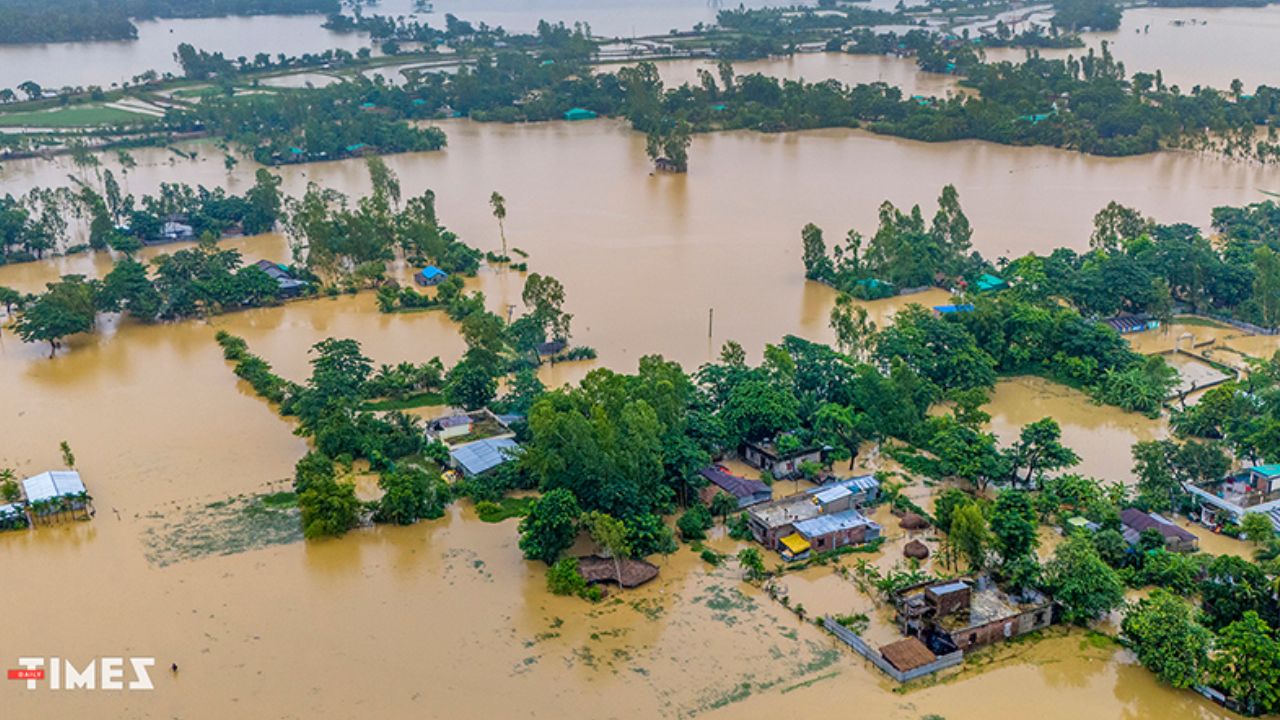



Prolonged heavy rainfall and flooding have caused widespread damage to agriculture in Chattogram and Cox’s Bazar, affecting nearly 170,000 farming families and inflicting losses of about Tk309 crore.
According to the final damage assessment by the Chattogram Regional Department of Agricultural Extension, crops on 18,816.66 hectares of farmland were damaged, resulting in production losses of around 88,539 tonnes. A total of 169,721 farming families were affected.
The report showed that Chattogram accounted for the largest share of the damage, with crops on 16,025.66 hectares affected, while Cox’s Bazar recorded damage to crops on 2,791 hectares.
Vegetables and Aus paddy suffered the heaviest losses. Vegetable cultivation on 9,208 hectares was damaged, reducing production by 56,730 tonnes and causing financial losses of Tk140.82 crore. Around 73,875 farming families were affected.
Aus paddy production fell by 30,741 tonnes, causing losses of nearly Tk146 crore and affecting 58,250 farming families.
The report also recorded significant damage to Aman seedbeds, ginger, turmeric, betel leaf and other seasonal crops.

Chattogram bears the brunt
The agriculture department said Chattogram district suffered the highest losses, particularly in summer vegetable cultivation.
Vegetables grown on 5,907 hectares were destroyed, reducing production by 43,050 tonnes and causing losses of Tk86.10 crore.
Floods also damaged 960.66 hectares of Aman seedbeds, resulting in losses of Tk4.32 crore.




Production losses included 520 tonnes of ginger worth Tk5.20 crore and 118.36 tonnes of turmeric valued at Tk3.79 crore.
Betel leaf gardens covering 78 hectares were also damaged, with losses estimated at nearly Tk60 lakh.
Although floodwaters have receded in many areas, the report said farmers continue to face severe challenges.
Destroyed seedbeds, standing water and silt deposits have become major obstacles to preparing land for the next cropping season, creating uncertainty over future cultivation.
Cox’s Bazar also suffers extensive losses
In Cox’s Bazar, crops on 2,791 hectares of land were damaged, reducing production by 19,311.30 tonnes and causing financial losses of Tk86.61 crore. A total of 43,210 farming families were affected.
Vegetables sustained the highest losses, with crops on 684 hectares destroyed, reducing production by 13,880 tonnes and causing losses of Tk54.72 crore.
Aus paddy cultivated on 1,797 hectares was also damaged, reducing production by 5,211.30 tonnes and causing losses of Tk23.45 crore.
Betel leaf gardens covering 42 hectares suffered production losses of 420 tonnes worth Tk6.30 crore.
Damage to 268 hectares of Aman seedbeds caused losses of Tk2.14 crore, forcing many farmers to prepare new seedbeds.
Floodwaters also damaged seasonal crops, including chilli, banana, papaya, onion, maize and groundnut.
Mohammad Ali Jinnah, additional director of the Chattogram Regional Department of Agricultural Extension, said several upazilas in Chattogram and Cox’s Bazar had been severely affected by the prolonged rainfall and flooding.
He said assessments were under way in the three hill districts and other areas under the region.
The ministry would be asked to provide incentives and other necessary assistance to affected farmers, while agriculture officers at the upazila level were continuing to provide technical advice and field-level support to help them recover, he added.