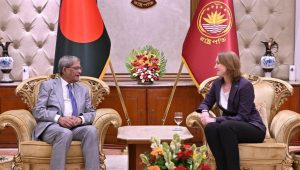
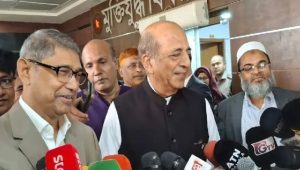
Following the ICT ruling, the question of ousted prime minister Sheikh Hasina’s extradition from India has once again moved to the forefront. Experts note that while an extradition request exists, the outcome will be determined primarily by political, not legal, considerations.
Hasina, who faces multiple charges of crimes against humanity linked to the July–August uprising, has been found guilty by the International Crimes Tribunal (ICT).
The verdict, delivered on 17 November, also convicted former home minister Asaduzzaman Khan Kamal and former police chief Chowdhury Abdullah Al-Mamun.
Hasina is currently in New Delhi, while Kamal is believed to be somewhere in Kolkata. Dhaka formally requested her repatriation in December last year under the existing extradition treaty, but New Delhi has yet to issue an official response.
Meanwhile, a press statement issued by the foreign ministry has urged India to immediately extradite Hasina and Kamal.
The official response of the government released after the verdict says, “Sheikh Hasina and Asaduzzaman Khan Kamal are convicted criminals and given sentence by the court today. If any third country gives shelter to these convicted criminals, it would be very unfriendly gesture and show disregard to justice.”
Under the extradition treaty, it is a compulsion from Indian side to oblige it, it added.
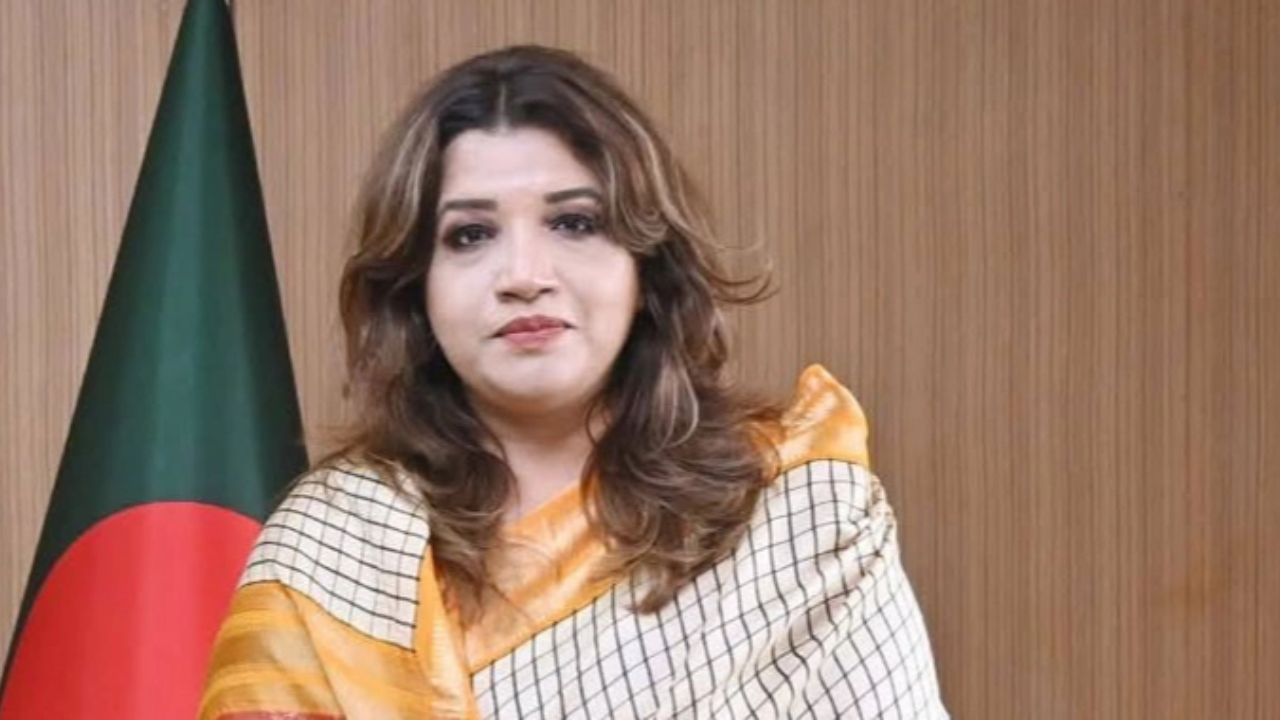
Foreign Adviser Md Touhid Hossain told journalists that Bangladesh will formally communicate with India regarding the matter. “We will send a letter to India and inform them officially. It doesn’t matter whether it goes tonight or tomorrow morning,” he said.

He noted that although the foreign ministry sent an extradition request last year, India has yet to respond. “But the situation is different now. The trial has been completed, they have been sentenced, and we have an extradition treaty with India,” he said.
Avoiding detailed legal questions, the adviser added, “What I understand is that the court has handed down the sentences, and we need to bring them back. We will officially notify India.”
Meanwhile, National Security Adviser Khalilur Rahman is scheduled to visit New Delhi this week and will have talks with his Indian counterpart Ajit Doval.
When asked whether Bangladesh would raise the issue of extradition during the meeting, Touhid Hossain said, “I don’t want to interfere in my colleague’s agenda. If he considers it necessary, he may certainly raise it. But we will follow the official channel.”
After the judgement, Indian foreign ministry issued a statement saying, “India has noted the verdict announced by the ‘International Crimes Tribunal of Bangladesh’ concerning former prime minister Sheikh Hasina.”


As a close neighbour, India remains committed to the best interests of the people of Bangladesh, including in peace, democracy, inclusion and stability in that country. We will always engage constructively with all stakeholders to that end, the statement said.
However, Indian Foreign Secretary Vikram Misri, when asked about the issue on 6 October, told Bangladeshi journalists that the matter required “engagement and consultations” between the two governments.
“We are examining these issues,” he said, adding that India is willing to work with Bangladeshi authorities but declined further comment, saying it “would not be constructive.”
Political stakes behind extradition
Bangladesh made the extradition requests, but decision on the repatriation of Hasina will be decided on political considerations primarily, not legal.
Article 6 (1) of the Extradition Treaty stipulates that ‘Extradition may be refused if the offence of which it is requested is an offence of a political character.’
However, Article 6 (2) says the ‘murder’ or ‘manslaughter or culpable homicide’ offences shall not be regarded as offences of a political character.
Former ambassador Humayun Kabir told TIMES of Bangladesh: “Extradition does not depend only on legal matters, but also political factors. Bangladesh has made its request; now India will take a political decision.”
Former ambassador Md Abdul Hye said there is little likelihood that India will hand over Hasina, “New Delhi considers her a valuable asset. They will not do anything that goes against their strategic interest.”
Former ambassador Md Sufiur Rahman echoed that view, “At present, India hardly has any incentive or compulsion to send Hasina back.”
Extradition treaty
Bangladesh and India signed their extradition treaty in 2013, later amending it in 2016 to speed up the exchange of fugitives.
Key provisions include: Both countries must extradite individuals charged with offences carrying at least one year of imprisonment and the crime must be punishable in both jurisdictions (dual criminality principle).
The 2016 amendment removed the requirement for hard evidence at the start of the process—a court-issued arrest warrant is now sufficient to initiate extradition.
However, even with these provisions, extradition between neighbours often hinges on political will rather than legal language.
India’s calculus
Diplomatic observers say India’s hesitation stems from the strategic value it attaches to Sheikh Hasina.
Hasina, long viewed as a trusted ally of New Delhi, took refuge in India immediately after the collapse of her government in August 2024. She continues to enjoy extensive facilities and, remains in communication with loyalists inside Bangladesh and abroad.
India, meanwhile, is believed to be leveraging her presence in New Delhi as a political bargaining chip to regain influence in Bangladesh’s shifting political landscape. For over a decade—from 2009 until Hasina’s fall—India invested heavily in the Awami League while maintaining limited engagement with other political forces. Over the past year, however, Delhi has broadened its outreach and, reportedly, sought to shape political dynamics inside Bangladesh.
Former ambassador Abdul Hye noted: “India will not allow Sheikh Hasina to return unless it receives assurances from Dhaka’s leadership that she will be well received by her people and that she receives due legal protection under law of the land with regard to the charges and sentences pressed against her. Given the absence of right politics, her return remains a myth.”
Ambassador Sufiur Rahman added that political unity in Bangladesh is essential, not only for her return but also for any restraint on activities that AL leaders and workers have been conducting using safety on the Indian soil.
“If political forces in Dhaka can unite on the Hasina issue and maintain pressure on India, only then there could be any chance of New Delhi reconsidering anything otherwise. But the more divided anti-AL forces in Bangladesh are, the lower the chance of her extradition and any restraint on AL activism from the Indian soil.”