




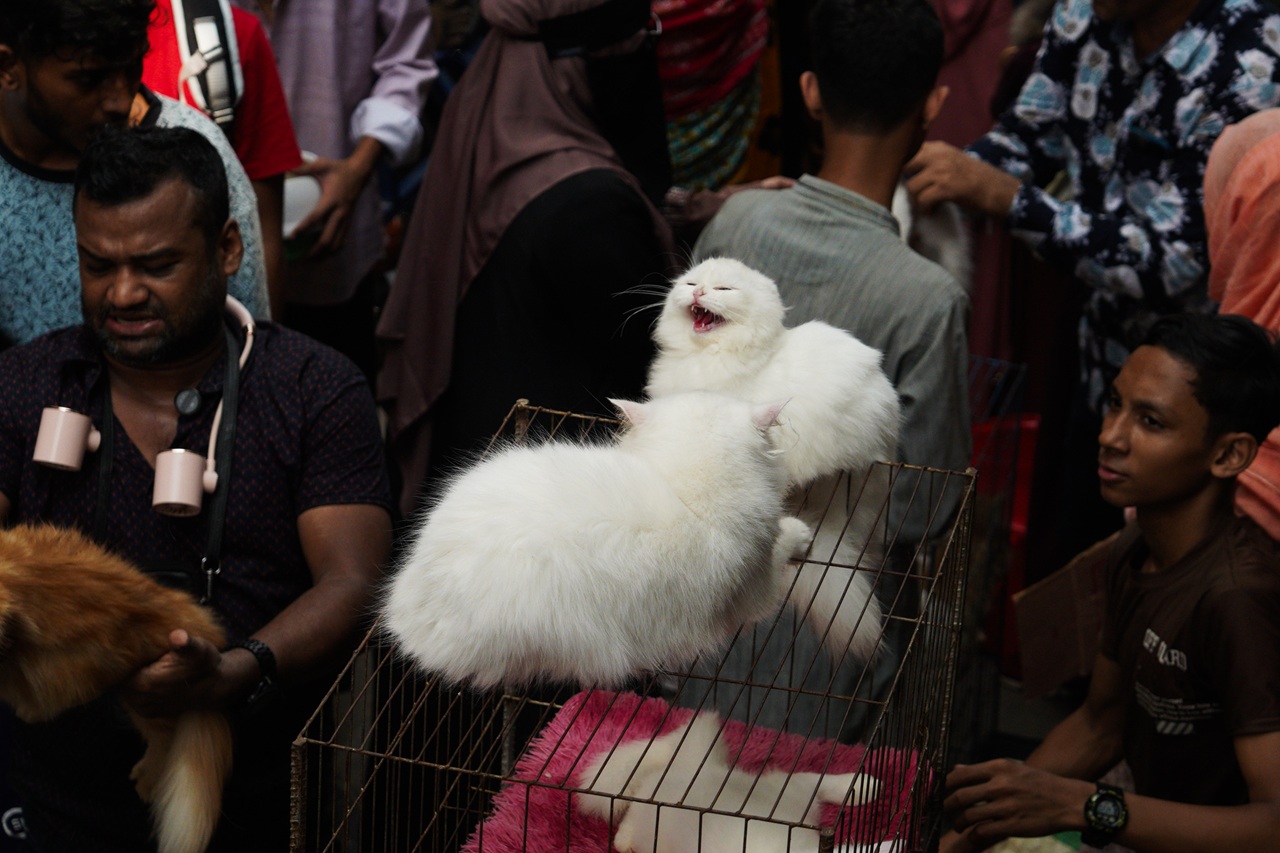
Every Friday, a narrow street beside Shah Ali Mazar in Mirpur-1 transforms into a lively pet bazaar. People call it “the cat market”, though it is filled with more than just cats. Persian kittens meow from metal cages. Parrots, puppies and rabbits sit in the cages. Crowds gather, bargaining, touching, admiring.
On the surface, it feels cheerful, a marketplace built on love for pets. But a closer look reveals something uneasy. Behind the excitement, a harder question sits quietly in the air: is this love, or a slow kind of cruelty?

Lawyer and animal welfare activist Rabab Chowdhury says the answer is already written in the law. The Animal Welfare Act 2019 clearly states that no animal can be deprived of clean water, food or medical care. Yet these markets break that rule every week. She says sellers know the law, but enforcement is so weak that they continue without fear.

If authorities monitored these markets properly, many violations could be prevented. But she also believes the cycle will stop only when buyers stop supporting it. “If we stop buying from unregulated markets, their profit chain will break,” she said.
Veterinary surgeon Dr Md Mahmudar Rahman sees the consequences firsthand. “Selling cats is a punishable offence. The animals here live in captive conditions, locked in cages under the sun for hours.” He explained that most cats brought in for treatment often come from places like Katabon or Mirpur markets, and many suffer from viral diseases or psychological trauma.
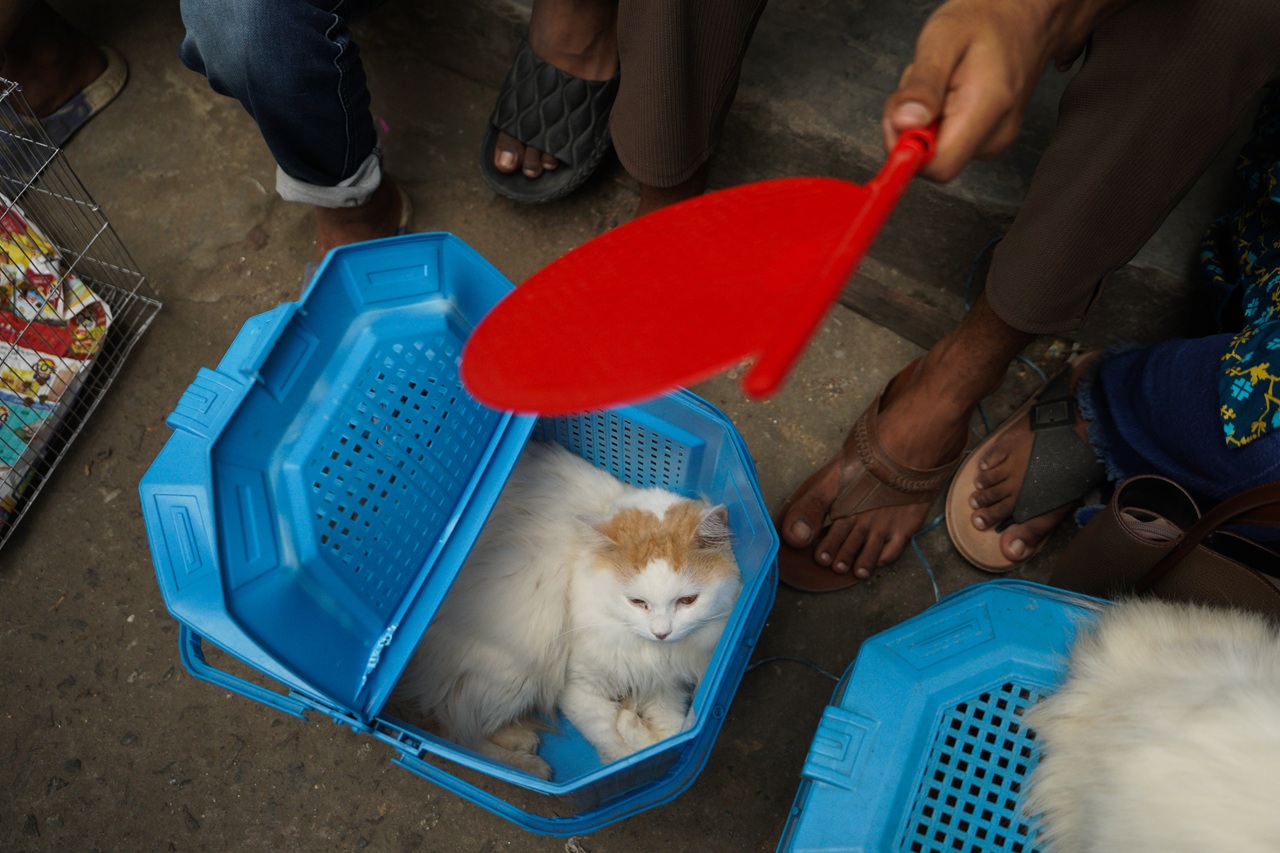
“Many of them are products of inbreeding, meaning they’re born weak and sickly. Long confinement leads to depression. Some cats become unusually quiet, while others grow highly aggressive out of fear,” he added.
Yet both Rabab and Dr Rahman acknowledge something positive. Dhaka has more pet lovers than ever before. More people are treating animals with empathy. More understand that animals are not threats but companions. Dr Rahman says petting animals improves mental health, reduces stress, and lifts mood. But real love requires responsibility: regular meals, clean water, sunlight, proper space and vaccinations under a vet’s guidance.
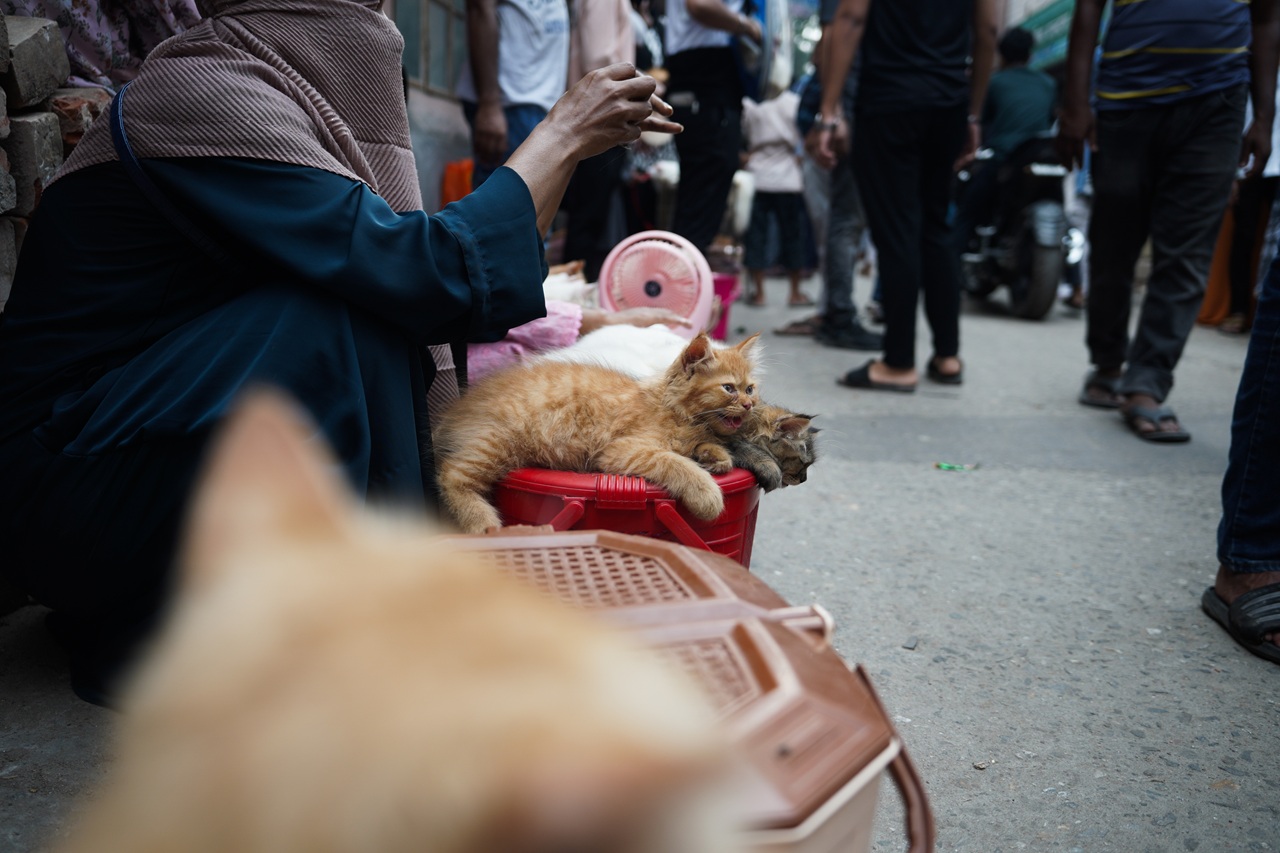
Traders, however, tell a different story. At Katabon, pet trader Mohammad Suman claims he maintains proper care. He says he uses fans, keeps ventilation and lets cats out twice a day.
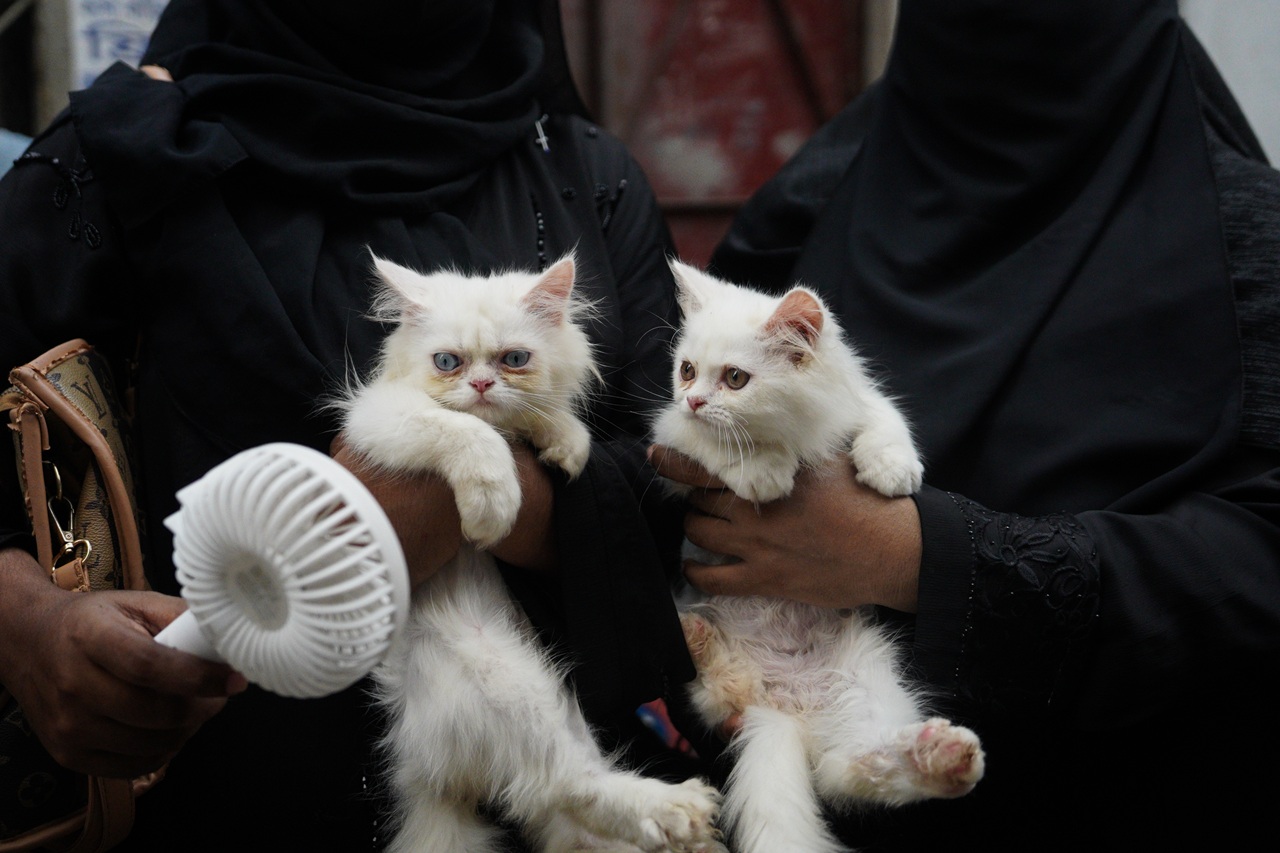
But a Times of Bangladesh visit showed another reality. At the Mirpur market, some sellers try small acts of care, shading their cats, fanning them by hand. But these gestures only underline a difficult truth: these conditions are not suitable for any living being. Dhaka’s pet culture is rising fast, but the gap between affection and responsibility is still wide.
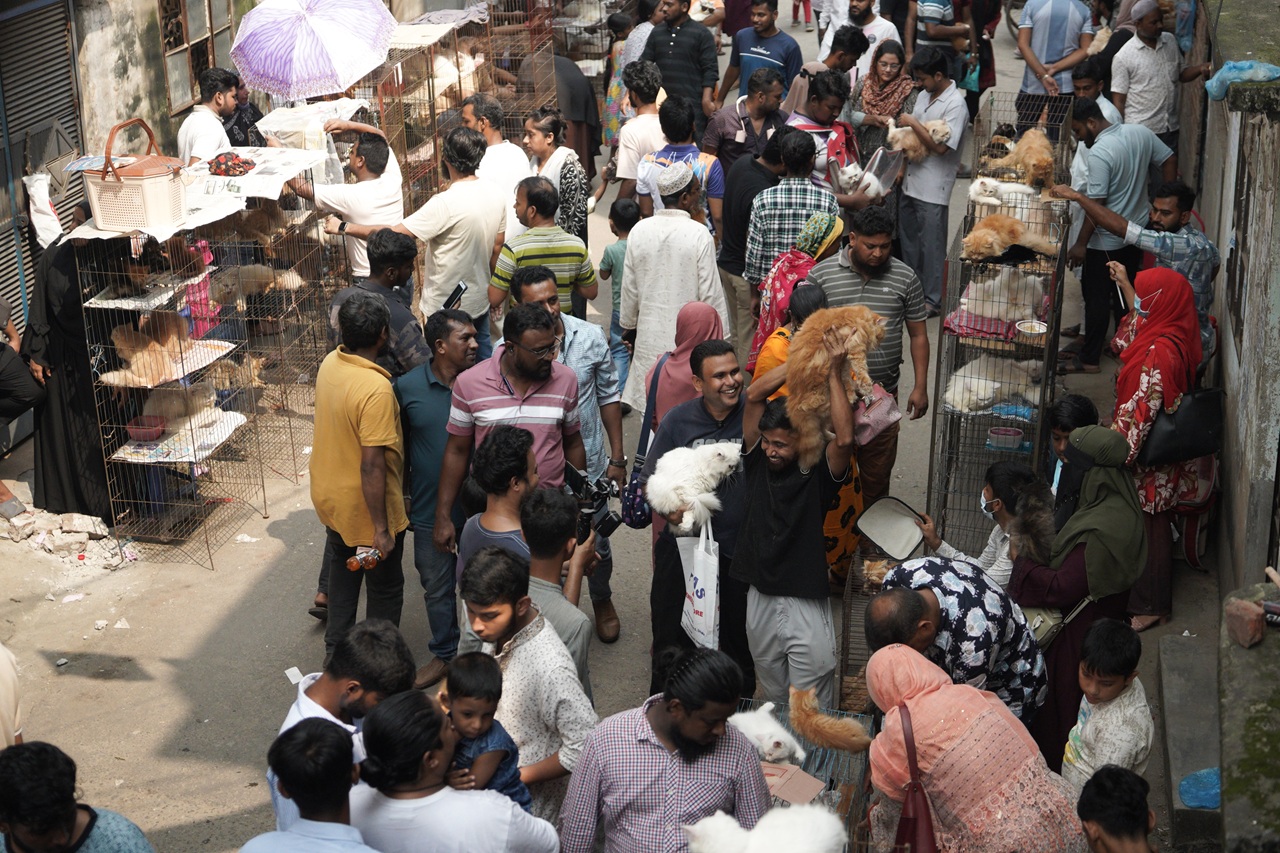
In Mirpur’s cat market, most animals live in crowded cages, stressed and dehydrated. Many are sold without vaccines or proper check-ups. Experts warn that these conditions can cause lifelong health problems.
For true animal lovers, the message is simple. True love means care, not confinement. Until strict monitoring and public awareness improve, Dhaka’s beloved cats may continue to pay the price for the city’s growing affection.


