The European Union Election Observation Mission (EU EOM) will soon deploy long-term observers across all 64 districts of Bangladesh to monitor the upcoming national election process.
An advance team began work in the last week of December, while 56 long-term observers arrived in Dhaka on Sunday to join the mission.
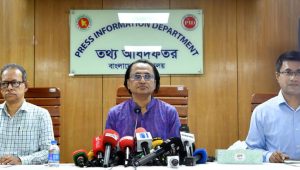
Altogether, around 200 short-term and long-term observers will participate in the entire election process, said Chief Observer Ivars Ijabs. The mission will issue a preliminary statement two days after the election on February 14, followed by a comprehensive final report two months later.
Ijabs, a Latvian Member of the European Parliament, arrived in Dhaka last week and has since held a series of meetings with the chief election commissioner, political leaders, representatives of civil society, media professionals, youth groups, and officials of the foreign ministry.
He also met Chief Adviser Muhammad Yunus on Sunday and is scheduled to meet the chief justice today.

“In the days leading up to the election, we will be joined by an additional 90 short-term observers, as well as observers from EU member states’ diplomatic missions and from Canada, Norway and Switzerland,” Ijabs said.
Sharing his preliminary assessment, he said, “We are really here to support this historic election.” The EU has decided to send an observation mission to Bangladesh based on the perception that the country is capable of conducting credible and participatory elections as part of its democratic journey, he added.

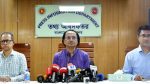


The chief observer said political parties appear committed to holding a credible and participatory election. So far, Ijabs has met representatives of two political parties.
“The first positive thing I have to mention is that they are truly devoted to having a credible election without violent upheavals,” he said. He noted that since 2008, Bangladesh has not experienced a fully credible and competitive election, making it necessary to reintroduce many democratic practices.
Ijabs said Election Commission has been transparent and open in its engagement with the EU observation team.
“We value their transparency and their openness in working with us,” he said when asked about the commission’s competency.
Regarding the referendum, he clarified that the mission’s primary focus would remain on the parliamentary elections, as the referendum falls outside its formal mandate. However, since the two processes are interconnected, observers will also pay attention to how well-informed voters are when making decisions related to the referendum.
Law and order is an important issue for election observers worldwide, including in Bangladesh, Ijabs said.
“My first impression from discussions with Bangladeshi authorities is that they are aware of the risks,” he said, adding that the key challenge lies in maintaining a balance between effective law enforcement and the protection of fundamental freedoms, including freedom of expression and association.
Pre- and post-election violence is a concern in many countries, he noted, expressing hope that Bangladeshi authorities have the capacity to address such challenges.
Intimidation of minority groups remains an important concern, the chief observer said.
“The European Union consistently defends gender equality and the participation of women and minority groups,” he said, adding that observers deployed in all 64 districts will be instructed to pay special attention to any such incidents.