The recent Iran war and the resulting surge in global fuel prices have pushed the European Union to accelerate efforts to reduce dependence on vulnerable energy routes, particularly those passing through the Strait of Hormuz.
European Union leaders are now exploring alternative trade and energy corridors, including new partnerships with Gulf countries and India, to strengthen energy security and reduce the risk of future disruptions caused by conflict, reports AP.
European Commission President Ursula von der Leyen said the EU is working on more resilient export and supply routes, including the India-Middle East-Europe Economic Corridor (IMEC), while addressing G7 leaders. She said the project aims to diversify supply chains and reinforce Europe’s energy independence.
“We are building alternative routes that offer choices,” she said, referring to IMEC as a key example.

The EU has already signed a memorandum of understanding on IMEC, although only a limited number of its 27 member states have formally joined. Despite this, officials say political support for the initiative remains strong.
A senior EU diplomat said discussions are now focused on turning the plan into practical projects. These include transport links, energy networks and digital infrastructure, along with possible pipelines and power cables. No timeline has been announced.
The proposed corridor would pass through Israel, which strongly supports the initiative. Israeli Prime Minister Benjamin Netanyahu has previously described IMEC as a “revolutionary” project after talks with Indian Prime Minister Narendra Modi.



However, analysts say the success of the plan may depend on wider regional diplomacy. In particular, progress on normalising relations between Israel and Saudi Arabia remains uncertain. Saudi Arabia has linked such steps to progress on Palestinian statehood.
The impact of the Iran war has also exposed Europe’s energy vulnerability. EU officials said the bloc spent an additional €25 billion on oil and gas imports in the early weeks of the conflict and warned of possible fuel shortages.
EU leaders have expressed willingness to deepen cooperation with Gulf countries to build alternative infrastructure routes that avoid conflict-prone areas such as the Strait of Hormuz.
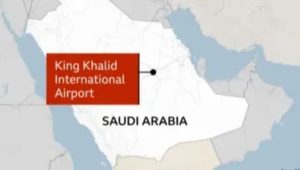
Existing systems, including Saudi Arabia’s East-West Pipeline, which transports oil to the Red Sea, have highlighted the importance of alternative routes during periods of instability.
Experts say early-stage projects will likely focus on oil and gas pipelines due to faster construction timelines, alongside upgrades to damaged or strained energy infrastructure. Future designs may also support hydrogen transport as part of Europe’s green transition.
Another major initiative under discussion is the Great Seas Interconnector, an undersea electricity cable that would link Europe’s power grid with Cyprus and Israel and could later extend into wider regional networks.
Supporters say the project could reduce energy isolation in parts of the Eastern Mediterranean and support long-term renewable energy goals.
The United States has also shown interest in expanding energy cooperation in the region, particularly between Greece, Cyprus and Israel, as part of broader efforts to develop Eastern Mediterranean energy resources.