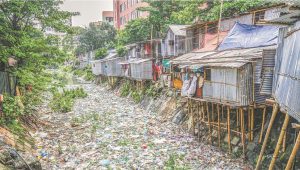
A large majority of people displaced by river erosion and flooding due to climate change are seeking refuge in urban slums, placing a severe strain on housing, health, water, and sanitation services in major cities including Dhaka, Rajshahi, and Satkhira.
Experts warned that the crisis will only deepen unless urban development shifts from project-dependent initiatives to climate-resilient and people-centric planning.
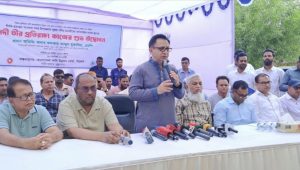
They made the observations at a citizen dialogue titled “Climate Crisis and Environmental Disaster: Actions for Building Climate Resilient Sustainable Cities,” held at the CIRDAP auditorium on Monday. The event was organised by the Children Watch Foundation (CWF).
Presenting the keynote paper, CWF Chairman Shah Ishrat Ajmeri cited data from a 2025 study conducted by BARCIK and CWF.

The research revealed that 55.5 per cent of climate-displaced people moved to cities due to river erosion, while 27 per cent migrated because of floods. Owing to a lack of adequate housing and employment opportunities, the majority are forced to live in unsafe slum areas.
The study further highlighted that 70.59 per cent of slum dwellers face climate-related disasters more than three times a year. Additionally, 64.5 per cent of respondents identified an increase in diseases as a primary impact of climate change, while 12.5 per cent pointed to waterlogging.




State Minister for Environment, Forest and Climate Change Shaikh Faridul Islam addressed the dialogue, mentioning that government initiatives alone are insufficient to protect the environment and require the conscious participation of the public.
He urged citizens to avoid using plastic bags when shopping for groceries and to reduce the use of single-use plastics. He also noted that the government is taking strict measures to regulate brick kilns.
Shahed Ghafur, Dean of the Faculty of Architecture and Planning at BUET, said building a resilient city is a fundamental right of citizens. However, he noted that government agencies remain stuck in project-centric thinking regarding urban development and planning.
According to Prof Ghafur, human-made disasters are currently causing more damage to cities than natural ones.
He highlighted that there is a lack of effective monitoring to protect “urban commons” such as parks and wetlands, which are being destroyed or repurposed due to political influence.
Public health expert Lenin Chowdhury warned that air pollution has significantly increased the risk of heart disease, with average life expectancy decreasing by approximately seven years. He added that the prevalence of non-communicable diseases, including high blood pressure and asthma, is on the rise.
Speakers at the dialogue observed that unplanned urban expansion is rapidly depleting green areas and water bodies, further escalating climate risks. They recommended that climate-induced internal migration be integrated into national and local urban planning.
The recommendations also included adopting nature-based solutions and ensuring climate-resilient housing, safe water, sanitation, and healthcare for low-income and displaced populations.