From the vital arteries of the Strait of Hormuz to the locks of the Panama Canal, and across the contested waters of the South China Sea to the war-torn Black Sea, a seismic shift is occurring.
Geopolitics is effectively rewriting the long-established rules of global shipping, transforming the world’s oceans into a turbulent and increasingly politicised battleground, according to an analysis by Al Jazeera.
The fragility of the current maritime order was laid bare recently when Indonesia’s Finance Minister, Purbaya Yudhi Sadewa, recently floated a proposal to charge a toll for vessels traversing the Strait of Malacca.

Though the suggestion – reportedly inspired by Iranian manoeuvres in the Strait of Hormuz—was swiftly retracted, its mere mention sent shockwaves through the insurance industry and Asian import markets.
Analysts suggest this move underscores a burgeoning reality: the rules-based order that once governed the high seas is being supplanted by a system defined by danger, expense, and strategic leverage.
The end of an era?
For decades, the oceans operated under a framework of stability. Following the expansion of international trade after World War II, a series of treaties signed between the late 1950s and the 1990s sought to ensure safer, free navigation.
This maritime order allowed global trade to balloon from a modest $60 billion in the 1950s to a staggering $25 trillion last year, with maritime transport now accounting for more than 80 per cent of all goods traded worldwide.


However, according to Elisabeth Braw, a senior fellow at the Atlantic Council’s Scowcroft Center for Strategy and Security, the oceans have not been this “turbulent and dangerous” since the initial establishment of these international rules.
Experts now warn that the actions of major global powers – including the United States, China, Russia, and Iran – threaten to dismantle the very framework that has facilitated global prosperity.
The Hormuz flashpoint
The Strait of Hormuz has emerged as a primary site of this maritime friction. Following the outbreak of conflict involving the US and Israel earlier this year, Iran began restricting passage through the strait in March.
The situation escalated on 13 April, when the US imposed a naval blockade on Iranian ports and vessels.




Since then, a pattern of tit-for-tat seizures has developed: the US has captured Iranian ships in the Asia Pacific and near the strait, alleging the transport of sanctioned oil, while Iranian forces have boarded and fired upon vessels they claim lack permission to transit.

These confrontations have had immediate global consequences, driving oil and gas prices to multi-year highs.
Jack Kennedy, head of MENA Country Risk at S&P Global Market Intelligence, notes that even without a total shutdown, the introduction of “permissioning” creates immense uncertainty.
He highlighted an incident northeast of Oman where an IRGC-linked gunboat fired upon a container ship, causing significant damage to its bridge—a move Kennedy described as a “calibrated use of force” designed to signal control rather than halt all traffic.
Contested canals and corridors
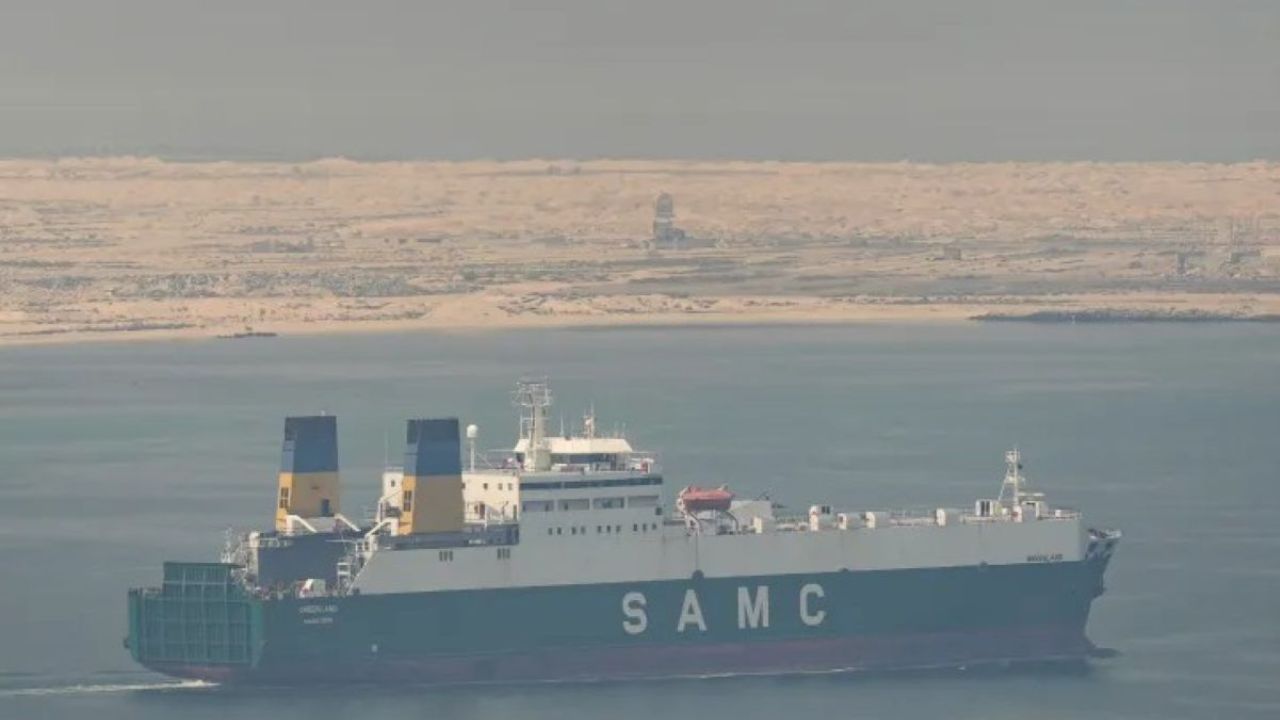
The geopolitical tug-of-war has also reached the Western Hemisphere. The US and several South American nations recently accused China of exerting “targeted economic pressure” by detaining Panama-flagged vessels in its ports.
This diplomatic flare-up follows a decision by Panama’s Supreme Court to scrap a port concession held by a Hong Kong-linked company, a move that came after sustained US pressure to curb Chinese influence near the Panama Canal.
In response, Beijing has dismissed these accusations, with Foreign Ministry spokesperson Lin Jian accusing the US of hypocrisy and infringing upon Panamanian sovereignty.
This friction highlights how even traditionally neutral waterways are becoming entangled in the broader Sino-American rivalry.
Beyond these specific flashpoints, the weaponisation of maritime routes is becoming more structured. In the Black Sea, Russian restrictions on Ukrainian exports have triggered global food supply shocks.
In the South China Sea, Beijing faces persistent accusations of harassing commercial vessels to enforce territorial claims – allegations it denies.
Jean-Paul Rodrigue of Texas A&M University points out that while using maritime pressure is an age-old tactic, the modern “scale, the volume of containers, and the size of the global fleet” have magnified the impact of such disruptions.
The rising cost of insecurity
The breakdown of norms is being further complicated by non-state actors. Houthi attacks in the Red Sea have forced major shipping firms to reroute vessels around the Cape of Good Hope, while the International Maritime Bureau reported that 2025 saw the highest level of piracy in five years.
For the shipping industry, these geopolitical tensions translate into a grim ledger of practical costs. Diverted routes result in higher fuel consumption and longer transit times, while insurance premiums and war-risk prices have soared.

Even minor detentions or inspections can cause cascading delays across global supply chains, forcing ship operators to reconsider everything from their routing and port calls to the very flags their vessels fly.
The ultimate danger, according to analysts, is the precedent being set.
As more states test the boundaries of international law through selective enforcement or the threat of tolls in international straits, maritime access risks becoming a matter of political bargaining and raw power rather than a universal right.
In this new landscape, the era of free and predictable seas appears to be drifting increasingly out of reach.