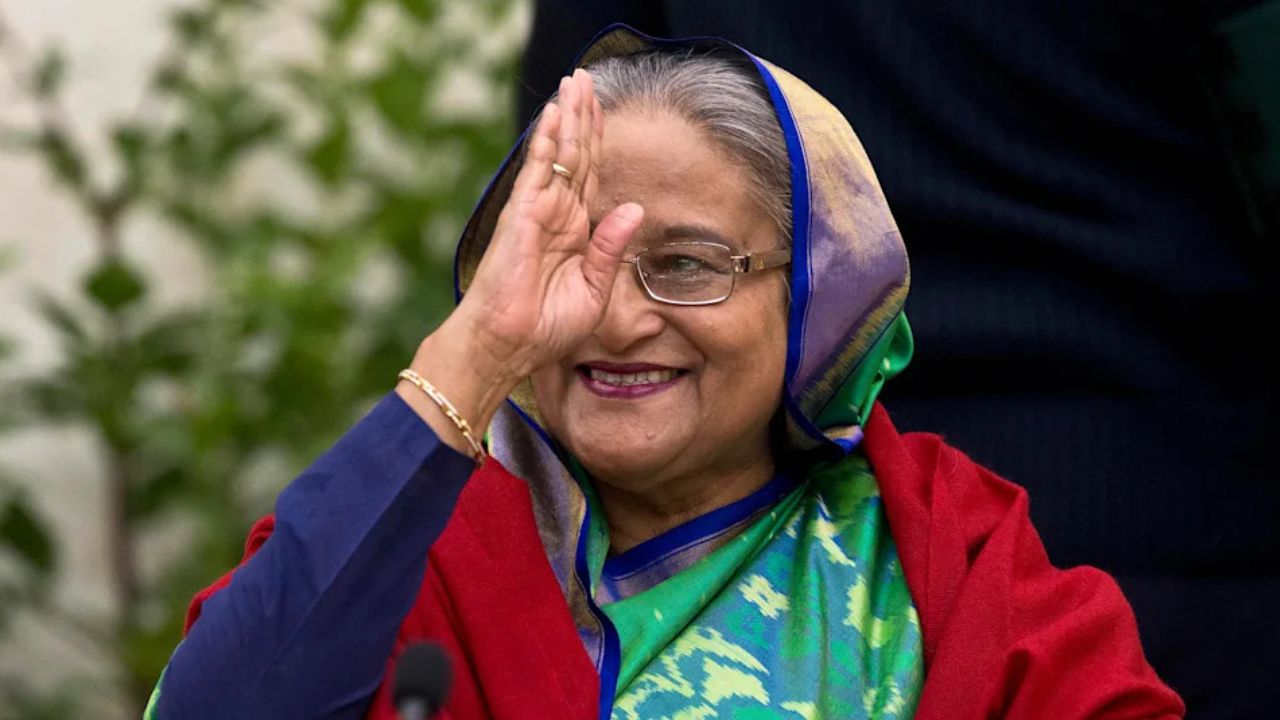
Bangladesh’s political transition has entered a sharper phase following the International Crimes Tribunal (ICT) verdict against ousted prime minister Sheikh Hasina — and with it, the geopolitics of South Asia has again been pulled into the centre of the crisis.
Dhaka’s recent public calls for Hasina’s extradition from India have not only heightened domestic debate but also exposed the limits of symbolic diplomacy in a region where strategic interests, not rhetoric, determine outcomes.
The Chief Adviser’s Office in Dhaka took the unusual step of issuing Facebook statements, supplemented by a Ministry of Foreign Affairs request, urging India to hand over Hasina and former home minister Asaduzzaman Khan Kamal. The move struck many diplomats as extraordinary: New Delhi does not recognise political press releases — much less social-media statements — as legitimate diplomatic communication.
In India’s bureaucratic system, only formal channels such as note verbales from the foreign ministry carry legal or diplomatic weight. Anything outside that structure is viewed as political messaging for domestic consumption.
As a result, analysts widely believe Dhaka’s remarks were aimed primarily at the Bangladeshi public rather than Indian policymakers. The tone, they say, reflected domestic political pressures and the need to project firmness in the wake of the ICT verdict, rather than any genuine attempt at negotiation.

While Dhaka’s messaging may have been symbolic, India’s response has been strategic. In recent weeks, the Indian military has strengthened forward deployments around the Siliguri Corridor — the narrow strip connecting India’s northeast to the rest of the country. New bases in Chopra in West Bengal and Dhubri in Assam underline Delhi’s growing unease as Bangladesh undergoes a volatile political transition and China deepens its regional footprint.
The timing of the security upgrade sends a message of its own: New Delhi expects stability on its eastern flank. For India, the combination of political upheaval, cross-border activism by Bangladeshi groups and shifting alliances inside Dhaka has raised red flags that extend beyond party politics.
Security officials also stress that any informal attempt to discuss Hasina’s extradition — such as during an upcoming high-level NSA meeting — would be dismissed. “Ajit Doval would shut down the conversation,” one former Indian official told the Times of Bangladesh, underscoring Delhi’s insistence on protocol and its sensitivity regarding political fugitives in the region.



The interim government of Muhammad Yunus has yet to secure full political trust in New Delhi. India has publicly adopted a wait-and-watch posture, signalling it is open to working with Dhaka but remains cautious — particularly when dealing with parties seen as strongly anti-India, including Jamaat-e-Islami and the National Citizen Party.
At the same time, the Bangladesh Nationalist Party (BNP) believes the absence of the Awami League gives Delhi no alternative but to re-engage with them. Indian policymakers, however, appear more concerned with continuity, connectivity and long-term stability than with political labels.
Their calculus is straightforward: India prefers predictable neighbours, regardless of ideological orientation.
Bangladesh and India have an operational extradition treaty, amended in 2016 to ease the transfer of fugitives. Despite this, analysts say Hasina’s case will hinge almost entirely on political will. Dhaka has already submitted its formal request; New Delhi has acknowledged it is “examining” the matter.
The treaty allows a country to refuse extradition if the offence is deemed “political in character”. However, it makes clear that offences such as murder cannot be treated as political.
Yet India retains significant room to interpret the clause as it sees fit, giving New Delhi considerable flexibility in how it applies the provision.
Former Bangladeshi envoys say New Delhi sees Hasina as a valuable strategic asset — one with deep networks, longstanding ties to the Indian establishment and potential influence in future political realignments inside Bangladesh. India also retains leverage as long as Hasina remains on its soil.
There is also regional precedent: India rarely extradites political figures unless assured of their safety, political accommodation and a fair trial. None of those conditions currently exist in Bangladesh, where the political landscape remains fragmented.
A former ambassador told Times that only a united political front in Dhaka could meaningfully influence India’s position — something that remains unlikely amid deep divisions between anti-Awami League groups.
“Unity is essential not only for Hasina’s return but also for placing any restraint on AL activities from Indian soil,” he said. “The more divided Bangladesh’s forces are, the lower the chance India will reconsider.”
For now, Dhaka’s public appeals on social media may resonate at home, but they lack diplomatic force abroad. One Indian diplomat said India will not make decisions of strategic importance based on public statements — particularly those outside formal channels.
The episode highlights a broader lesson: in a region defined by asymmetry of power, diplomacy is not shaped by rhetoric but by realism. If Bangladesh hopes to influence India’s decisions on sensitive matters such as extradition, it will need structured diplomacy, consistent messaging and political cohesion — not symbolic gestures.