

Pause the frame and count the red jerseys. A dribbler revving his engines, a startled defensive wall attempting to thwart by sheer numbers. It is not Diego Maradona facing Belgium in 1982. It is Ousmane Dembele, at the left corner of the penalty area in Boston, doing it for the third time in half an hour.
By the 32nd minute, Norway knew what was coming. They just could not stop it.
Dembele scored three brilliant goals, claimed the second-fastest hat-trick in World Cup history and reminded the world exactly why he is the reigning Ballon d’Or winner as France beat Norway 4-1 to top Group I with a perfect nine points from nine. The game had been billed as Mbappe versus Haaland. Stale Solbakken killed that storyline by leaving Haaland on the bench all night. In his absence, Dembele took the stage and made it entirely his own. His three goals came from three shots, all three on target, a 100 per cent conversion rate that earned him a perfect 10 player rating for the evening. He needed just 65 minutes to do it.
The first was driven in with his right foot in the seventh minute, Mbappe’s diagonal ball releasing him on the right before he cut inside and smashed a shot high into the corner past Egil Selvik. It was precision disguised as power.
The second came 13 minutes later from an almost identical position. Same wide area, same inside cut, this time his left foot sending a magnificent strike into the far corner from 20 yards. A Monet with his right, then a replica with his left.
The third, in the 32nd minute, was the most extraordinary of all. A move lasting almost a minute and involving 17 passes and every single France player, making it the first goal of this tournament to involve an entire squad. When Aurelien Tchouameni finally threaded the ball through to Dembele with four Norway defenders around him, he showed the composure of a man who had already won the argument. He feinted, shifted, created the angle and curled a left-footed shot into the far corner as if he were passing it there.

The conditions had grown harder with each attempt. More bodies, less space, higher pressure. The result was the same.
His carry data tells the fuller story of how he worked those openings. Across 65 minutes, Dembele completed 20 ball carries covering 219.9 metres, with seven progressive carries totalling 126.5 metres and his longest single progression stretching 29.3 metres. Those runs consistently unbalanced Norway’s backline, setting up clean chances rather than speculative shots.
“If you give him too much space and time, he will punish you,” said Bodo/Glimt left-back Fredrik Andre Bjorkan, the man tasked with stopping him and sent spinning back to the Arctic Circle on multiple occasions. “The things he does are amazing. You have to congratulate him. But as a defender, you always look at the ways you could have stopped him.”
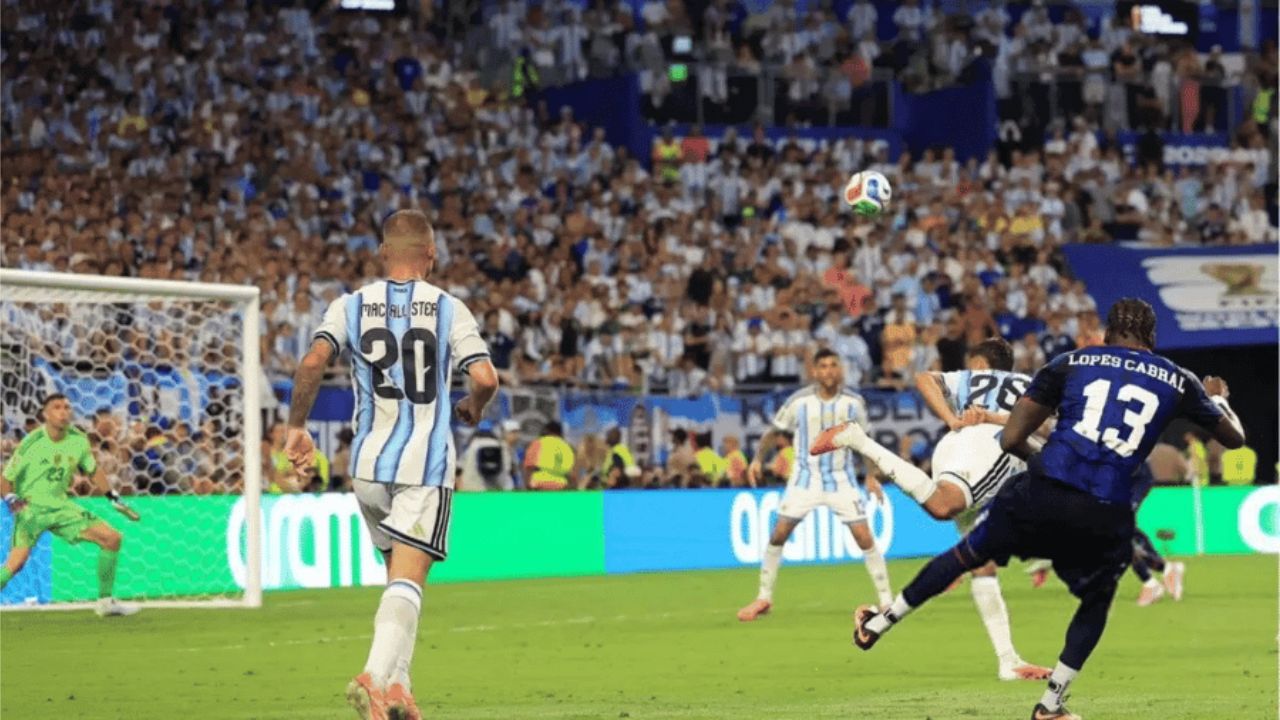

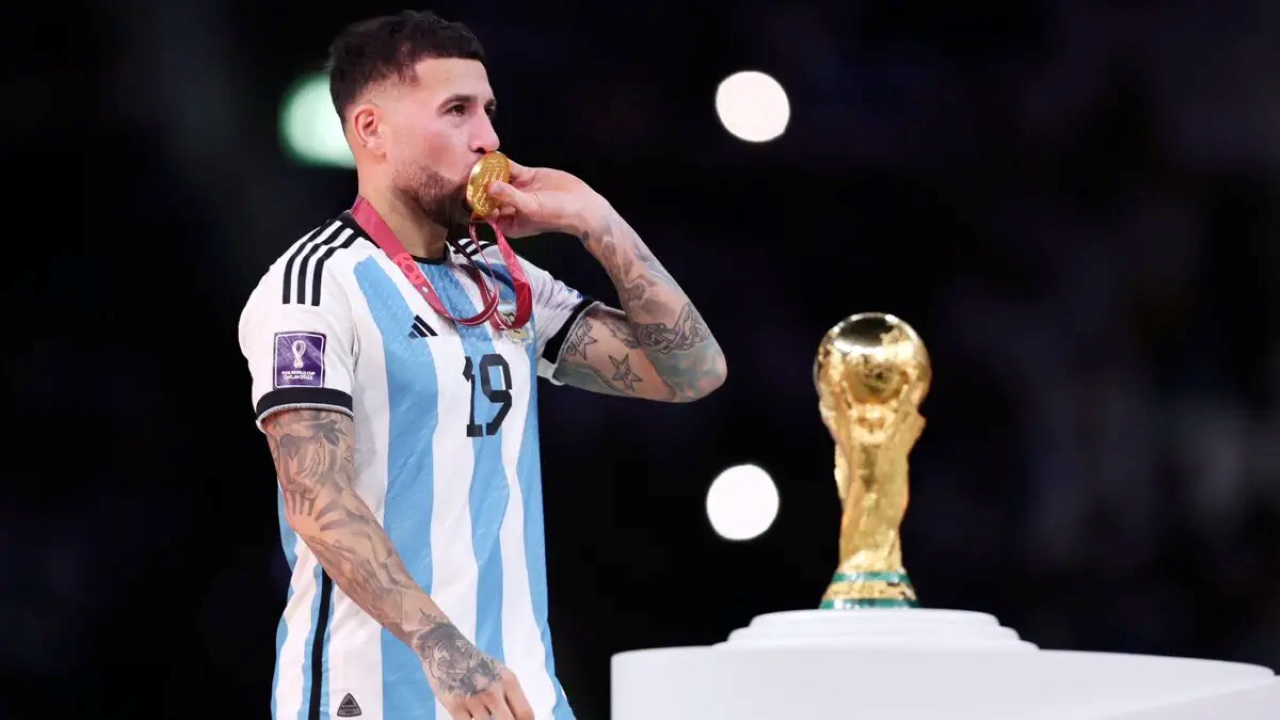
Dembele’s hat-trick was the second-fastest in World Cup history, completing his treble in 32 minutes. Only Austria’s Erich Probst, who struck three times in 24 minutes against Czechoslovakia in 1954, has done it faster.
The records did not stop there. France have now scored at least three goals in each of their last four World Cup matches, equalling the joint-longest run of any side achieving that feat in the competition’s history, and the longest since Spain between 1998 and 2002.
Dembele also became the first French player to score twice in the opening 20 minutes of a World Cup match, and only the second player at this tournament to do so, alongside Brian Brobbey for the Netherlands against Sweden.
Since 1966, Dembele and Mbappe are only the third duo to combine for five goals at a single World Cup, joining Poland’s Andrzej Szarmach and Grzegorz Lato and Germany’s Miroslav Klose and Michael Ballack. France also became the first World Cup team since Poland in 1974 to have two players score four or more goals in a single group stage. Mbappe finished the group stage with four goals and two assists, giving him 20 goal involvements at World Cups since his debut in 2018, more than any other player in that period.
And it is only the second time France have won all three of their World Cup group matches. The only previous occasion was in 1998, when they went on to win the tournament at home.
What makes Dembele’s performance all the more remarkable is the context. Operating in the permanent shadow of Mbappe, he had gone 12 World Cup appearances without scoring. Just eight goals and six assists across 61 caps before Boston. On the morning of the match, former France international Bixente Lizarazu used his L’Equipe column to call for the team to “save private Dembele.”
He did not need saving. He needed the ball.
Beyond the goals, Dembele kept France moving. He completed 30 of 41 passes, including 24 of 35 in the opposition half, added two key passes and sent five of seven long balls accurately. His 51 touches reflected steady involvement across build-up and transitions. The expected goals figure for his three chances stood at just 0.29, but his placement lifted the expected goals on target to 1.88, which tells the real story: the finishing did the heavy lifting, not the chance quality.
The tactical adjustment that has unlocked him is Deschamps’ decision to move Michael Olise into the centre and push Dembele wide right, a reversal of their positions at club level.
“There is an organisation that is not necessarily in a fixed position,” said assistant Guy Stephan, deputising for Deschamps following his mother’s death. “The idea is to finish actions in the box. I feel they talk the same football.”
Ten goals and nine points is the most Deschamps has ever accumulated in a group stage across seven major tournaments. Three matches into this World Cup, Dembele has four goals and one assist in 213 minutes, scoring every 53 minutes on average, converting at 50 per cent from eight shots. He has scored with both feet and from inside and outside the box, averaging a player rating of 8.57 across the group stage.
The front four of Mbappe, Dembele, Olise and Desire Doue, who added a fourth in stoppage time with a header from Bradley Barcola’s cross, is the most dangerous attacking combination in the competition. Norway’s Solbakken called them “by far the best” in the tournament.
After 12 World Cup appearances and zero goals before this tournament, he found his voice in Boston. It was worth the wait.