

Three days before facing Colombia in Miami, Cristiano Ronaldo was screaming into television cameras after becoming the first footballer to score in six different World Cups. It felt like a statement of intent. On 28 June at Hard Rock Stadium, the statement went unanswered.
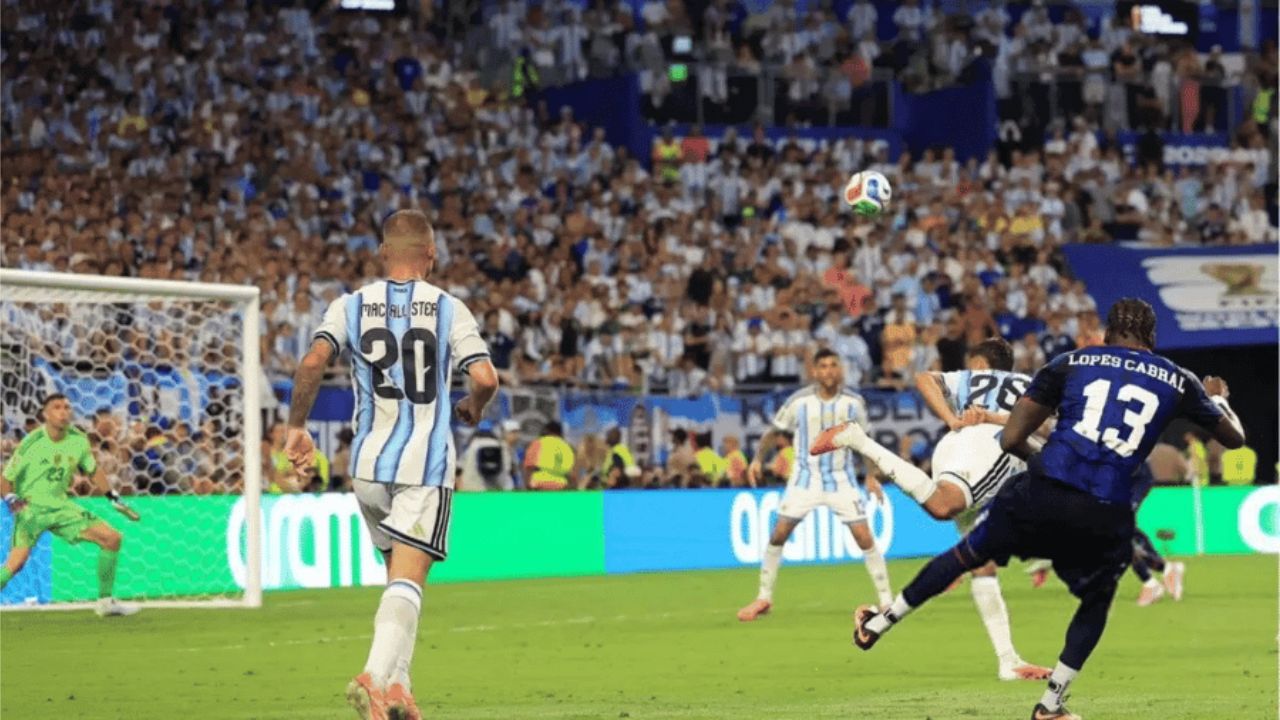
Portugal drew 0-0 with Colombia and finished second in Group K. They were outshot 24 to 13, restricted to two shots on target across 90 minutes and survived only because goalkeeper Diogo Costa produced one of the finest individual displays of the tournament. In stoppage time, Davinson Sanchez headed home from a cross in the 91st minute, sending the Colombian fans into pandemonium, before a marginal offside call, confirmed by VAR, denied the South Americans a winner. Sanchez’s big toe had strayed beyond Rafael Leao. Nothing else.
Portugal were fortunate to escape with a point.
The Ronaldo question will not go away
The most uncomfortable images of the evening were not Colombia’s chances. They were Ronaldo’s reactions. The 41-year-old spent long stretches gesturing at teammates, pointing into spaces and waiting for service that never arrived. He managed three shots, 35 touches and an expected goals figure of 0.17 across 90 gruelling minutes in Miami’s near-40 degree heat. He has now been called offside 11 times across his last two World Cups, four more than any other player.
He also played every single minute of Portugal’s 270 minutes in the group stage, becoming the only player at the tournament not to be rested despite qualification being secured with a game to spare. Erling Haaland sat out Norway’s final group fixture. Lionel Messi was named on the bench for Argentina’s last match. Ronaldo did not although Portugal needed to win for a more favourable group of knockout opponents.

Coach Roberto Martinez was unequivocal when asked about the comparison. “We don’t compare with other players of other teams,” he said. “That would be childish. Cristiano is used to being in the right place at the right time. It’s not an issue for Cristiano to play 90 minutes.”
The numbers suggest otherwise. In the final half hour against Colombia, Ronaldo was a non-entity, shuffling around the pitch in punishing conditions while Goncalo Ramos, 25, a double Champions League winner with Paris Saint-Germain, sat unused on the bench. The AC Milan-bound striker had scored a hat-trick against Switzerland in the 2022 World Cup last 16 and appeared to signal the future for Portugal. At this tournament, he has been used for eight minutes against DR Congo and nothing more.
This is Martinez’s central dilemma, and he does not appear close to resolving it. Against Uzbekistan, Portugal attacked wide relentlessly and delivered early crosses that allowed Ronaldo to dominate the box, scoring twice. Against Colombia, that blueprint vanished entirely. Against DR Congo in their opening match, tactical naivety allowed the Africans to equalise from a position of comfortable control.
A midfield without a map

Portugal possess one of the most talented midfields in the tournament. Bruno Fernandes creates for one of the world’s biggest clubs. Vitinha, who completed 54 of 54 passes against Colombia for a 100 per cent accuracy rate, controls matches for PSG. Joao Neves has emerged as one of the brightest young midfielders in European football. Ruben Neves brings composure and experience.
Against Colombia, none of it translated. There was no rhythm to their passing, no obvious attacking patterns and no consistent movement between midfield and attack. Colombia held Portugal to 45 per cent possession, their lowest share since the UEFA Nations League final against Spain in June 2025, ending a run of 12 consecutive matches in which Portugal had recorded at least 60 per cent possession.
Fernandes repeatedly dropped deeper to find the ball because Portugal could not progress through the lines. Vitinha rarely dictated tempo. Ruben Neves recycled possession without accelerating the game. Joao Felix floated without ever becoming the creative link Ronaldo so desperately needed.
Since the 2018 World Cup, 29 teams have attempted 650 or more passes in a World Cup match. None have managed fewer than Portugal’s seven shots against DR Congo. Only Croatia against Brazil in the 2022 quarter-final created less expected goals from such a volume of possession.
Colombia, for their part, were equally wasteful in front of goal. They attempted 24 shots, the most they have ever managed in a World Cup match, surpassing the 23 they had against the United States in 1994. James Rodriguez, despite completing 38 passes in the final third, the second-most by a Colombian player in World Cup history behind only Carlos Valderrama in 1994, departed without a goal involvement. Santiago Arias caused consistent problems down the right. Gustavo Puerta was outstanding in midfield. Luis Diaz threatened whenever he found space.
Ronaldo reached 25 World Cup appearances with this match, drawing level with Germany’s Lothar Matthaus and sitting second only behind Messi’s 28.
Costa alone stands between Portugal and crisis
If there was a single reason Portugal didn’t lose against Colombia, it was Costa. The Porto goalkeeper saved six shots, including two from inside the box, recorded 0.73 goals prevented and was Portugal’s player of the match by some distance. In the week in which Camilo Vargas made his brilliant save from Fernandes, Vozinha became an international celebrity for Cape Verde and Uruguay’s Fernando Muslera became the first goalkeeper since 1966 to commit three errors leading to goals in a single World Cup tournament, this has been the goalkeepers’ competition.
For Portugal, Costa is both their greatest asset and a symptom of a deeper problem. When your goalkeeper is the best player, something has gone wrong in front of him.
What lies ahead
Finishing second in Group K means Portugal now face Croatia in Toronto on 3 July in the round of 32. Ronaldo’s reunion with former Real Madrid teammate Luka Modric will be framed as a battle of football’s last great romantics. In reality, a Croatian midfield featuring Modric and Mateo Kovacic will ask harder questions than Colombia did, and if Portugal again surrender control in the middle of the park, Ronaldo could spend another knockout game waiting for service that does not come.
The bracket that awaits makes for uncomfortable reading. Should Portugal beat Croatia, Spain almost certainly await in the last 16 in Dallas on 6 July, a potential Iberian battle against the European champions. Win that, and Belgium or the United States stand in the way of a quarter-final place. Beyond that, a semi-final against either France or Germany looms, before a potential final against Argentina, Brazil or England.
It is, by any measure, one of the most brutal projected paths to the final in the tournament. Colombia, by finishing first, face Ghana in the round of 32, a likely meeting with Switzerland in the last 16 and a potential quarter-final rematch of the 2024 Copa America final against Argentina. Portugal’s failure to top the group has cost them dearly in terms of bracket positioning.
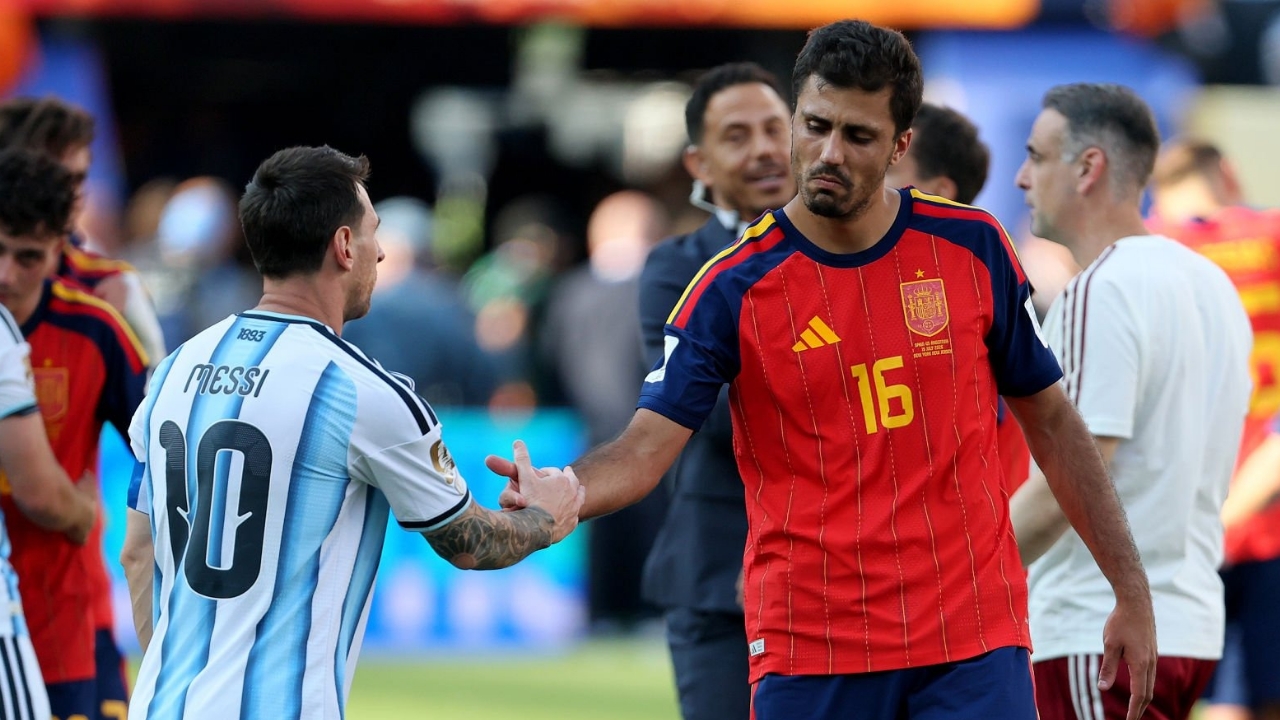
A quarter-final against Argentina, which would have set up a Messi versus Ronaldo World Cup meeting for the first time, is no longer possible. The only scenario in which the two icons can now share a pitch at this tournament is in the final itself.
On this evidence, Portugal have significant work to do before anyone starts planning for that occasion. Martinez said after the match that the group stage was preparation for the knockouts. “Now it’s time to adjust, improve and steer the matches where we want them,” he said.
Croatia will not wait. And neither will Spain, France, Germany or anyone else that follows.